How Large Can Killer Crocodiles Grow in India?
TL;DR
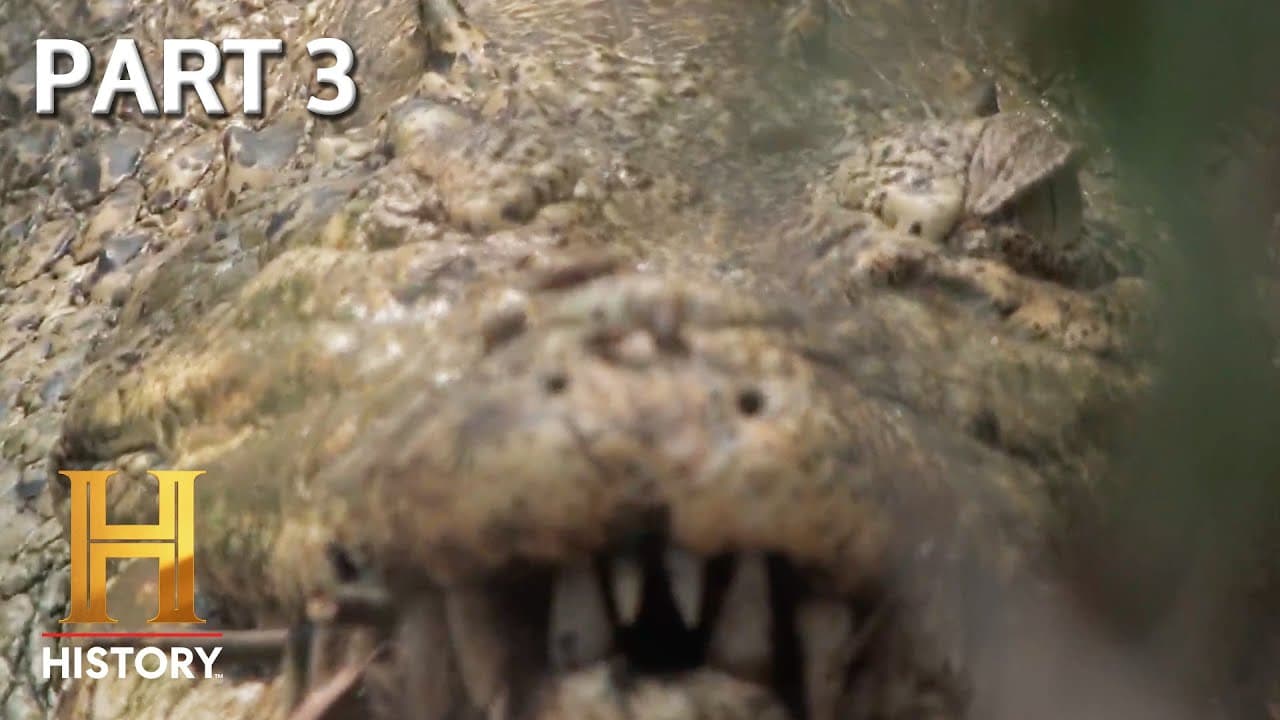
Investigators in India documented a saltwater crocodile estimated at 18 to 20 feet long, but they did not verify the reported 40-foot animal. A belly slide measuring 117 centimeters, compared with 52 centimeters for a known 10-foot female, indicated that the large male was almost four feet across and roughly twice the female's size.
Transcript
Monster Quest is in India searching for oversized killer crocodiles. Wildlife experts say the largest known crocs max out at 20 ft. But eyewitnesses in India say they are growing to much larger sizes. I was here by the water in the evening just 3 days ago. This ferryboat captain spends hours daily on the waterways of Bitter Canaka National Park. He... Read More
Key Insights
- The reported 40-foot crocodile is not verified by the expedition. Wildlife experts cited in the program place the largest known crocodiles at about 20 feet, while local eyewitnesses maintain that animals in India can grow substantially larger.
- The largest directly estimated crocodile is 18 to 20 feet long. The team sees it close to a village and livestock, and Whitaker describes it as the largest saltwater crocodile he has encountered during his 40-year career.
- The big demon leaves a belly slide measuring 117 centimeters, or 46 inches, across. Investigators compare this mark with a 52-centimeter slide made by a known 10-foot female and calculate that the large male was almost four feet wide.
- Saltwater crocodiles are described as solitary animals with exceptional power. The program states that their bite force can reach 3,000 pounds, helping explain how a crocodile could kill and consume a large deer near the waterways searched by the team.
- Human activity and crocodile habitat overlap near Indian settlements. The expedition observes a large crocodile heading toward a village where livestock are present, and the investigators suggest that livestock may attract crocodiles close to human habitation.
- Camera traps confirm that large crocodiles visit known feeding areas, but photographs alone do not identify the legendary animal. After checking a camera placed where the big demon reportedly came ashore, the team records a sizeable crocodile but concludes that it is not their target.
- Low tide makes large crocodiles easier to locate because heavy animals may remain on exposed banks as water recedes. The investigators explain that a 20-foot crocodile could weigh close to a ton and may use gravity when sliding back into the river.
- American crocodiles in Florida also approach the program's threshold for monster size. The team examines the remains of an animal measured by park biologists at 15 feet 3 inches after it reportedly died during cold, cloudy weather.
Install to Summarize YouTube Videos and Get Transcripts
Explore YouTube Video Summarizer or Get YouTube Transcript Extractor
Questions & Answers
Q: Did the expedition find a 40-foot crocodile in India?
The expedition did not verify a crocodile measuring 40 feet. It observed one animal estimated at 18 to 20 feet and later encountered the crocodile villagers called the big demon. Investigators measured that animal's belly slide at 117 centimeters wide, but the transcript provides no confirmed full-length measurement. The evidence supports an exceptionally large crocodile, not a documented 40-foot specimen.
Q: How did investigators estimate the big demon's size?
Investigators measured the width of the large crocodile's belly slide and compared it with a nearby slide made by a known 10-foot female. The large track measured 117 centimeters, or 46 inches, while the smaller track measured 52 centimeters. From this comparison, the team calculated that the big demon was almost four feet across and approximately twice the female's size.
Q: What was the largest crocodile directly estimated during the search?
The largest crocodile given a direct length estimate was judged to be between 18 and 20 feet long. The team spotted it near a village, with livestock visible nearby, and described it as the biggest crocodile seen on the trip at that point. Whitaker said it was the largest saltwater crocodile he had encountered during his 40-year career.
Q: Why were large crocodiles found near human settlements?
The investigators observed an exceptionally large crocodile close to a village and moving in the direction of nearby livestock. They suggested that livestock might attract crocodiles toward areas of human habitation. Local accounts also placed the big demon at frequently used waterways, showing that people, domestic animals, and crocodiles shared closely connected spaces around the park's rivers and ponds.
Q: What evidence showed that the big demon was active nearby?
Villagers reported seeing the large crocodile come ashore only three days before the team's visit and identified the exact location. The investigators installed a camera trap at that feeding area, found deer remains and crocodile tracks elsewhere, and later saw the big demon enter the water. Its exceptionally broad slide mark supplied measurable physical evidence of its recent presence.
Q: How dangerous are the saltwater crocodiles described in the episode?
The program describes saltwater crocodiles as powerful, solitary predators with a bite force of up to 3,000 pounds. One survivor recounts being grabbed by the arm and pulled toward the water before escaping, then being charged a second time. His injuries required 22 days in a hospital, demonstrating the danger of approaching water where large crocodiles hunt.
Q: Why did low tide help the team search for large crocodiles?
Low tide exposed more of the banks and made resting crocodiles easier to see. Investigators explain that very large crocodiles may be too heavy to climb steep banks comfortably, so they can remain in place as the water falls and then use gravity to slide back into the river. The program estimates that a 20-foot crocodile could weigh close to a ton.
Q: What did the Florida crocodile remains reveal about maximum size?
In the Everglades, the team examined the remains of an American crocodile that park biologists had measured at 15 feet 3 inches. The animal reportedly died following cold, cloudy conditions that prevented normal warming in the sun. The investigators considered this measurement close to their monster-size target and then continued searching for a living example in Florida.
Summary & Key Takeaways
-
A MonsterQuest team searches India's waterways for the oversized saltwater crocodile that villagers call the big demon. Eyewitnesses describe a frightening animal hunting near settlements, including one account of a deer disappearing in a single attack. The investigators use direct observation, camera traps, tracks, and belly-slide measurements to assess its size.
-
The search produces sightings of numerous crocodiles, deer remains, and an exceptionally large male near a village and livestock. One observed crocodile is estimated at 18 to 20 feet long. The expedition later encounters the big demon moving rapidly into the water and leaving a slide resembling the track of a truck.
-
Measurements provide the expedition's strongest evidence. The large crocodile's belly slide is 117 centimeters, or 46 inches, wide, while the slide of a known 10-foot female measures 52 centimeters. The comparison suggests the male was almost four feet across and approximately twice the female's size, although its full length remains unverified.
Read in Other Languages (beta)
Share This Summary 📚
Summarize YouTube Videos and Get Video Transcripts with 1-Click
Try YouTube Summary with ChatGPT & Claude or YouTube Transcript Generator
Explore More Summaries from HISTORY 📚





Summarize YouTube Videos and Get Video Transcripts with 1-Click
Try YouTube Summary with ChatGPT & Claude or YouTube Transcript Generator