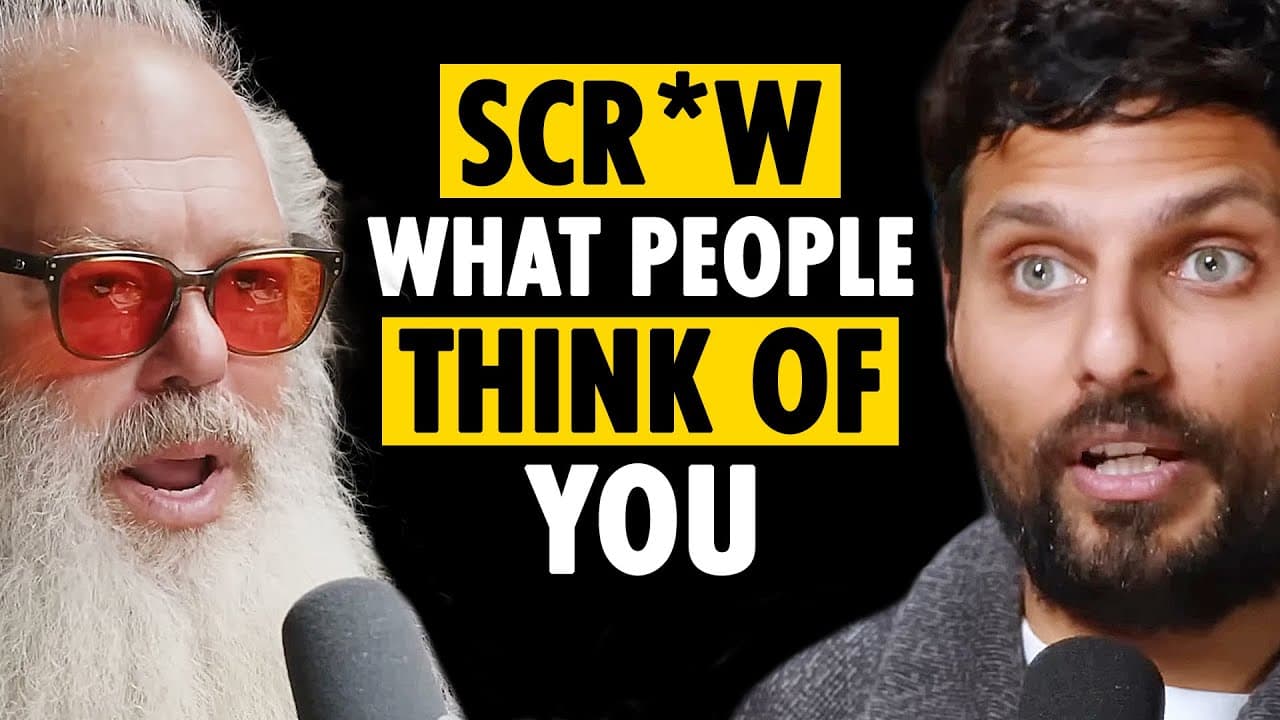
Rick Rubin Addresses Criticisms & OPENS UP About His Greatest Challenge in Life
TL;DR
Authenticity begins by looking inward, recognizing what genuinely resonates, and sharing that perspective without trying to predict what others want. Creativity grows through curiosity, meditation, openness to opposing views, and a willingness to revise long-held beliefs when new information appears. Personal differences and imperfections make creative work meaningful because they reveal real human experience.
Transcript
how do you feel you have the number one album in the country and I remember saying I've never been more unhappy in my life let's say you spend 20 years of your life working towards a goal that's going to solve everything and nothing changes that's when you get hopeless the best-selling author and host the number one Health and Wellness podcast on p... Read More
Key Insights
- Authenticity is the practice of looking inward, noticing personal reactions, and expressing them honestly. Rubin argues that predicting what other people will like is impossible, so being true to oneself offers the strongest chance that creative work will resonate with someone else.
- Creative judgment can be as direct as deciding whether food tastes good. Confidence does not always require layers of analysis, because a creator may clearly feel that something works or does not work before developing a detailed intellectual explanation for that reaction.
- The best route to acceptance is being yourself rather than adapting to imagined expectations. Rubin says changing oneself according to what others supposedly think creates a mask or projection, especially because people cannot reliably know what everyone else wants from them.
- Different viewpoints make creative work interesting and expand understanding. Rubin supports artists in presenting their visions clearly even when he strongly disagrees with their messages, because encountering unfamiliar perspectives helps people learn about the reality and variety of human experience.
- Human imperfections give personal expression its emotional power. An honest song about heartbreak can move someone who is not currently heartbroken because a truthful account of another person's experience can create resonance, compassion, and a broader understanding of life.
- Open-mindedness requires accepting that one's preferred method is only one possible approach. Rubin says he once believed he knew the right way to work, but experience taught him that many different methods can produce meaningful and effective results.
- Beliefs should evolve when new information changes one's understanding. Rubin uses his transition after 22 years as a vegan to illustrate how commitment to an identity can make change difficult, even after a person begins believing that another approach is healthier.
- Meditation is a tool for quieting internal noise and clarifying how one sees the world. That self-awareness provides a starting point for understanding other perspectives, examining opposing arguments, and holding existing beliefs softly enough to be surprised by new information.
Install to Summarize YouTube Videos and Get Transcripts
Explore YouTube Video Summarizer or Get YouTube Transcript Extractor
Questions & Answers
Q: How can creators stay authentic in their work?
Creators can stay authentic by looking inward and paying close attention to what they genuinely feel, see, like, and dislike. Rubin argues that nobody can accurately predict what other people will enjoy. Instead of designing work around imagined expectations, creators should clarify their own responses and share them honestly. That authenticity gives the work its best opportunity to resonate with someone else.
Q: Why is self-knowledge important for creativity?
Self-knowledge helps creators distinguish their genuine preferences from reactions shaped by family, friends, media, or the desire for acceptance. Rubin describes creative discernment as similar to tasting food: a person may immediately know whether something feels right. Understanding what one likes, dislikes, and why makes creative decisions clearer and reduces the temptation to build work around an artificial persona.
Q: How does authenticity help a person gain acceptance?
Authenticity helps because people can respond to a real perspective, while a personality constructed around presumed expectations is only a mask. Rubin suggests that changing oneself to satisfy others is unreliable because nobody fully knows what other people think. Honest self-expression may not please everyone, but it provides something genuine that others can recognize, understand, and potentially connect with.
Q: Why should artists explore viewpoints they disagree with?
Exploring opposing viewpoints reveals aspects of reality that a single perspective cannot provide. Rubin supports artists in expressing their visions clearly even when he strongly disagrees with their messages. He believes differences are what make people and creative work interesting. Asking how another person reached a conclusion can uncover useful information, challenge assumptions, and deepen understanding without requiring agreement.
Q: What makes imperfect human expression meaningful?
Imperfections make expression recognizably human and particular to the person sharing it. Rubin argues that audiences value honest experiences, including their flaws, because those experiences can produce emotional resonance. A song about heartbreak may move someone who is not experiencing heartbreak at that moment, since truthful expression can communicate another person's reality and broaden the listener's understanding of human life.
Q: How can someone become more open-minded?
Open-mindedness develops through practice, curiosity, and a willingness to treat personal beliefs as provisional rather than final. Rubin recommends trying to understand why another person thinks differently and practicing arguments for positions opposite one's own. Understanding multiple sides creates a fuller picture and makes it easier to remain surprised, learn from new information, and revise previous conclusions when necessary.
Q: How does meditation support creativity and curiosity?
Meditation can quiet mental noise enough for a person to recognize how they actually perceive the world. Rubin presents this inward clarity as a starting position, not an endpoint. Once people understand their own views more clearly, they can compare them with other perspectives, examine assumptions, and remain receptive to information that might alter what they previously believed.
Q: Why is changing a long-held belief so difficult?
A long-held belief can become tied to identity, commitment, and years of repeated behavior. Rubin illustrates this with his experience of being vegan for 22 years. He says that even after he came to believe eating meat was healthier for him, changing remained difficult because of his established commitment. Growth requires allowing new information to reshape beliefs despite that discomfort.
Summary
In this video, the interviewee discusses topics such as creativity, authenticity, fear, feedback, and the process of creating art. They provide insights into their own experiences and offer practical advice for nurturing creativity.
Questions & Answers
Q: How do you see yourself at the core of who you are?
The interviewee explains that they try to be true to themselves and focus on their internal experiences. They believe that by sharing genuine and honest aspects of themselves, they can connect with others who resonate with their authenticity.
Q: Why do people tend to create a version of themselves that pleases others rather than being themselves?
The interviewee believes that people crave acceptance and validation from others, thus making them want to conform to societal expectations. They argue that the best way to be accepted is to be true to oneself, as changing or molding oneself to fit someone else's idea leads to inauthenticity.
Q: How can we overcome the fear of being judged by others?
The interviewee suggests that the goal is to focus on how one sees themselves rather than worrying about others' opinions. They emphasize the importance of making art and expressing oneself for the sake of personal satisfaction and connection rather than seeking external validation.
Q: How can we break free from creative blocks?
The interviewee offers several strategies, such as changing the context or environment in which we work, inviting an audience or observer, and experimenting with different approaches. They encourage individuals to embrace curiosity, uncertainty, and the willingness to take risks in order to expand their creative abilities.
Q: What is the impact of feedback and criticism on creativity?
The interviewee explains that artists they work with often do not read reviews or criticism because they recognize that feedback says as much about the critic as it does about their work. They suggest that the only meaningful competition is with oneself, as artists should focus on continuously pushing their artistic boundaries and evolving rather than comparing themselves to others.
Q: How can we navigate the fear and vulnerability that often comes with creativity?
The interviewee shares personal experiences and advises embracing a devotional mindset when creating art. They suggest viewing art as an offering to a higher power, allowing oneself to be guided by love and devotion rather than seeking external approval. By shifting focus from fear to love, artists can approach their work with more confidence and authenticity.
Q: What are some practical steps to nurture creativity?
The interviewee suggests changing the environment, inviting an audience or observer, exploring new perspectives, and practicing self-reflection. They emphasize the importance of curiosity, self-acceptance, and the willingness to take creative risks. They believe that everyone has the capacity for creativity, and it is a matter of nurturing and embracing it in everyday life.
Q: How can artists handle the pressure to constantly create something new and innovative?
The interviewee expresses that artists should not feel pressured to constantly create something groundbreaking. Instead, they should focus on personal growth and constant improvement. They argue that the true value of art comes from the artist's authenticity and evolution over time, rather than solely from innovation or novelty.
Q: How can artists balance the desire for creative freedom with commercial success?
The interviewee shares their experience of staying true to their artistic vision while also considering commercial viability. They believe that artists should make art they genuinely love and resonate with, which in turn increases the chance of others appreciating it. They stress the importance of authenticity and supporting other artists in expressing their own unique perspectives.
Q: How can artists overcome self-doubt and imposter syndrome?
The interviewee acknowledges that self-doubt is a common struggle for many artists. They advise artists to focus on their own growth and not compare themselves to others. They also emphasize the importance of cultivating a supportive community of like-minded individuals who understand and appreciate their creative journey.
Takeaways
Creativity is accessible to everyone and is not limited to specific artistic endeavors. To nurture creativity, one must focus on authenticity, continuously challenge oneself, and be open to new perspectives. Concerns about external judgment should be secondary to personal satisfaction and connection. Feedback and criticism should be approached with discernment, recognizing that they reflect the opinions and biases of others. True artistic competition is with oneself, constantly evolving and pushing creative boundaries. Fear and vulnerability can be navigated through a devotional mindset and embracing love as a guiding force. Practical steps to nurture creativity include changing the environment, inviting observers, and self-reflection. Balancing creative freedom and commercial success requires staying true to one's artistic vision while understanding audience preferences. Overcoming self-doubt and imposter syndrome involves focusing on personal growth and building a supportive artistic community.
Summary & Key Takeaways
-
Rick Rubin describes authenticity as tuning into his inner reactions rather than studying outside expectations. He compares creative judgment to tasting food: a person can often recognize what feels right without constructing an elaborate justification. Honest self-knowledge gives creative work its clearest chance of connecting with other people.
-
Acceptance is more likely to arise from genuine self-expression than from changing oneself to match imagined preferences. Rubin supports artists in communicating their own visions, even when their views differ sharply from his. Distinct perspectives, imperfections, and honest accounts of human experience make art interesting and emotionally resonant.
-
Open-mindedness requires holding beliefs lightly enough to absorb new information. Rubin says meditation can quiet the mind, clarify personal perception, and create a foundation for understanding others. Practicing arguments for opposing positions helps reveal the whole picture, while curiosity makes it possible to reconsider assumptions and evolve over time.
Read in Other Languages (beta)
Share This Summary 📚
Summarize YouTube Videos and Get Video Transcripts with 1-Click
Try YouTube Summary with ChatGPT & Claude or YouTube Transcript Generator
Explore More Summaries from Building Confidence & Overcoming Fears 📚
Summarize YouTube Videos and Get Video Transcripts with 1-Click
Try YouTube Summary with ChatGPT & Claude or YouTube Transcript Generator