How Are Modern Data Center Networks Designed?
TL;DR
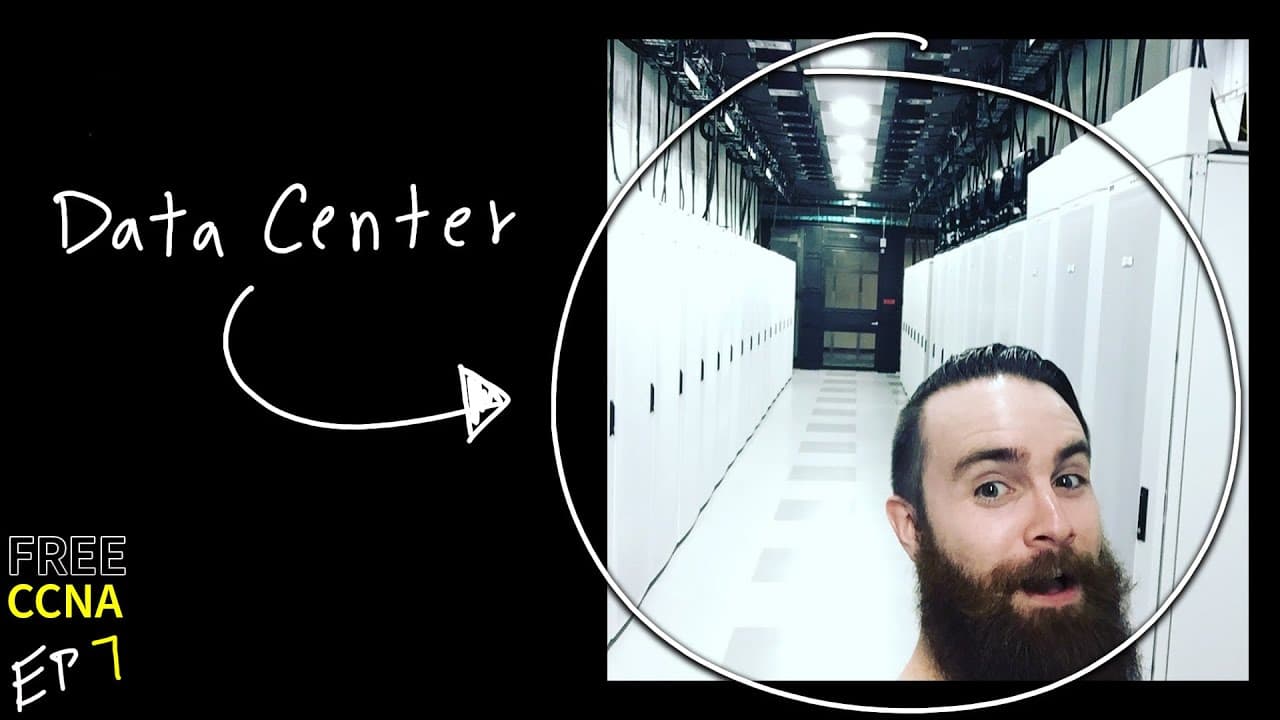
Data center networks must support fast communication among servers, not only connections between servers and the internet. Traditional three-tier designs prioritize north-south traffic, but virtualization made east-west traffic the majority of data center traffic, exposing excessive hops and inefficient redundant links. The course introduces spine-leaf as the newer design intended to address these limitations.
Transcript
have you ever been inside a data center it's amazing rows and rows of switches routers servers just buzzing and humming powering the internet we use every day getting goosebumps just thinking about it and as you're learning networking you've gotta wonder how does all that work what does a data sensor network look like is it different from any other... Read More
Key Insights
- A data center is a location containing servers, routers, and switches that provide resources through a network or the internet. Its size can vary from one room with a single rack to a massive facility filled with rows of equipment.
- Companies use data centers in several ways: they may maintain equipment inside their own building, rent rack space in a shared facility, or consume servers and infrastructure as cloud services from Amazon AWS, Google Cloud, or Microsoft Azure.
- Shared data centers provide infrastructure that individual companies may not be able to maintain themselves. The services described include redundant cooling, redundant power, rack space, and internet connectivity, while each customer installs its own servers, routers, and switches.
- Cloud computing still depends on data centers, but the physical facility and servers belong to the cloud provider. Customers can place services such as websites on provider infrastructure without renting rack space or purchasing and installing their own hardware.
- A traditional data center network has three tiers: top-of-rack access switches connect servers, distribution or aggregation switches connect the access layer, and large multilayer core switches connect the distribution layer. Redundant connections and core switches provide resiliency.
- North-south traffic is communication entering or leaving the data center, such as a customer accessing a website over the internet. Traditional three-tier networks prioritized this traffic pattern by carrying requests through the core, distribution, and access layers to the destination server.
- East-west traffic is communication between servers and resources located across racks within the same data center. Virtualization made data centers more distributed and gave servers stronger reasons to communicate with other servers, storage, and resources throughout the facility.
- East-west communication accounts for 80 percent of the data center traffic described in the lesson. In a three-tier design, traffic between racks may cross access, distribution, core, distribution, and access switches, creating too many hops for communication that must happen quickly.
Install to Summarize YouTube Videos and Get Transcripts
Explore YouTube Video Summarizer or Get YouTube Transcript Extractor
Questions & Answers
Q: What is a data center and what does it contain?
A data center is a location where network-accessible resources are hosted. It contains servers that run websites, databases, and other services, along with routers and switches that connect those systems to one another and to the internet. A data center can be a small equipment room with one rack or a large facility containing rows of racks and equipment.
Q: How can a company use a data center?
A company can build a data center inside its own facility, place equipment in a small networking room, rent one or more racks in a shared data center, or use cloud infrastructure. The appropriate arrangement depends on whether the company wants to own its servers and networking equipment or use hardware and facilities operated by another provider.
Q: Why do companies rent rack space in a shared data center?
Companies rent rack space when their own building or internet connection does not provide the environment needed to operate business services reliably. The shared facility can provide redundant cooling, redundant power, and internet connectivity. Customers then place their own servers, routers, and switches in the rented racks instead of constructing and maintaining an entire facility themselves.
Q: How does cloud computing relate to physical data centers?
Cloud computing still uses physical data centers, but the facility and servers are operated by another company. Providers named in the lesson include Amazon AWS, Google Cloud, and Microsoft Azure. Customers can deploy a website or another service onto provider infrastructure without renting physical rack space, supplying their own hardware, or directly managing the underlying data center network.
Q: What is a hybrid cloud data center arrangement?
A hybrid cloud arrangement combines more than one infrastructure model. The example described includes equipment in a company's own building, rented space in another data center, and resources placed in the cloud. Rather than moving every system into a single environment, the company retains multiple locations and uses them together to support its services and network requirements.
Q: How is a traditional three-tier data center network designed?
A traditional three-tier design begins with top-of-rack switches that connect the servers in each rack. These access switches connect through redundant links to distribution switches, also called aggregation switches. The distribution layer then connects to large multilayer core switches. A properly redundant design includes another core switch so services can remain available if one device or connection fails.
Q: What is the difference between north-south and east-west traffic?
North-south traffic moves into or out of the data center, such as a customer reaching a website from the internet and receiving information from its server. East-west traffic moves horizontally between servers, storage, and other resources located in different racks within the data center. Traditional networks prioritized north-south traffic, while virtualization increased the importance of east-west communication.
Q: Why is the traditional three-tier design inefficient for east-west traffic?
The three-tier design can force traffic between racks through several switching layers. A server may send data to its top-of-rack switch, then to the distribution layer, across the core, down through another distribution switch, and finally through another top-of-rack switch to the destination. The lesson identifies these numerous hops as unsuitable for communication that must happen very quickly.
Summary & Key Takeaways
-
A data center houses servers, routers, and switches that provide resources accessed through a network or the internet. It can range from a single equipment room with one rack to a large facility containing rows of customer racks, supported by redundant cooling, redundant power, and internet connectivity.
-
Companies can operate equipment in their own facilities, rent racks inside a shared data center, or use cloud services from providers such as Amazon AWS, Google Cloud, and Microsoft Azure. Some companies combine on-premises equipment, rented data center capacity, and cloud resources in an arrangement identified as hybrid cloud.
-
Traditional data center networks use top-of-rack access switches, distribution or aggregation switches, and redundant core switches. This three-tier structure was designed primarily for north-south internet traffic. Virtualization increased east-west server communication, making long paths through multiple switching layers a significant performance concern and motivating newer spine-leaf designs.
Read in Other Languages (beta)
Share This Summary 📚
Summarize YouTube Videos and Get Video Transcripts with 1-Click
Try YouTube Summary with ChatGPT & Claude or YouTube Transcript Generator
Explore More Summaries from NetworkChuck 📚


Summarize YouTube Videos and Get Video Transcripts with 1-Click
Try YouTube Summary with ChatGPT & Claude or YouTube Transcript Generator