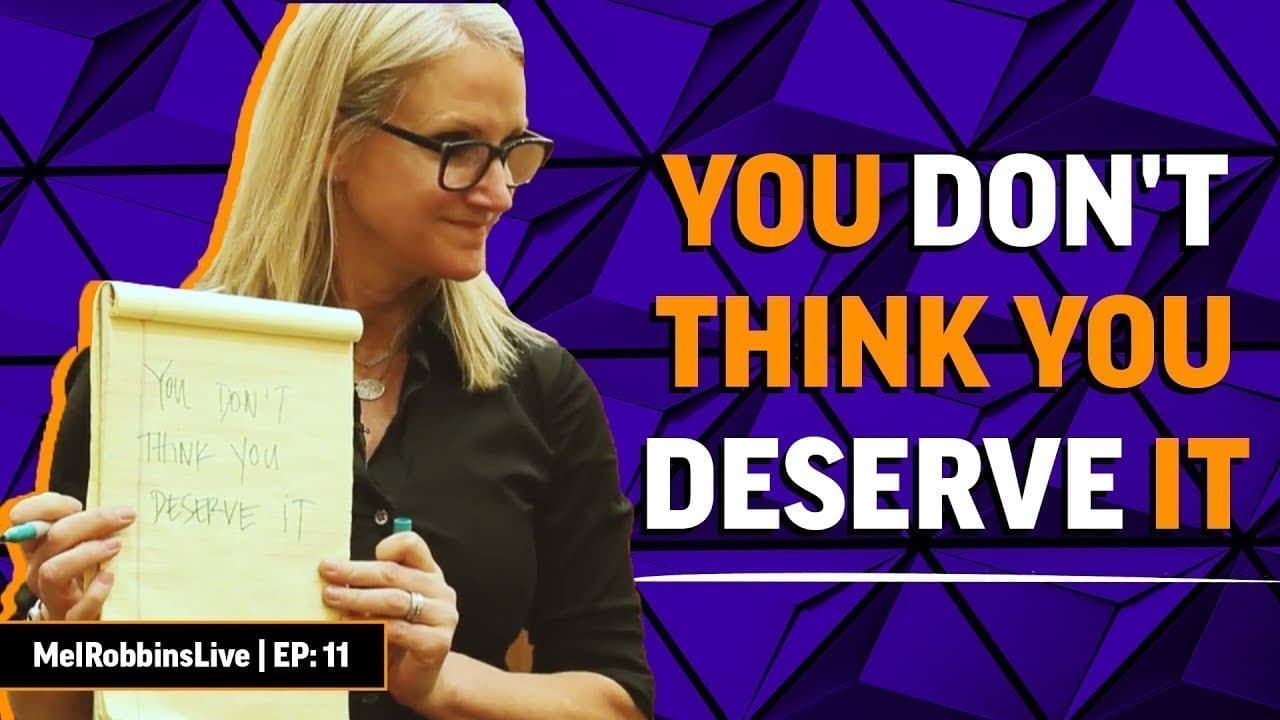
You Don't Think You Deserve It | Mel Robbins
TL;DR
Stop self-sabotaging and engage in positive action to break the cycle of negative self-talk and achieve personal growth.
Transcript
so is are these all the excuses for why you want change do we have a sharpie anywhere because I know the answer to this the reason why you won't change is this so what I know about all of us I was super stuck the one thing that really marks that time was a ton of self-loathing and feeling worthless and shame and kind of all those really dark emotio... Read More
Key Insights
- 🤳 Self-sabotage and negative self-talk often originate from past traumatic experiences or abusive relationships.
- ❓ These harmful behaviors can reinforce feelings of worthlessness and shame.
- 🤳 Challenging negative self-talk and engaging in positive action is crucial to overcome self-sabotage.
- 🥹 Seeking external support, such as therapy or having someone hold you accountable, can enhance the process of changing negative self-talk and behavior patterns.
- 🙈 Personal growth requires actively breaking the cycle of negative self-talk and seeing evidence of progress through consistent action.
- 🆘 Improving oneself is more manageable and effective with the help of others.
- 🤩 Taking responsibility for one's actions and being open to feedback is key in changing negative self-talk and behavior.
Install to Summarize YouTube Videos and Get Transcripts
Explore YouTube Video Summarizer or Get YouTube Transcript Extractor
Questions & Answers
Q: What are the common reasons for self-sabotage and negative self-talk?
Self-sabotage and negative self-talk can be rooted in past trauma, abusive relationships, or experiences of feeling worthless or not good enough. These experiences can shape one's self-perception and lead to the repetition of harmful behavior patterns.
Q: How can self-sabotage be broken?
To break self-sabotage, one needs to identify the underlying narrative that reinforces negative self-talk and engage in positive action towards personal goals. Consistently challenging and disproving the negative thoughts can help change the behavior patterns.
Q: How can therapy help in overcoming negative self-talk?
Therapy provides a safe space to explore and address the underlying causes of negative self-talk. Therapists can help individuals uncover and challenge false beliefs, develop healthier coping strategies, and support them in making positive changes.
Q: Is it helpful to have someone hold you accountable for changing negative self-talk?
Yes, external support can be beneficial. Having someone who can help identify and point out negative self-talk can increase awareness and enable the individual to make necessary changes. This support system can also provide encouragement and motivation during the process of personal growth.
Summary & Key Takeaways
-
Self-sabotage and negative self-talk often stem from past trauma or abusive experiences, leading to feelings of worthlessness and shame.
-
Breaking the cycle of self-sabotage requires understanding the underlying story and taking positive action towards personal goals.
-
Seeking external support, such as therapy or having someone hold you accountable, can help in changing negative self-talk and behavior patterns.
Read in Other Languages (beta)
Share This Summary 📚
Summarize YouTube Videos and Get Video Transcripts with 1-Click
Try YouTube Summary with ChatGPT & Claude or YouTube Transcript Generator
Explore More Summaries from Mel Robbins 📚




Summarize YouTube Videos and Get Video Transcripts with 1-Click
Try YouTube Summary with ChatGPT & Claude or YouTube Transcript Generator