Why Has an Early-Cycle Market Recovery Started?
TL;DR
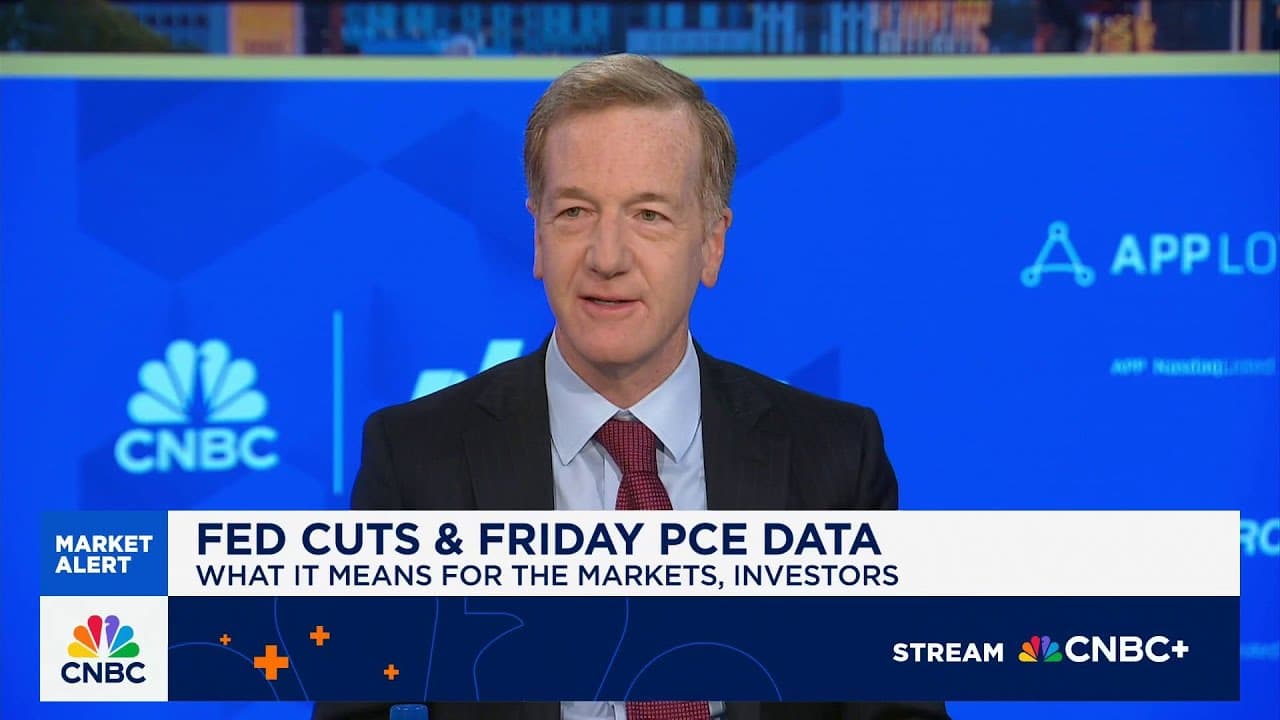
Mike Wilson argues that a rolling economic recovery has started because labor conditions appear to have passed their trough and stock prices are anticipating improvement. He believes high interest rates still constrain consumers and smaller businesses, so further rate cuts are needed, although delayed Federal Reserve action could cause a near-term market correction without ending the broader bull-market thesis.
Transcript
see you later. >> See you later. >> Okay, Biff? >> Yeah. >> Join us. The movie. >> That's from the movie to join us now. Mike Wilson, Morgan Stanley CIO and chief US equity strategist. The reason I said you're so smart about physics is I'm reading how you're basing some of your calls, and you are like, tackling the most difficult things to forecast... Read More
Key Insights
- Wilson’s central thesis is that the economy experienced a rolling recession rather than one synchronized downturn. Different sectors weakened over an extended period, and the latest labor-market evidence now suggests that the overall cycle has moved from contraction toward an early-stage recovery.
- The labor-cycle trough was likely reached around March or April, according to Wilson’s analysis of job cuts and payroll revisions. He connects that turning point with weakness in government employment and says delayed unemployment claims may continue making later reports look soft.
- The stock market is a forward-looking indicator that typically anticipates economic conditions by roughly six months. Wilson treats recent market strength as confirmation of his economic analysis because prices began reflecting recovery before the improvement became obvious in reported data.
- Lagging economic reports can remain weak after markets have already turned upward. Wilson says this pattern is typical because equities often bottom during a recession, while unemployment and other backward-looking indicators may not reach their worst levels until considerably later.
- Lower interest rates are necessary for the recovery to broaden across the private economy. Wilson argues that current rates remain too high for many consumers and businesses, with smaller companies particularly constrained, so Federal Reserve easing is needed to support a fuller early-cycle expansion.
- The Federal Reserve is behind the curve because it is responding to labor data that does not yet capture the economy’s turning point. Wilson expects additional government-related unemployment claims to emerge later, potentially revealing weakness that his market and employment analysis already identifies.
- The early-cycle rotation remains incomplete because small-cap and lower-quality stocks have risen without delivering clear relative outperformance. Their absolute gains support the recovery thesis, but broader leadership may require a more aggressive path of interest-rate cuts than the Federal Reserve has provided.
- A near-term correction would not necessarily invalidate the bull-market thesis. Wilson sees a risk that cautious Federal Reserve policy disappoints bond and equity markets, creating a period of digestion, while the underlying transition from a bear market to an early-cycle recovery continues.
Install to Summarize YouTube Videos and Get Transcripts
Explore YouTube Video Summarizer or Get YouTube Transcript Extractor
Questions & Answers
Q: Why does Mike Wilson think an economic recovery has started?
Mike Wilson believes the recovery has started because several labor indicators appear to have reached their trough around March or April. His analysis includes job cuts, payroll revisions, and government-related employment weakness. He also views the stock market’s advance as confirmation, since markets generally anticipate the economy and can turn before improving conditions become visible in official data.
Q: What is a rolling recession in Mike Wilson’s market outlook?
A rolling recession is an extended downturn in which weakness moves through different parts of the economy rather than striking every sector simultaneously. Wilson says this process lasted for several years and created bear-market conditions for the average stock. His thesis is that the rolling contraction has now shifted into a rolling recovery, even though some delayed data may remain negative.
Q: Why can stock prices rise while economic reports remain weak?
Stock prices can rise during weak economic conditions because the market attempts to value what the economy will look like in the future. Wilson says the market generally lives about six months ahead. As a result, equities may bottom during a recession and begin advancing before unemployment, payroll revisions, or other lagging indicators show that the downturn has ended.
Q: Why does Wilson believe the Federal Reserve is behind the curve?
Wilson believes the Federal Reserve is relying on labor information that reflects past conditions and does not fully reveal the cycle’s turning point. Government employees affected by DOGE-related cuts may file for unemployment later, causing weakness to appear with a delay. Meanwhile, markets already expect policy support, creating tension between cautious Federal Reserve action and the easing that investors believe the economy needs.
Q: Why are lower interest rates important for the recovery?
Lower interest rates are important because Wilson considers current borrowing conditions too restrictive for much of the private economy. Consumers, ordinary businesses, and especially smaller companies face pressure when rates remain high. He argues that rate cuts are therefore needed to turn an early rolling recovery into a fuller expansion and encourage stronger performance from more economically sensitive areas of the stock market.
Q: What would confirm a broader early-cycle stock rotation?
A broader early-cycle rotation would be confirmed by stronger relative performance from small-cap and lower-quality stocks. Wilson notes that these groups have already risen significantly in absolute terms, which supports his thesis, but they have not yet clearly outperformed. More decisive Federal Reserve easing could help broaden market leadership beyond the areas that have already driven the advance.
Q: Could the stock market correct even if the recovery thesis is right?
Yes. Wilson says a meaningful correction could occur if the Federal Reserve remains less aggressive than bond and equity markets expect. That policy gap may create a temporary period of digestion after strong gains. He does not view such a correction as proof that the recovery has failed, provided the labor cycle has troughed and the broader early-cycle process remains intact.
Q: When does Wilson believe the new bull market began?
Wilson believes the new bull market began in April, when Liberation Week delivered what he characterizes as the final major piece of bad news associated with the preceding bear market. He says the average stock had already suffered a proper bear-market decline. The subsequent advance, including gains among economically sensitive stocks, indicates that markets began pricing an early-cycle recovery before the data confirmed it.
Summary & Key Takeaways
-
Wilson describes the economy as emerging from a rolling recession that affected different areas at different times. His analysis of payroll revisions, job cuts, and government-related weakness suggests that labor conditions have already troughed. The stock market’s advance serves as confirmation because markets generally anticipate economic data rather than wait for clear evidence.
-
The recovery remains incomplete because interest rates are still restrictive for many consumers, private businesses, and especially smaller companies. Wilson argues that lower rates are necessary for a broader early-cycle rotation. Small-cap and lower-quality stocks have risen, but they have not yet outperformed enough to signal that the recovery has fully broadened.
-
Wilson believes the new bull market began in April after the final major negative development associated with the preceding bear market. He warns that the Federal Reserve’s cautious response to lagging labor data creates tension with market expectations. That tension could produce a meaningful correction while leaving the longer-term recovery thesis intact.
Read in Other Languages (beta)
Share This Summary 📚
Summarize YouTube Videos and Get Video Transcripts with 1-Click
Try YouTube Summary with ChatGPT & Claude or YouTube Transcript Generator
Explore More Summaries from CNBC Television 📚




Summarize YouTube Videos and Get Video Transcripts with 1-Click
Try YouTube Summary with ChatGPT & Claude or YouTube Transcript Generator