How Can a Digital Bridge Restore Movement?
TL;DR
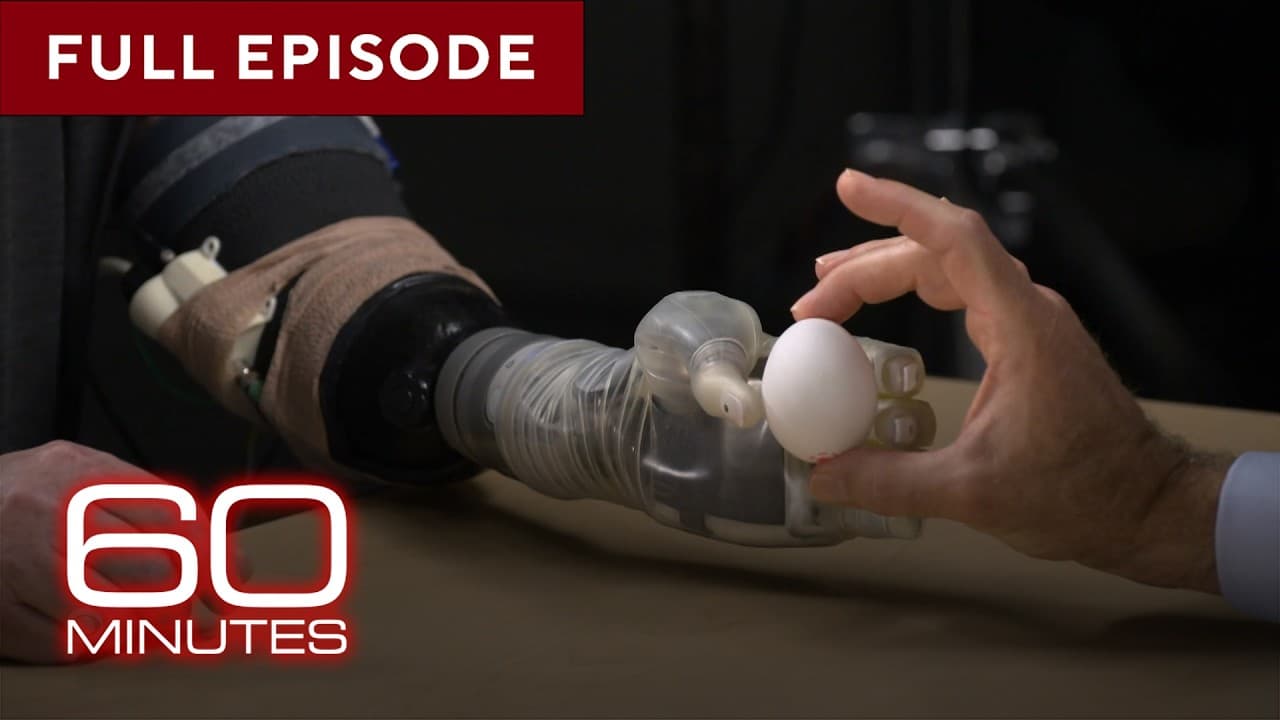
A digital bridge can bypass a spinal cord injury by translating brain activity into electrical stimulation that activates paralyzed limbs. Early clinical-trial participants have stood, walked with support, or regained limited arm and hand movement, while some also improved when the system was off, possibly because training encouraged new nerve connections.
Transcript
for those who've suffered a traumatic spinal cord injury and are paralyzed. There's rarely encouraging news, which is why what's happening in early clinical trials in a research lab in Loausanne, Switzerland, is so remarkable. A renowned French neuroscientist Gregoire Cortine and Swiss neurosurgeon Dr. Joseen Block have implanted a small stimulatio... Read More
Key Insights
- The digital bridge is a wireless connection between a brain implant and a spinal cord stimulator that bypasses the damaged area of the spinal cord, allowing movement intentions recorded in the brain to trigger electrical stimulation below the injury.
- The brain implant is a small titanium device positioned over the motor cortex, the region responsible for movement. Its 64 electrodes record populations of neurons associated with movements involving areas such as the hip, knee, and ankle.
- Artificial intelligence is the translator between thought and stimulation. A computer recognizes brain-activity patterns produced when a patient intends to move, converts them into instructions, and sends those instructions to the spinal cord device in about half a second.
- Patient training is essential because the decoding system must recognize repeatable patterns. Marta practiced thinking about movements in the same way each time and explored whether focusing on her hip, knee, or ankle produced the clearest and most consistent signal.
- Walking with the digital bridge still requires substantial assistance for some participants. Marta used a harness supporting about half her body weight, while physical therapists helped position her feet because she had no sensation below her waist and could not maintain balance independently.
- The digital bridge can support both leg and arm movement, although hand control is more complex because it requires individual access to many small muscles. After eight months of training, Arno Rober could use his left hand to help hold a glass and type.
- Repeated digital-bridge training may promote biological recovery in addition to assisted movement. Some patients improved their ability to move while the system was off, and animal studies indicated that training enabled new connections to grow onto neurons equipped to repair the central nervous system.
- The technology remains an early clinical development rather than a broadly available treatment. Five patients had used thought-controlled movement in the reported work, further study was needed, and the researchers hoped to begin United States clinical trials within two to three years.
Install to Summarize YouTube Videos and Get Transcripts
Explore YouTube Video Summarizer or Get YouTube Transcript Extractor
Questions & Answers
Q: How does a digital bridge help paralyzed patients move?
A digital bridge bypasses the injured section of the spinal cord by wirelessly connecting recorded brain activity to a stimulator implanted on the spinal cord. When a patient thinks about moving a limb, electrodes over the motor cortex capture that activity. Artificial intelligence translates the pattern into instructions, and the stimulator sends electrical pulses that activate muscles in the intended leg or arm.
Q: What devices are implanted for the digital bridge?
The system uses a small titanium device implanted in the skull directly over the motor cortex and a separate stimulation device implanted on the spinal cord. The skull implant contains 64 electrodes that record populations of neurons associated with movement. A computer interprets those recordings and wirelessly directs the spinal stimulator to send electrical pulses that activate the appropriate muscles.
Q: How quickly does the digital bridge turn thoughts into movement?
The complete process takes about half a second. Electrodes first detect brain activity generated by the patient's intention to move. A computer then uses artificial intelligence to translate the recorded pattern into an instruction for the spinal cord stimulator. The stimulator delivers electrical pulses that activate muscles in the arm or leg, bypassing the interruption caused by the spinal injury.
Q: Why must patients train to use the digital bridge?
Patients must learn to produce movement intentions consistently so artificial intelligence can recognize their brain-activity patterns. Marta experimented with thinking about hip contraction, knee lifting, and ankle movement, then practiced generating the same thought pattern repeatedly. Engineers and physical therapists also adjusted the amount of electrical stimulation required to move her legs, making training both a mental and physical process.
Q: Can a completely paralyzed patient walk using the system?
The trial showed that Marta, whose spinal cord had been severed and who had no sensation below her waist, could move her paralyzed legs with her thoughts and take steps. She did not walk independently. A harness supported about half her body weight, and physical therapists helped place her feet because she could not maintain balance or feel the ground beneath her.
Q: Can the digital bridge restore arm and hand movement?
The digital bridge helped quadriplegic journalist Arno Rober move his left arm and fingers after surgery and eight months of training. He could use that hand to help hold a glass and type, although he said he was not using the arm daily. Hand control is especially difficult because opening and closing a hand requires subtle activation of many individual small muscles.
Q: Can movement improve when the digital bridge is turned off?
Some participants, including Arno Rober and Gert-Jan, improved their ability to move paralyzed limbs even when the digital bridge was off. Because researchers could not inspect microscopic spinal cord changes directly in people, they conducted animal studies. Those studies suggested that training enabled new nerve connections to grow onto a specific type of neuron equipped to repair the central nervous system.
Q: When could the digital bridge enter larger clinical trials?
The researchers said the system still needed evaluation in many more patients and hoped to launch clinical trials in the United States within two to three years. The FDA had designated the technology as a breakthrough device, which would prioritize its review. Grégoire Courtine and Jocelyne Bloch also co-founded Onward Medical to help move the technology beyond the research laboratory.
Summary & Key Takeaways
-
The digital bridge wirelessly connects an implant over the motor cortex to a spinal cord stimulator. Artificial intelligence interprets recorded brain activity and converts a patient's intention to move into electrical pulses. The pulses activate muscles in a paralyzed leg or arm, completing the process in about half a second.
-
Patients must train both their bodies and the decoding system. Marta Cristiano Dombi practiced producing consistent thoughts about hip, knee, and ankle movement so artificial intelligence could recognize her intentions. With a harness supporting about half her body weight and therapists positioning her feet, she moved her paralyzed legs and took steps.
-
The technology remains experimental and requires further study in many more patients. Researchers observed that some participants gained movement even when the bridge was switched off, and animal studies suggested training enabled new nerve connections to grow. The team hopes to launch United States clinical trials within two to three years.
Read in Other Languages (beta)
Share This Summary 📚
Summarize YouTube Videos and Get Video Transcripts with 1-Click
Try YouTube Summary with ChatGPT & Claude or YouTube Transcript Generator
Explore More Summaries from 60 Minutes 📚


Summarize YouTube Videos and Get Video Transcripts with 1-Click
Try YouTube Summary with ChatGPT & Claude or YouTube Transcript Generator