How to Separate Nutrition Facts From Diet Myths
TL;DR
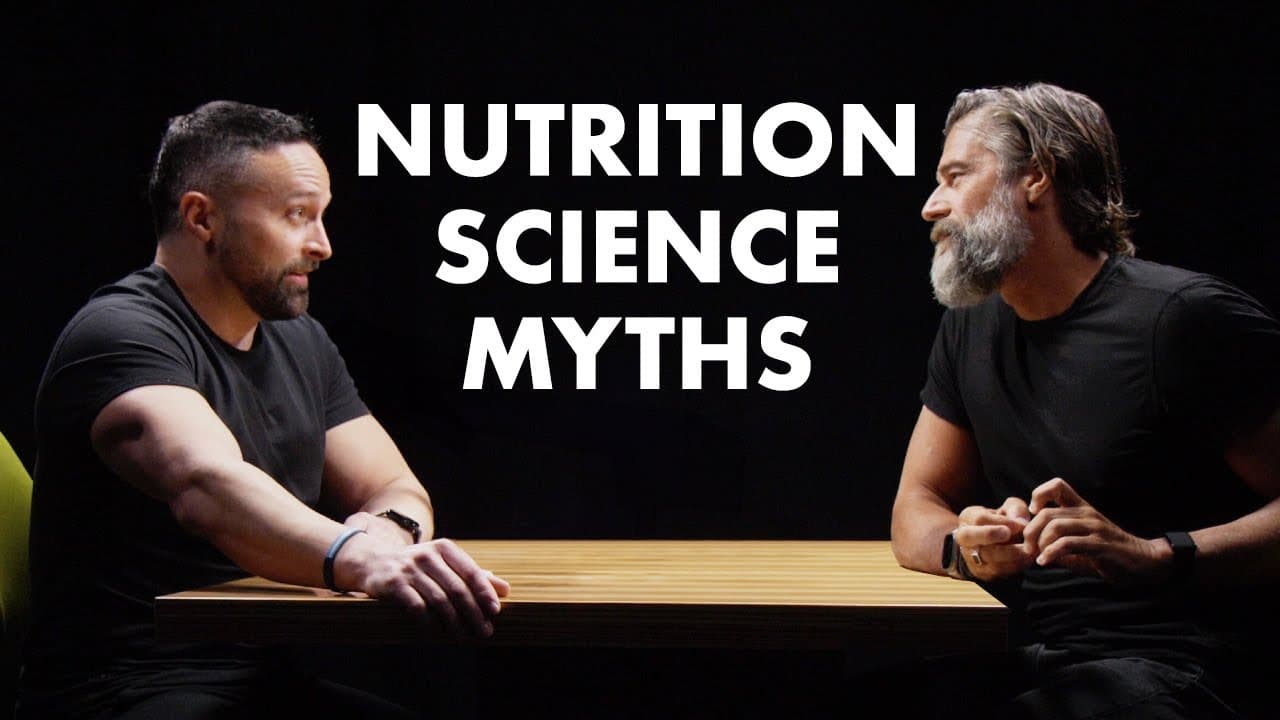
Judge nutrition claims by controlled outcome studies, especially substitution trials that hold calories constant, rather than by isolated biochemical mechanisms or influencer narratives. Seed oils may add excess calories through highly processed foods, but replacing saturated fat with polyunsaturated fat produces neutral or improved outcomes across the measures discussed, including heart disease risk, insulin sensitivity, liver fat, and inflammation.
Transcript
can you help me like bust a few diet misss let's go how do the carnivore enthusiasts dismiss the importance of fiber oh boy what is you want the smoke [Laughter] huh who can you trust for accurate nutrition information you can always find a study that will support whatever narrative you want to play Dr Norton is one of the foremost experts in prote... Read More
Key Insights
- Seed oils are a major source of added calories in the American diet because they appear widely in highly processed foods and restaurant meals. Their contribution to excess energy intake matters, but it does not prove that seed oils uniquely cause obesity or metabolic disease.
- Substitution studies are essential for comparing dietary fats because total calorie intake can confound the results. Replacing saturated fat with polyunsaturated fat while holding energy constant provides a more meaningful test than simply adding oil to an existing diet.
- Polyunsaturated fats produce neutral or improved results in the studies Norton discusses. The measured outcomes include heart disease risk, metabolic health, liver fat, insulin sensitivity, and inflammation, which contradicts broad claims that seed oils are inherently inflammatory or harmful.
- Saturated fat increased liver fat much more than fructose in the cited equal-calorie overfeeding comparison. Norton reports increases of 86% for saturated fat and 16% for fructose, using the contrast to challenge selective concern about sugar while ignoring dietary fat.
- Biochemical mechanisms do not establish whole-body health outcomes by themselves. A fatty acid may undergo oxidation or activate an unfavorable pathway, but the final effect reflects hundreds or thousands of interacting mechanisms, including responses that may compensate for potential harms.
- Caffeine illustrates why outcome evidence matters more than a single pathway. Although caffeine can stimulate cortisol release, Norton says studies measuring body fat and visceral fat find neutral or positive effects, undermining the claim that caffeine necessarily causes abdominal fat storage.
- Seed oils can function as a proxy for highly palatable processed foods rather than an independent explanation for poor health. Potato chips, french fries, packaged foods, and restaurant dishes can contain substantial oil while also encouraging calorie intake beyond what consumers recognize.
- Fruit, vegetables, whole grains, and fiber are consistently associated with lower risks in the research Norton references. He says he has not seen a study in which their intake failed to reduce cancer risk, all-cause mortality, or heart disease risk.
Install to Summarize YouTube Videos and Get Transcripts
Explore YouTube Video Summarizer or Get YouTube Transcript Extractor
Questions & Answers
Q: How can you tell whether a nutrition claim is reliable?
A reliable nutrition claim should be supported by studies that measure meaningful outcomes rather than merely describing a possible biochemical mechanism. Check whether researchers controlled total calories, compared appropriate dietary substitutions, and measured results such as inflammation, insulin sensitivity, liver fat, body weight, or heart disease risk. A mechanism can be real without determining the food's overall effect.
Q: Are seed oils inherently harmful to human health?
The evidence discussed does not support describing seed oils as inherently harmful. When polyunsaturated fats, which commonly come from seed oils, replace saturated fat while calories remain controlled, the observed effects are neutral or beneficial across heart disease risk, metabolic health, liver fat, insulin sensitivity, and inflammation. Problems can arise when oils add excess calories through processed foods or restaurant meals.
Q: Why are substitution studies important in nutrition research?
Substitution studies separate the effect of a nutrient from the effect of consuming more total energy. Researchers add one dietary component while removing another, keeping calories controlled. Without that design, adding oil to a person's normal diet may cause overeating and metabolic problems, making it impossible to determine whether the outcome came from the oil itself or from excess calories.
Q: Do seed oils cause inflammation because they can oxidize?
The possibility that polyunsaturated fatty acids can oxidize describes a mechanism, not a complete health outcome. Norton says studies directly measuring inflammation after polyunsaturated fat intake find neutral or positive effects. Foods can activate both unfavorable and favorable biochemical pathways, so the relevant question is the combined result of all those processes rather than one theoretically negative reaction.
Q: How do processed foods affect the debate about seed oils?
Seed oils are common in potato chips, french fries, packaged goods, restaurant meals, and other highly palatable foods. As a result, high seed-oil intake may indicate a diet containing more processed food and more calories. That makes seed oils a potential proxy for the broader food environment, not proof that one type of oil independently drives obesity or metabolic illness.
Q: Why can restaurant meals contain unexpectedly high calories?
Restaurants may use far more oil in cooking than diners can see or accurately estimate. Norton notes that distinguishing one tablespoon from five tablespoons by looking at a dish is extremely difficult, and he references restaurant pasta dishes exceeding 2,000 calories. Hidden cooking oil can therefore make actual energy intake much higher than consumers assume.
Q: What does the fructose and saturated fat comparison show?
Norton cites an equal-calorie overfeeding study in which fructose increased liver fat by 16%, while saturated fat increased it by 86%. He uses this comparison to expose inconsistent reasoning: people who strongly criticize fructose because of liver fat should also consider evidence about saturated fat instead of selectively focusing on the nutrient that fits their preferred dietary narrative.
Q: Why are single-mechanism nutrition arguments misleading?
Single-mechanism arguments assume that one biochemical effect determines the entire response to a food. Norton compares this approach to rejecting a mutual fund because two individual stocks declined even though the overall fund gained. Health outcomes reflect the combined influence of hundreds or thousands of pathways, so direct measurements of inflammation, disease risk, and body composition carry greater weight.
Summary & Key Takeaways
-
Layne Norton argues that seed oils became a convenient villain as some low-carbohydrate and carnivore influencers began accepting fruit and honey. Because seed oils appear throughout highly processed foods, they correlate with excess calorie intake, but that association does not establish that the oils themselves independently cause obesity or poor metabolic health.
-
The appropriate comparison is a substitution study that replaces one nutrient with another while controlling total energy. Norton says trials replacing saturated fat with polyunsaturated fat generally report neutral or improved effects on heart disease risk, metabolic health, liver fat, insulin sensitivity, and inflammation, challenging claims based only on theoretical oxidation pathways.
-
Nutrition misinformation often isolates one mechanism and treats it as a complete health outcome. Norton compares this mistake to judging an entire mutual fund by two poorly performing stocks. Foods activate multiple positive and negative pathways, so reliable conclusions require measuring their combined effects on outcomes such as inflammation, body fat, and disease risk.
Read in Other Languages (beta)
Share This Summary 📚
Summarize YouTube Videos and Get Video Transcripts with 1-Click
Try YouTube Summary with ChatGPT & Claude or YouTube Transcript Generator
Explore More Summaries from Rich Roll 📚





Summarize YouTube Videos and Get Video Transcripts with 1-Click
Try YouTube Summary with ChatGPT & Claude or YouTube Transcript Generator