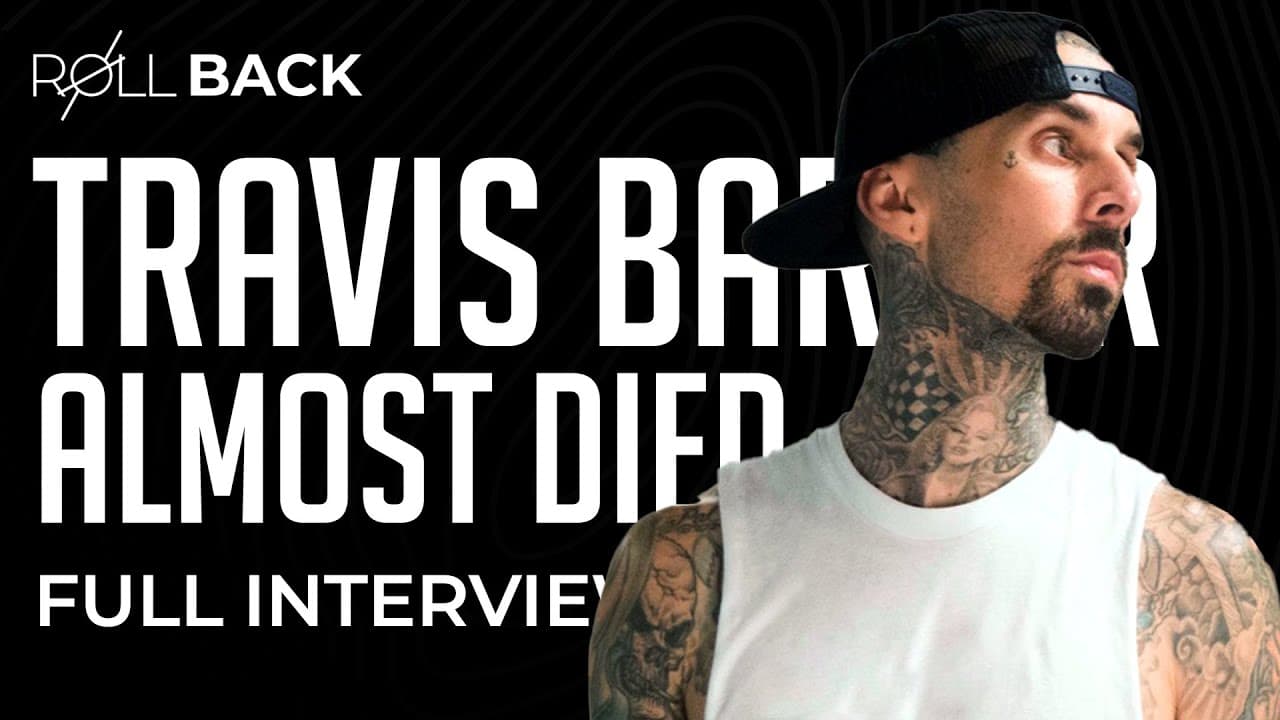
Travis Barker on Drumming, Instinct, and Recovery
TL;DR
Travis Barker built his career by following creative fulfillment, trusting his instincts, and practicing drums with intense discipline from childhood. His mother’s final encouragement to pursue music sharpened his focus, while broad exposure to jazz, punk, and hip-hop helped him develop a versatile approach that later supported collaborations, entrepreneurship, sobriety, parenting, fitness, and recovery from a near-fatal plane crash.
Transcript
hey everybody welcome to rollback where we serve up the very best of our pre-video episodes to the youtube algorithm for the very first time and when considering the best my mind instantly returns to episode 269 from january of 2017 with travis barker travis is a musician an entrepreneur and of course the drummer for the influential multi-platinum ... Read More
Key Insights
- Creative fulfillment is Barker’s primary standard for choosing projects. His ventures began as activities he genuinely loved, without an initial goal of making money, and became businesses only when he found ways to pursue them without continually losing money.
- Trusting intuition is a lesson Barker says he learned through difficult decisions. Looking back, he recognized occasions when an opportunity felt wrong but he accepted it anyway, sometimes because of a paycheck rather than the creative satisfaction it offered.
- Mistakes are useful when they produce learning. Barker embraces the idea of “win or learn,” reasoning that a poor decision does not remain merely a mistake when its lesson changes how a person evaluates later choices.
- Parental discipline established the foundation for Barker’s musical development. His parents required regular practice, supported his attraction to percussion, and found him a teacher at four, giving his natural interest the structure needed to become a serious skill.
- Music reading became an early strength for Barker. At five or six, he could interpret unfamiliar notation during sight-reading competitions, an ability he attributes to understanding note values early and receiving focused instruction from a young age.
- Broad listening shaped Barker’s versatility as a drummer. Rather than identifying exclusively with punk, hip-hop, goth, or another scene, he welcomed musical confusion and learned from jazz players, rock records, rap groups, and drum-machine programming.
- Grief intensified Barker’s commitment to drumming. After his mother died the day before high school, he withdrew from other interests, stopped skateboarding, and focused almost entirely on music while holding closely to her instruction to keep playing.
- Professional ambition does not require an established roadmap. When counselors laughed at Barker’s plan to become a touring drummer, he concluded that he would need to create his own path, remain obsessed with the work, and refuse to accept discouragement as a final answer.
Install to Summarize YouTube Videos and Get Transcripts
Explore YouTube Video Summarizer or Get YouTube Transcript Extractor
Questions & Answers
Q: How did Travis Barker decide which creative projects to pursue?
Travis Barker says he becomes involved in projects because he genuinely loves them, not because he initially expects financial success. His goal was often simply to make an activity sustainable enough that he would not lose money pursuing it. Some of those hobbies later developed into businesses, but creative interest and personal instinct remained the starting points for his decisions.
Q: Why does Travis Barker place so much trust in his intuition?
Barker learned to trust his intuition after making pivotal choices that felt wrong from the beginning. In retrospect, he questioned why he proceeded despite those internal warnings, particularly when a paycheck competed with creative fulfillment. Those experiences led him to treat a clear negative feeling as a reason to decline and to trust his gut fully when evaluating opportunities.
Q: What did Travis Barker’s mother tell him before she died?
Barker’s mother told him to follow his dreams and continue playing the drums no matter what. She died the day before he started high school, and her words stayed with him during a period when he became emotionally withdrawn. He responded by concentrating intensely on drumming, treating her confidence in his talent as both permission and direction for his life.
Q: How did Travis Barker begin learning to play drums?
Barker began striking pots, pans, and other objects at about four, prompting his mother to recognize his interest in percussion. She arranged lessons with a teacher who taught him to read music. His parents also required disciplined practice, so his early enthusiasm was supported by structured instruction, productivity expectations, and repeated time with the instrument.
Q: How did reading music help Travis Barker as a child?
Reading music gave Barker a technical foundation at a very young age. By five or six, he could participate in competitions where an unfamiliar sheet of music was placed in front of him and he had to perform it immediately. He says he understood note values early, and that formal training made sight-reading one of his strongest childhood abilities.
Q: How did Travis Barker learn styles beyond formal drum lessons?
Barker’s teacher gave him jazz fundamentals, including reading charts, but Barker expanded beyond those lessons by listening closely to music that excited him. He repeatedly tried to reproduce what he heard in rock and hip-hop recordings, including programmed patterns associated with drum machines. This combination of formal literacy and self-directed imitation broadened his playing across genres.
Q: Why did Travis Barker listen to many different musical genres?
Barker enjoyed music across categories during a period when young listeners often identified with a single scene, such as punk, hip-hop, or goth music. He describes himself as happily confused because he liked everything. Jazz drummers supplied technical inspiration, while groups such as the Beastie Boys and Public Enemy gave him programmed rhythms to study and reproduce.
Q: How did discouragement affect Travis Barker’s career goal?
School counselors asked Barker about college and dismissed his plan to become a professional drummer, but their reaction made him more determined. His family lacked substantial money for college, his grades were not strong after his mother died, and he cared mainly about touring. He accepted that he might earn only enough for food and shelter while doing work he loved.
Summary & Key Takeaways
-
Travis Barker describes a career guided by genuine enthusiasm rather than financial opportunity. Music opened paths into other creative pursuits that gradually became businesses. After regretting decisions that felt wrong from the beginning, he adopted a firm rule: trust intuition, pursue creative fulfillment, and treat mistakes as opportunities to learn and improve.
-
Barker began drumming on household objects at four, then received formal instruction from a teacher who taught him to read music. By five or six, he was skilled at sight-reading in competitions. Jazz fundamentals gave him technical discipline, while repeated listening helped him reproduce rock, hip-hop, and programmed drum patterns independently.
-
The death of Barker’s mother immediately before high school transformed grief into intense musical focus. Her instruction to follow his dreams and continue drumming became a lasting source of direction. Although school counselors dismissed professional drumming as unrealistic, their skepticism strengthened his determination to create his own path and accept modest conditions.
-
Key Insights and Recovery Themes
-
Key Insights
Read in Other Languages (beta)
Share This Summary 📚
Summarize YouTube Videos and Get Video Transcripts with 1-Click
Try YouTube Summary with ChatGPT & Claude or YouTube Transcript Generator
Explore More Summaries from Rich Roll 📚


Summarize YouTube Videos and Get Video Transcripts with 1-Click
Try YouTube Summary with ChatGPT & Claude or YouTube Transcript Generator