Why Did the U.S. Military Want Tesla's Files?
TL;DR
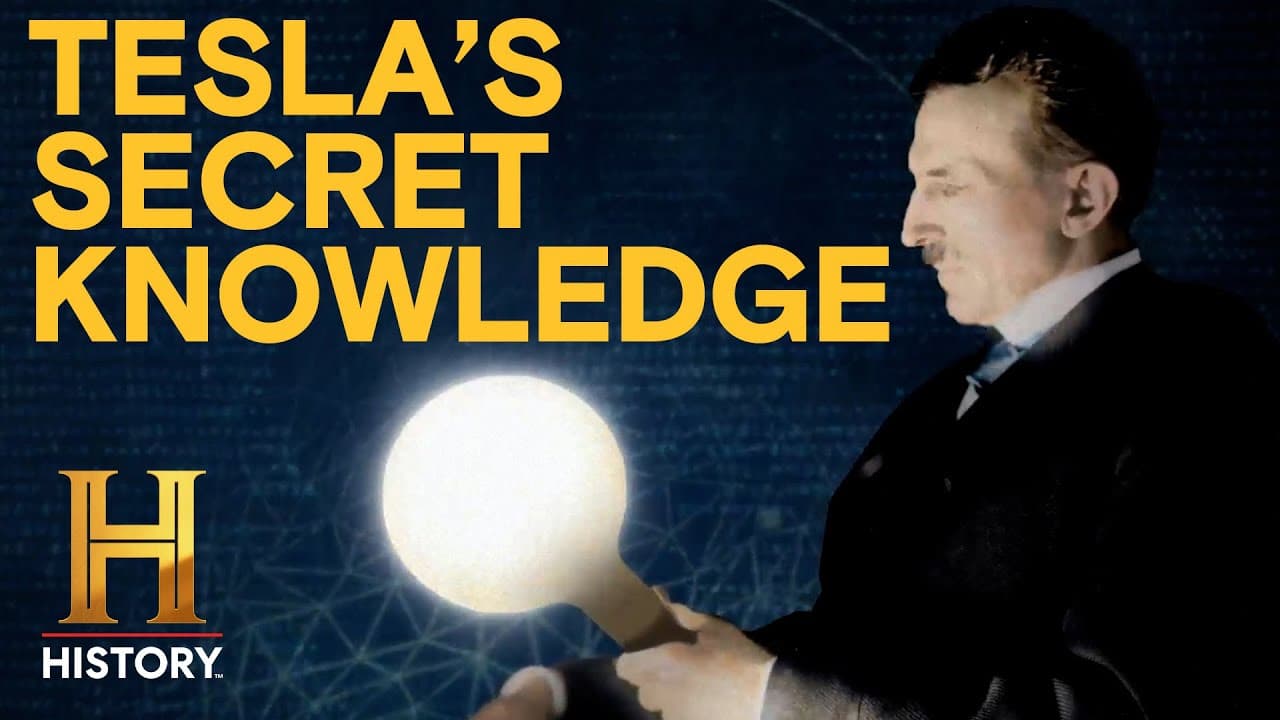
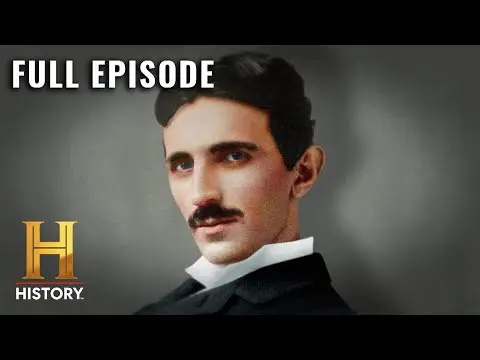
U.S. military and intelligence organizations showed interest in Nikola Tesla’s papers, according to correspondence found in the National Archives. The investigation connects Tesla’s protégé Bloyce Fitzgerald to the Army and the Office of Strategic Services, while questioning whether files concerning wireless power, defensive weapons, aviation, and other experiments disappeared after officials confiscated Tesla’s belongings in 1943.
Transcript
tonight on the Tesla files so this is a a Pat from Nicola Tesla the concept is is certainly Innovative are yall secure to that this ties the Tesla papers to Military Intelligence right we weren't convinced about what was the right technology and that is what made us think about Nicol Tesla he of course invented the AC induction motor this hotel mig... Read More
Key Insights
- Tesla’s missing files are the investigation’s central mystery because he reportedly possessed about 80 trunks of materials, while only 60 were later accounted for. The researchers consider whether the missing trunks held designs involving wireless electricity, defensive weapons, aviation, or other experiments.
- Government custody of Tesla’s property began within hours of his death in 1943, when agents from the Office of Alien Property Custodian took possession of his papers and belongings. The transcript says more than 200,000 pages were subsequently presented to engineer John G. Trump for evaluation.
- John G. Trump’s assessment concluded that Tesla’s papers had virtually no military, strategic, or scientific value. The researchers question whether a reliable judgment could be reached after examining such a large and technically complex collection for only a few hours or about two days.
- Tesla’s AC induction motor remained relevant more than a century after its development because it became a crucial technology for the Tesla automobile. Company co-founders Martin Eberhard and Marc Tarpenning paired the motor with lithium-ion batteries and a modern high-frequency controller.
- Tesla envisioned electrically powered transportation in writing from 1904, according to material shown during the investigation. His proposal described cars powered by electricity associated with his AC induction motor, although the program also notes that several companies were already producing electric vehicles around the turn of the century.
- Bloyce Fitzgerald had privileged access to Tesla’s plans while working as a young electrical engineer at MIT. The investigation reports that Fitzgerald was also paid by the U.S. Army’s Ordnance Department, creating a possible channel through which Tesla’s unpublished technical information could reach military officials.
- National Archives correspondence connects Tesla-related discussions to military intelligence through Fitzgerald, the Air Technical Service Command, and Office of Strategic Services official James Murphy. Researcher Kevin Leonard presents this documentation as evidence that interest in Tesla’s papers extended beyond routine domestic property administration.
- The investigation distinguishes documented connections from unresolved suspicions. Archival letters, government confiscation, Fitzgerald’s military employment, and Tesla’s established inventions are presented as evidence, while claims about stolen trunks, suppressed energy systems, and secret use of a death ray remain questions explored by the researchers.
Install to Summarize YouTube Videos and Get Transcripts
Explore YouTube Video Summarizer or Get YouTube Transcript Extractor
Questions & Answers
Q: Why did the U.S. government confiscate Nikola Tesla’s files?
Agents from the Office of Alien Property Custodian took possession of Nikola Tesla’s papers and belongings within hours of his death in 1943. The program investigates whether this was ordinary government custody or part of a broader effort to evaluate and control potentially valuable technology. Its evidence includes archival correspondence linking people close to Tesla with the Army and the Office of Strategic Services.
Q: What happened to Nikola Tesla’s missing trunks?
Nikola Tesla reportedly claimed to possess about 80 trunks filled with his work, but the investigation says only 60 were later found or accounted for. The fate of the remaining trunks is not established in the supplied material. Researchers suspect they may have contained unpublished scientific files, but the idea that officials deliberately stole or concealed them remains an unresolved theory rather than a demonstrated conclusion.
Q: What evidence connects Tesla’s papers to U.S. military intelligence?
Researcher Kevin Leonard found National Archives correspondence from the Sarah Clark collection that involved Bloyce Fitzgerald, the Army’s Air Technical Service Command, and James Murphy of the Office of Strategic Services. The investigators consider this a direct connection between discussions about Tesla’s papers and military intelligence, rather than merely the domestic agency responsible for holding property after Tesla’s death.
Q: Who was Bloyce Fitzgerald, and why is he important to the Tesla investigation?
Bloyce Fitzgerald was a young electrical engineer at MIT and a protégé of Nikola Tesla who reportedly received extensive access to Tesla’s guarded plans and designs. The investigation says he was also being paid by the U.S. Army’s Ordnance Department. It therefore examines whether Fitzgerald supplied privileged information to military officials and helped secure Tesla’s files after the inventor died.
Q: What did John G. Trump conclude about Tesla’s papers?
John G. Trump, a government-appointed engineer, concluded that Tesla’s papers had virtually no military, strategic, or scientific value after reviewing the collection. The program challenges the reliability of that judgment because more than 200,000 pages were reportedly available and the examination lasted only a few hours or about two days. It offers questions about the assessment’s completeness, not proof that the conclusion was deliberately false.
Q: How did Nikola Tesla’s inventions influence the Tesla automobile?
Tesla Motors co-founders Martin Eberhard and Marc Tarpenning explain that their automobile combined lithium-ion batteries with an AC induction motor and a modern high-frequency controller. Their choice of the motor led them to honor Nikola Tesla, whose work pioneered induction motors, generators, alternators, and AC power concepts. They regarded his engineering as directly relevant to building an electric car that did not use gasoline.
Q: Did Nikola Tesla predict modern electric cars?
The investigation presents writing from 1904 in which Nikola Tesla proposed that his AC induction motor offered a direction for future cars powered by electricity rather than fossil fuels. The program also acknowledges that electric transportation was not his idea alone, since multiple companies were already producing electric vehicles around the turn of the century and Thomas Edison worked with Henry Ford on electric cars.
Q: Did Tesla’s missing files contain plans for a death ray?
The supplied material does not establish what the missing files contained. Tesla claimed to have extensive work involving wireless electricity and weapons powerful enough to destroy cities, and the researchers explore whether papers about a so-called death ray entered government hands. Their archival discoveries show military interest in Tesla-related information, but they do not prove that a completed weapon design existed in the missing trunks or was secretly developed.
Summary & Key Takeaways
-
Nikola Tesla reportedly left about 80 trunks containing scientific papers and personal belongings, but investigators say only 60 were ultimately accounted for. Because government agents seized his property shortly after his death in 1943, the researchers examine whether the missing materials contained unpublished designs for wireless electricity, powerful weapons, aviation, or other advanced technologies.
-
Tesla’s AC induction motor provides a documented connection between his historical inventions and modern engineering. Tesla Motors co-founders Martin Eberhard and Marc Tarpenning describe choosing an AC induction motor with lithium-ion batteries and a modern high-frequency controller, while crediting Tesla’s work and his early vision of electricity-powered transportation.
-
National Archives correspondence provides the investigation’s strongest connection between Tesla’s papers and military intelligence. Researcher Kevin Leonard identifies communications involving engineer Bloyce Fitzgerald, the Army’s Air Technical Service Command, and James Murphy of the Office of Strategic Services, raising questions about Fitzgerald’s access to Tesla’s unpublished plans and activities after Tesla’s death.
Read in Other Languages (beta)
Share This Summary 📚
Summarize YouTube Videos and Get Video Transcripts with 1-Click
Try YouTube Summary with ChatGPT & Claude or YouTube Transcript Generator
Explore More Summaries from HISTORY 📚

Summarize YouTube Videos and Get Video Transcripts with 1-Click
Try YouTube Summary with ChatGPT & Claude or YouTube Transcript Generator