Why Do ICE and the Department of Homeland Security Exist?, Last Week Tonight with John Oliver (HBO)
TL;DR
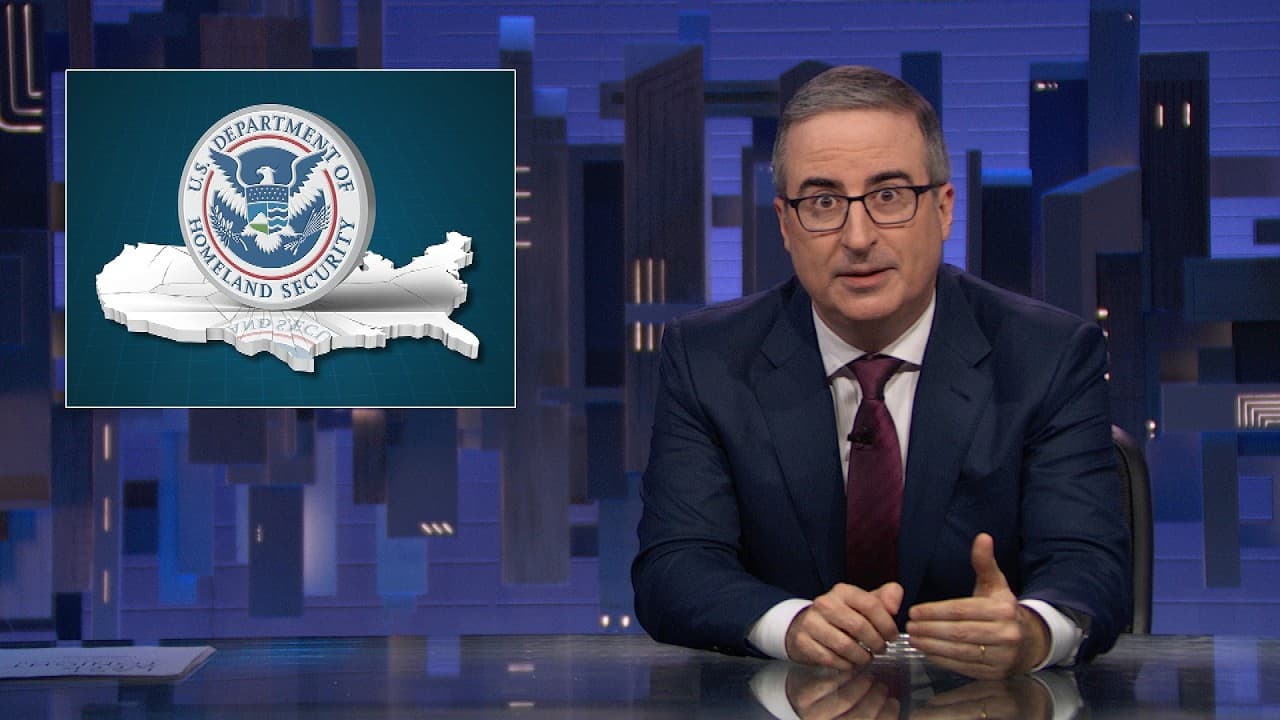
The Department of Homeland Security exists because the Bush administration responded to 9/11 and poor interagency communication by combining 22 agencies and 170,000 workers into one department. Yet the FBI, CIA, and Pentagon remained outside DHS, while immigration enforcement became linked to counterterrorism through ICE and Customs and Border Protection. Read on to understand the resulting problems with oversight, spending, power, and public trust.
Transcript
♪ ("LAST WEEK TONIGHT" INTRO MUSIC PLAYS) ♪ We have to dive straight in with our main story this week, which concerns what's been happening in Minnesota, from the surge in immigration raids, to the killings of Renée Good and Alex Pretti, to the massive protests in the streets. And to be clear, for all this administration's talk of "paid agitators,"... Read More
Key Insights
- DHS is a relatively young federal department, founded as a response to 9/11 and concerns that agencies had failed to communicate and share information effectively before the attacks. Its creation reflected an urgent attempt to improve coordination by placing many existing organizations under one administrative banner.
- The department combined 22 agencies and 170,000 workers, making it the third-largest department in the federal government at its creation. Its responsibilities included organizations as different as the Secret Service, Coast Guard, FEMA, TSA, and animal disease researchers, producing an unusually complicated organizational structure.
- DHS lacks several powers central to counterterrorism because the FBI, CIA, and Pentagon remained outside the department. Consequently, the organization created to improve security coordination did not control the federal government’s principal investigative, intelligence, and military capabilities, raising questions about how effectively its structure addressed the original problem.
- ICE and Customs and Border Protection were formed during the creation of DHS by combining parts of the Immigration and Naturalization Service and US Customs Service. Their placement inside DHS explicitly connected immigration enforcement with the broader mission of preventing terrorism, shaping the department’s priorities and public identity.
- Congressional oversight of DHS is fragmented because members overseeing its component agencies resisted surrendering control. The department consequently answered to around a hundred committees and subcommittees, a structure that the chair of the 9/11 commission described as equivalent to having a hundred bosses and an obstacle to effective work.
- DHS spending included documented examples of equipment that offered little demonstrated value. Marin County received more than $100,000 in surveillance equipment for its water treatment system, but state authorities later found $67,000 worth of gear still boxed and unused, while other jurisdictions purchased $4,700 Segway scooters for bomb squads.
- A 2015 report from a Republican senator found that DHS was not successfully executing any of its five main missions despite spending over half a trillion dollars. The report also concluded that the department’s principal counterterrorism programs were producing little value, reinforcing longstanding concerns about effectiveness and accountability.
- Public trust in ICE and Border Patrol has declined amid raids, detentions, killings, and protests in Minnesota. The episode cites the detention of a five-year-old, the removal of a US citizen from his home in his underwear, and polling showing that most Americans disapproved of what was happening.
Install to Summarize YouTube Videos and Get Transcripts
Explore YouTube Video Summarizer or Get YouTube Transcript Extractor
Questions & Answers
Q: Why was the Department of Homeland Security created?
DHS was created in response to 9/11 and concerns that federal agencies had failed to communicate and share information effectively before the attacks. The Bush administration combined numerous existing agencies under one department in an effort to improve coordination.
Q: Which agencies and functions were combined under DHS?
DHS brought together 22 agencies and 170,000 workers, making it the federal government’s third-largest department at the time. Its responsibilities included the Secret Service, Coast Guard, FEMA, TSA, and animal disease research, while the FBI, CIA, and Pentagon remained outside the department.
Q: How were ICE and Customs and Border Protection formed?
ICE and Customs and Border Protection were formed during the creation of DHS by combining parts of the Immigration and Naturalization Service and US Customs Service. Placing them within DHS explicitly connected immigration enforcement to the department’s counterterrorism mission.
Q: Why is congressional oversight of DHS so fragmented?
Members of Congress overseeing agencies absorbed into DHS resisted surrendering their existing authority. DHS consequently answered to around a hundred committees and subcommittees, an arrangement the chair of the 9/11 commission compared to having a hundred bosses.
Q: What examples of questionable DHS spending are discussed?
Marin County received more than $100,000 in surveillance equipment for its water treatment system, but state authorities later found $67,000 worth of it still boxed and unused. Other jurisdictions bought $4,700 Segway scooters for bomb squads.
Q: What did the 2015 report conclude about DHS effectiveness?
A 2015 report by a Republican senator concluded that DHS was not successfully executing any of its five principal missions despite spending over half a trillion dollars. It also found that the department’s main counterterrorism programs were producing little value.
Q: Why does the episode question the structure and power of DHS?
DHS received enormous funding and broad surveillance authority despite persistent concerns about management, waste, oversight, and effectiveness. Its structure also excluded the FBI, CIA, and Pentagon, leaving the department without several investigative, intelligence, and military capabilities central to counterterrorism.
Q: Why did ICE and Border Patrol lose public trust in Minnesota?
The episode connects the loss of trust to immigration raids, detentions, the killings of Renée Good and Alex Pretti, and massive protests. It cites agents taking a five-year-old into custody and removing a US citizen from his home in his underwear, while polling showed that most Americans disapproved of what was happening.
Summary & Key Takeaways
-
DHS was founded 23 years before the episode as a response to 9/11 and concerns about poor communication between federal agencies. The Bush administration combined 22 agencies and 170,000 workers under one department, creating the third-largest government department while leaving major intelligence, investigative, and military institutions outside its structure.
-
Immigration enforcement became closely associated with counterterrorism during DHS’s creation. Parts of the Immigration and Naturalization Service and US Customs Service were combined to establish ICE and Customs and Border Protection. The episode connects this history to immigration raids, detentions, public anger, and the administration’s goal of making 3,000 arrests per day.
-
DHS accumulated massive funding and surveillance authority despite persistent concerns about management, oversight, waste, and effectiveness. Examples included unused surveillance equipment and Segway scooters for bomb squads. A 2015 report by a Republican senator concluded that DHS was not successfully executing any of its five principal missions after spending over half a trillion dollars.
Read in Other Languages (beta)
Share This Summary 📚
Summarize YouTube Videos and Get Video Transcripts with 1-Click
Try YouTube Summary with ChatGPT & Claude or YouTube Transcript Generator
Explore More Summaries from LastWeekTonight 📚




Summarize YouTube Videos and Get Video Transcripts with 1-Click
Try YouTube Summary with ChatGPT & Claude or YouTube Transcript Generator