How AI Codex speeds immune cell analysis and tools
TL;DR
AI Codex speeds biology work by turning data into usable apps and analysis workflows. It enables faster flow cytometry analysis and custom tools for immune cell panels, while demonstrating how reasoning models can assist experimental planning and hypothesis testing. The speaker describes building practical software for complex biology tasks with Codex and the impact on daily research.
Transcript
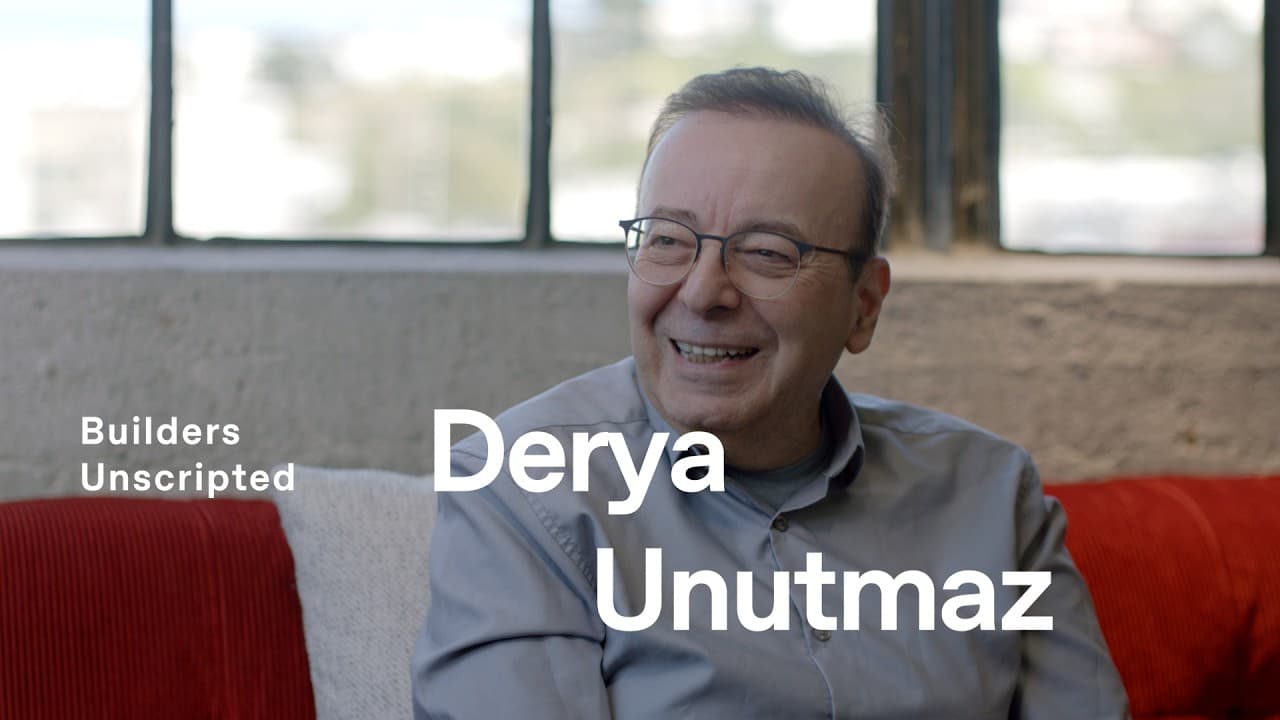
Derya, thank you so much for being here. Thank you. I'm very excited. Likewise. Very psyched to have you, because you're obviously a very unique kind of builder. Quite unlike the builders we usually talk to. You have a medical background, but you also work in, you know, bioscience, bioengineering, and you're pushing into AI in a way that, like mos... Read More
Key Insights
- AI helps biology by turning large, complex data into practical software tools
- The key to making AI useful in biology is building domain-specific apps that handle real lab workflows
- Flow cytometry data consists of many cells with multiple labels, requiring specialized visualization and gating techniques
- Codex can generate usable prompts and code to automate software tasks in biology
- Reasoning models can provide deeper insights by linking biology concepts to experimental design
- Early AI tools were less capable, but newer models now show meaningful reasoning that aids science
- A personal use-case is building an immune cell analysis panel to identify T cell subsets
- The approach combines engineering, biology, and AI to create repeatable, efficient workflows
- More videos from this channel:
- More from this channel: OpenAI
Install to Summarize YouTube Videos and Get Transcripts
Explore YouTube Video Summarizer or Get YouTube Transcript Extractor
Questions & Answers
Q: What is the first moment the guest realized biology would need AI
The guest explains that after medical school, the complexity of biological systems and the vast number of interacting parts made traditional methods insufficient. This realization occurred while doing biomedical research and recognizing that AI could help model and manage the trillions of reactions and processes in biology. This moment set the course for integrating AI with biomedical work.
Q: How did the guest first encounter AI reasoning models
The guest recalls OpenAI approaching them in September 2024 to test reasoning models like o1-preview. They describe prompting the model with a complex immunology question framed through a battle royale analogy between the immune system and cancer. The model produced a deep, insightful response that felt emotionally meaningful and marked a turning point toward trusting AI for reasoning in science.
Q: What shifted in the guest’s view after trying early AI models
The guest notes that GPT-4 era models were useful for literature search and drafting, but genuine trust in AI came when models began to reason about outcomes of experiments and design. That shift, from data retrieval to hypothesis and experiment planning, made AI feel indispensable for scientific work.
Q: How does Codex fit into the guest’s daily workflow
Codex is described as a morning tool that helps generate ideas and prototype applications quickly after coffee. The guest is a Codex addict, using it to brainstorm, code, and even run overnight iterations. This enables rapid development of apps and simulations that bridge biology and software.
Q: What is the example of a Codex-driven tool in flow cytometry
The guest shares building a flow cytometry analysis app where each dot represents a single cell with multiple fluorescent markers. The app allows gating to identify CD8 and CD4 positive cells and to compute their percentages. It supports selecting cell types and markers to tailor panels for immune cell analysis.
Q: What makes the flow cytometry tool user-friendly for a non-software engineer
Although not a software engineer by training, the guest describes composing prompts and leveraging Codex to assemble a usable interface. The tool visualizes hundreds of thousands of cell events, uses color-coded markers, and enables rapid selection of cell types, making complex data approachable for immunology research.
Q: What is the broader vision for AI in science according to the guest
The guest envisions AI-powered science as a collaboration where AI accelerates data analysis, simulation, and experimental design. The future involves more integrated tools that translate intricate biology into actionable software, enabling researchers to test ideas faster, simulate experiments, and iterate hypotheses with AI-guided reasoning.
Q: How does the immune system analogy help explain AI reasoning in biology
The analogy compares the immune system to a battle royale where various immune cells fight cancer. This helps frame how AI reasoning can coordinate diverse cell types and interactions to propose experimental strategies. It demonstrates that AI can model complex biological battles and propose new scenarios for investigation.
Summary & Key Takeaways
-
A researcher describes using Codex to create a custom flow cytometry analysis app that processes thousands of cell events and visualizes immune cell subsets.
-
The interview covers converting complex biological data into interactive panels and tools, enabling faster decision making in immunology research.
-
The discussion highlights how AI research tools, including reasoning models, can support hypothesis generation and experiment planning in biology.
Read in Other Languages (beta)
Share This Summary 📚
Summarize YouTube Videos and Get Video Transcripts with 1-Click
Try YouTube Summary with ChatGPT & Claude or YouTube Transcript Generator
Explore More Summaries from OpenAI 📚



Summarize YouTube Videos and Get Video Transcripts with 1-Click
Try YouTube Summary with ChatGPT & Claude or YouTube Transcript Generator