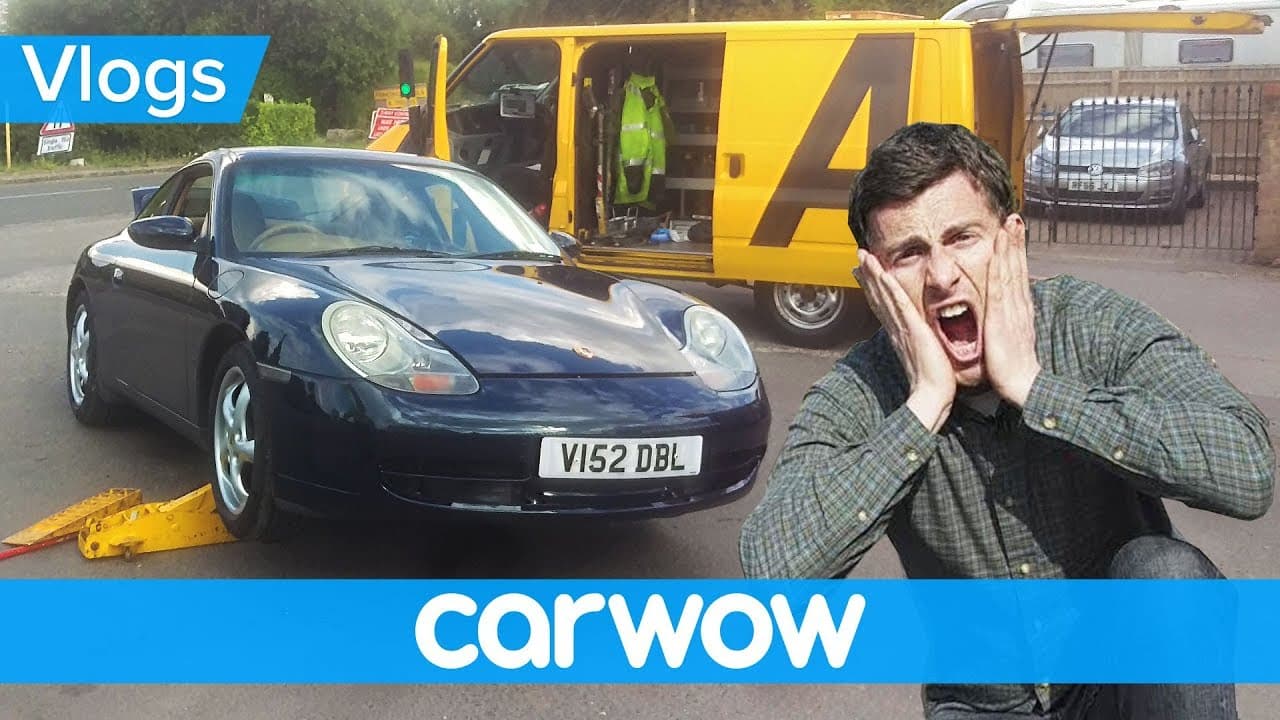
My Porsche 911 has broken. AGAIN! What's wrong this time? | Mat Vlogs
TL;DR
Porsche 911 noise issue resolved with repairs and upgrades.
Transcript
yes there's another problem with my Porsche 911 so I had to call the breakdown services out to it because do that it started making that noise it's all pulled over called the AAA they came and checked it out got it up on a jack have a look underneath and the man reckoned there might be a problem with my anti rod by thinking but he thinks they might... Read More
Key Insights
- The Porsche 911 experienced a mysterious noise, prompting a call to breakdown services and a visit to a specialist garage.
- Initial diagnosis suggested a problem with the anti-roll bar, but further inspection revealed no issues with it.
- A thorough inspection of nuts and bolts showed no obvious faults, leaving the technician initially stumped.
- Replacing rotted brace bars and installing a performance engine mount kit were part of the repair process.
- The source of the noise was traced to a collapsed top mount bushing, which was not apparent until the car's weight was applied.
- New Yokohama tires were fitted, enhancing the car's handling and driving experience.
- The repairs and upgrades resulted in improved car performance, eliminating the knocking noise and enhancing driving feel.
- The video emphasizes the importance of thorough diagnostics and high-quality parts in automotive maintenance.
Install to Summarize YouTube Videos and Get Transcripts
Explore YouTube Video Summarizer or Get YouTube Transcript Extractor
Questions & Answers
Q: What was the initial suspected cause of the noise in the Porsche 911?
The initial suspected cause of the noise in the Porsche 911 was thought to be an issue with the anti-roll bar. However, after a thorough inspection, it was determined that the anti-roll bar was not the source of the problem, prompting further investigation into other potential causes.
Q: What parts were replaced during the repair process?
During the repair process, several parts were replaced, including rotted brace bars and the installation of a performance engine mount kit. These replacements were part of the efforts to enhance the car's structural integrity and improve its overall performance, contributing to the resolution of the noise issue.
Q: How was the true cause of the noise eventually discovered?
The true cause of the noise was eventually discovered when the car's geometry was checked, and the technician observed the behavior of the suspension under load. It was found that a top mount bushing had collapsed, which was not apparent until the car's weight was applied, leading to the noise issue.
Q: What role did the new tires play in the car's performance?
The new Yokohama tires significantly improved the car's performance by enhancing handling and driving feel. The tires' design, featuring a firm sidewall, contributed to better response and stability, providing a more enjoyable driving experience and complementing the other repairs and upgrades made to the vehicle.
Q: Why was the initial diagnosis of the noise incorrect?
The initial diagnosis was incorrect because the breakdown service and the technician both inspected the car when it was raised, which did not reveal the collapsed top mount bushing. The issue only became apparent when the car's weight was applied, highlighting the importance of dynamic testing in automotive diagnostics.
Q: What was the main challenge faced by the technicians during the repair process?
The main challenge faced by the technicians was identifying the source of the noise, as initial inspections of the anti-roll bar and other components did not reveal any issues. The collapsed top mount bushing was only discovered through a detailed examination of the car's suspension under load, demonstrating the complexity of automotive diagnostics.
Q: How did the performance engine mount kit contribute to the car's improvement?
The performance engine mount kit contributed to the car's improvement by providing better torsional rigidity and reducing engine movement during acceleration and deceleration. This upgrade enhanced the car's overall stability and handling, making the driving experience more responsive and enjoyable, especially in combination with the new tires.
Q: What lessons can be learned from the repair experience of the Porsche 911?
The repair experience of the Porsche 911 highlights the importance of thorough diagnostics, the use of quality replacement parts, and the value of specialized knowledge in automotive maintenance. It demonstrates that complex issues may require multiple inspections and dynamic testing to accurately identify and resolve the root cause of problems.
Summary & Key Takeaways
-
The Porsche 911 developed a troubling noise, leading to an inspection by breakdown services and a visit to a specialist garage. Initial checks suggested an anti-roll bar issue, but further investigation was needed to identify the true cause.
-
Technicians conducted a detailed inspection, checking every nut and bolt, but found no immediate issues. Replacement of rotted brace bars and installation of a performance engine mount kit were part of the repair process.
-
The noise was eventually traced to a collapsed top mount bushing, which was not visible until the car's weight was applied. New tires were fitted, improving the car's handling and resolving the noise issue, resulting in a better driving experience.
Read in Other Languages (beta)
Share This Summary 📚
Summarize YouTube Videos and Get Video Transcripts with 1-Click
Try YouTube Summary with ChatGPT & Claude or YouTube Transcript Generator
Explore More Summaries from carwow 📚





Summarize YouTube Videos and Get Video Transcripts with 1-Click
Try YouTube Summary with ChatGPT & Claude or YouTube Transcript Generator