Will It Sink or Float?
TL;DR
The density of an object determines whether it will sink or float in water, with objects of low density floating and those of high density sinking.
Transcript
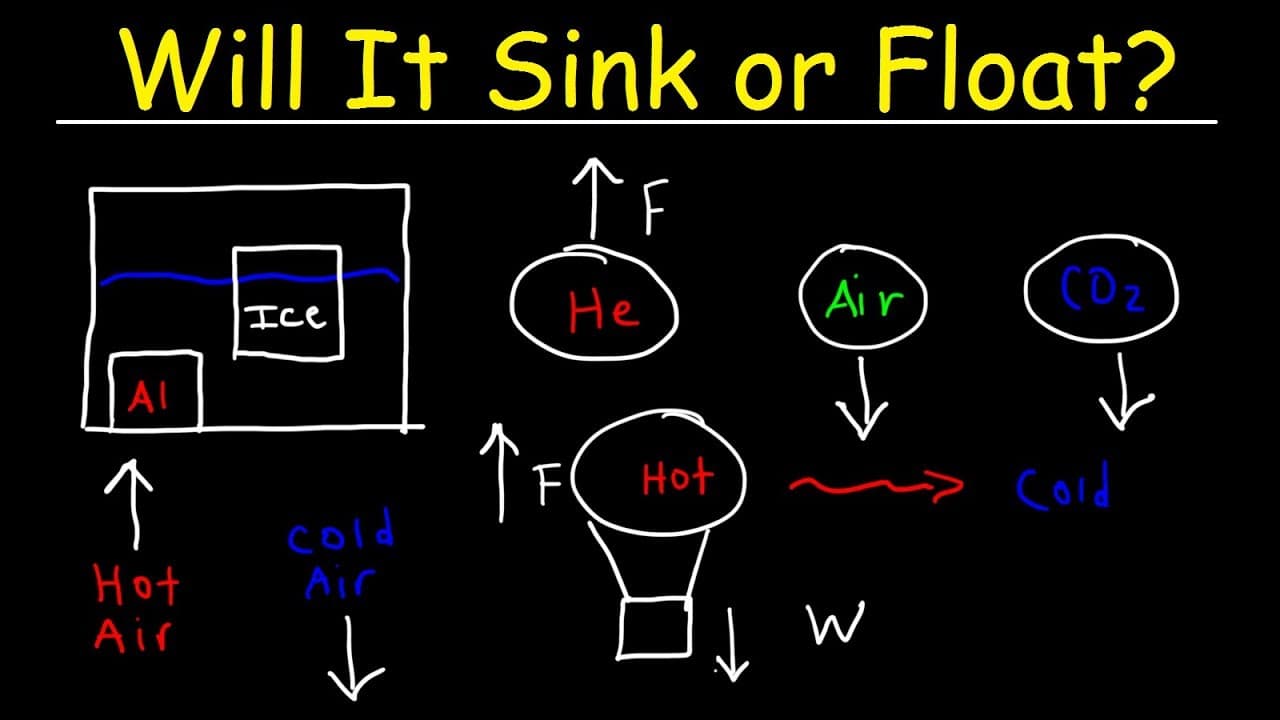
now let's say if we have a container with water and what's going to happen if we put an ice cube in this container if we put an ice cube we know that the ice cube will float however if we put let's say a chunk of aluminum in this uh container the chunk of aluminum will fall to the bottom it's going to sink whereas ice will float why is that why is ... Read More
Key Insights
- 💦 The density of an object determines whether it will sink or float in water.
- 💬 Helium-filled balloons float because helium is lighter than air, while carbon dioxide-filled balloons sink because carbon dioxide is heavier.
- 💬 Balloons filled with air will slowly sink due to the combined mass of the air and the balloon.
- 👱 Hot air rises and cold air sinks due to differences in density.
- 📈 The displacement of denser fluids by less dense fluids contributes to the upward movement of fluids.
- 💆 The density of an object is determined by its mass per unit volume.
- 🧑🏭 Density is a crucial factor in understanding the behavior of fluids.
Install to Summarize YouTube Videos and Get Transcripts
Explore YouTube Video Summarizer or Get YouTube Transcript Extractor
Questions & Answers
Q: Why do some materials float on water while others sink?
The density of an object determines whether it will float or sink. Objects with low density, like ice, float because they are less dense than water. Conversely, objects with high density, like aluminum, sink because they are heavier than water.
Q: Do balloons filled with different gases float or sink?
Helium-filled balloons float because helium is lighter than air. Carbon dioxide-filled balloons sink because carbon dioxide is heavier than air. Balloons filled with air will slowly sink due to the combined mass of the air and the balloon itself.
Q: What causes hot air to rise and cold air to sink?
Hot air rises because it is lighter than cold air. When heat is added, air molecules move apart, resulting in lower density. Cold air, on the other hand, sinks because it is heavier. Cold air has a higher density due to its molecules being closer together.
Q: How does density affect the movement of fluids?
Density plays a crucial role in determining whether fluids, such as water and air, will rise or sink. Less dense fluids, like hot air, rise because they are pushed upward by the surrounding denser fluids, such as cold air. The displaced denser fluid exerts an upward force on the less dense fluid.
Summary & Key Takeaways
-
Objects with low density, like ice, will float on water because they are less dense than water.
-
Objects with high density, like aluminum, will sink in water because they are heavier than water.
-
The density of air is determined by its average molar mass, with helium being lighter than air and carbon dioxide being heavier. Balloons filled with helium rise, while those filled with carbon dioxide sink. A balloon filled with air will slowly sink due to the combined mass of the air and the balloon itself.
Read in Other Languages (beta)
Share This Summary 📚
Summarize YouTube Videos and Get Video Transcripts with 1-Click
Try YouTube Summary with ChatGPT & Claude or YouTube Transcript Generator
Explore More Summaries from The Organic Chemistry Tutor 📚





Summarize YouTube Videos and Get Video Transcripts with 1-Click
Try YouTube Summary with ChatGPT & Claude or YouTube Transcript Generator