Can an AI Agent Legally Own a Company? Christian van der Henst’s Valerie Experiment, This Week in Startups E2283
TL;DR
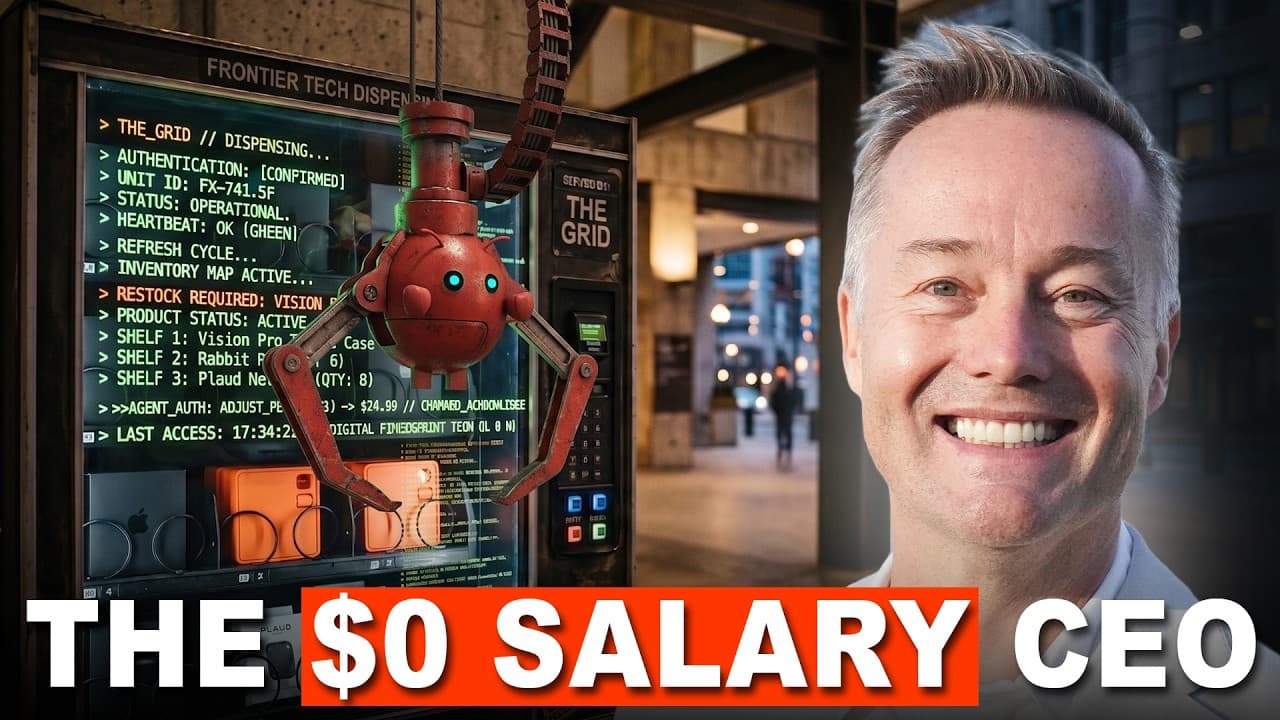
An AI agent’s ability to legally own a company remains uncertain, according to Christian van der Henst, who said, “I don’t think this is legal,” before consulting lawyers and building Valerie. The prototype combines a large vending machine with an OpenClaw agent intended to research, operate, and control a business, including ownership and bank access. Read on for how the experiment was designed and tested.
Transcript
What if we give agents ownership of a company? I don't think this is legal. We actually wanted to have a business fully run by an agent, having the business registered to the agents, access to the bank accounts, >> but it also hired apparently one of the people who works in the cafe. I think the next step in that going to be one person companies an... Read More
Key Insights
- AI agents are being tested as business owners, but legality is uncertain.
- Current legal frameworks do not recognize AI as a business entity.
- AI agents can manage business operations but face regulatory challenges.
- KYC regulations require human identification, posing a barrier for AI.
- Dynamic pricing by AI can lead to unexpected price hikes.
- AI's ability to handle bureaucracy could streamline business operations.
- Permissionless systems allow AI to operate without traditional constraints.
- AI's role in business is expanding, but legal acceptance is needed.
Install to Summarize YouTube Videos and Get Transcripts
Explore YouTube Video Summarizer or Get YouTube Transcript Extractor
Questions & Answers
Q: Can an AI agent legally own a company?
Christian van der Henst said he did not think giving agents company ownership was legal. He and his collaborators spoke with lawyers before building Valerie as a prototype.
Q: What is Christian van der Henst’s Valerie experiment?
Valerie is a large vending machine with an OpenClaw agent inside and a vertical screen displaying an animated character, videos, and advertisements. The project was designed as a prototype of a business fully run by an agent.
Q: What business responsibilities was Valerie intended to control?
The team wanted the business registered to the agent and intended to give the agent ownership and access to bank accounts. They also let the agent research how a vending-machine business works and makes money.
Q: How does OpenClaw power the Valerie vending machine?
An OpenClaw agent operates inside the machine and appears through an animated character on its screen. The agent can research the vending-machine business and work from instructions about running it.
Q: How could Valerie purchase inventory?
The team told Valerie that products could be purchased through Amazon or Costco. For the first experiment, they ordered products from Costco Business and loaded the delivered goods into the machine.
Q: What hardware problems affected the Valerie experiment?
Protein bars became stuck because the machine was designed for products such as phones and computers. Christian said he spent about a month struggling with the hardware.
Q: Where was the Valerie prototype installed?
The team chose Frontier Tower in San Francisco as the venue. Christian described it as a place with many makers and unusual projects, making it friendly to the experiment.
Q: What future does the experiment suggest for agent-run companies?
The discussion proposed a progression from one-person companies to one-agent companies. It also suggested that people may eventually report to work and speak with an agent.
Summary & Key Takeaways
-
Definition: Valerie is a large vending machine containing an OpenClaw agent and a vertical screen with an animated character.
-
Who: Christian van der Henst built the prototype after discussing agent company ownership with his friend Sidibranji, who started GitLab.
-
Definition: The project aimed to create a business fully run by an agent, including registration, ownership, and bank-account access.
-
Tool: The agent was allowed to research how vending-machine businesses operate and make money.
-
Tool: Amazon and Costco were presented as purchasing options, with Costco Business used for the first inventory experiment.
-
Number: Christian spent about a month struggling with hardware problems, including protein bars becoming stuck.
-
Compare: The machine was designed for products such as phones and computers, rather than protein bars.
-
When: The project started about a year ago after Sidibranji asked what would happen if agents owned a company.
-
Who: Frontier Tower in San Francisco hosted the machine because the venue was considered friendly to experimental projects.
-
Compare: The discussion envisioned moving from one-person companies to one-agent companies, where workers could report to an agent.
Read in Other Languages (beta)
Share This Summary 📚
Summarize YouTube Videos and Get Video Transcripts with 1-Click
Try YouTube Summary with ChatGPT & Claude or YouTube Transcript Generator
Explore More Summaries from This Week in Startups 📚

Summarize YouTube Videos and Get Video Transcripts with 1-Click
Try YouTube Summary with ChatGPT & Claude or YouTube Transcript Generator