What Are the Economic Effects of Immigration?
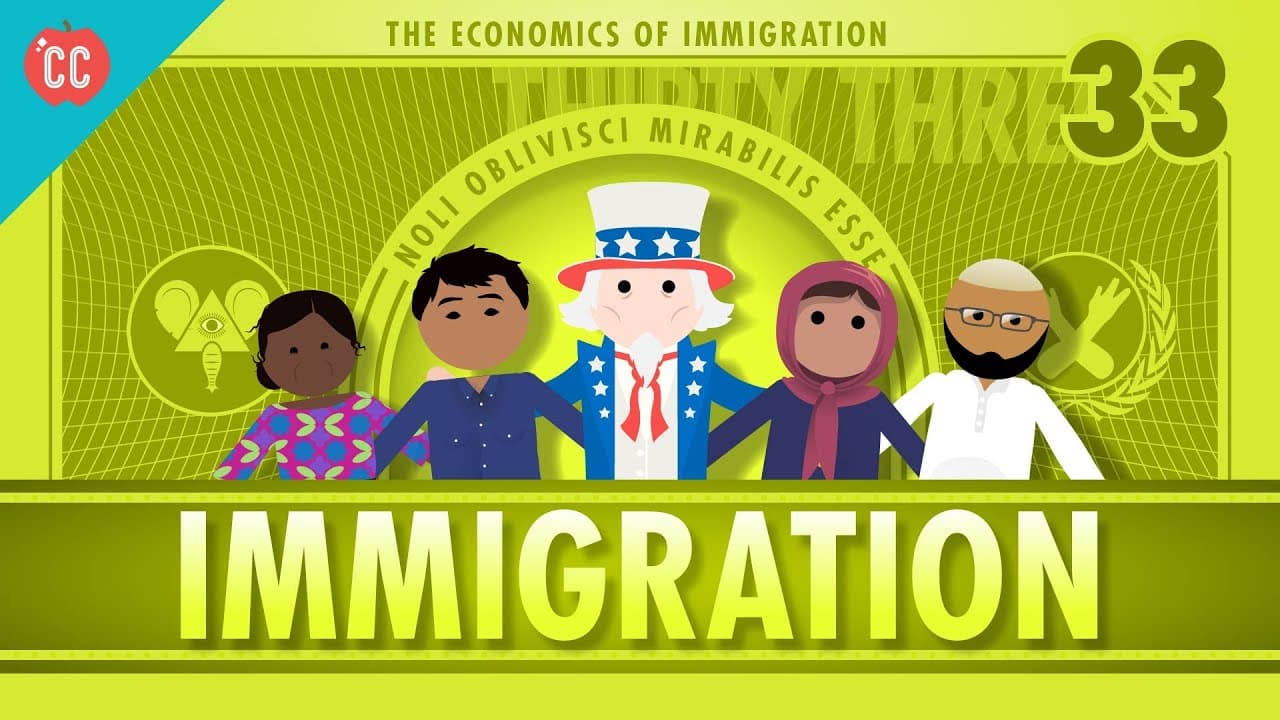
TL;DR
Immigration generally benefits national economies by increasing GDP and productivity. While it can temporarily lower wages due to a higher labor supply, the long-term effects are positive, especially from high-skill immigrants who drive innovation and create jobs. Legalizing undocumented immigrants could further enhance economic growth and tax revenues.
Transcript
Hi, I’m Adriene Hill, this is Crash Course Economics, and today we’re going to talk about Immigration and how it affects economies. So, that poem on the statue of liberty? The one that reads in part, “Give me your tired, your poor, Your huddled masses yearning to breathe free, The wretched refuse of your teeming shore.” That’s some lofty stuff, rig... Read More
Key Insights
- Immigration historically results from economic opportunities, as seen during the Great Atlantic Migration when millions moved to the US for better prospects.
- Technological advancements, like improved transportation, have historically facilitated large-scale migrations, impacting economies positively by providing labor for growing industries.
- Most economists agree that immigration increases GDP and productivity, though it may initially lower wages due to increased labor supply.
- The Immigration Surplus model suggests that population growth through immigration eventually leads to higher wages and economic growth.
- High-skill immigrants often drive innovation, registering a significant percentage of new patents and contributing to revenue increases in companies.
- Legalizing undocumented immigrants could boost the economy by increasing tax revenues and creating more jobs, as supported by various studies and think tanks.
- Public sentiment on immigration in the US is becoming more positive, with younger generations viewing immigrants as economic assets.
- Despite economic benefits, immigration remains contentious due to security concerns and the legal status of undocumented immigrants.
Install to Summarize YouTube Videos and Get Transcripts
Explore YouTube Video Summarizer or Get YouTube Transcript Extractor
Questions & Answers
Q: What historical migration trends are discussed?
The video discusses the Great Atlantic Migration, where millions of Europeans moved to the Americas in search of better economic opportunities. This migration was facilitated by technological advancements like steamships, which reduced migration costs. The influx of immigrants supported the growing industrial economy of the US by providing necessary labor.
Q: How do economists view the impact of immigration on national economies?
Most economists agree that immigration is beneficial for national economies, as it increases GDP and productivity. While there may be short-term negative effects such as lower wages due to increased labor supply, the long-term benefits include higher wages and economic growth driven by population increases and demand for goods.
Q: What is the Immigration Surplus model?
The Immigration Surplus model, discussed by economist George Borjas, suggests that population growth through immigration increases the demand for goods, leading to more hiring and eventually higher wages. While initial effects may include lower wages for existing workers, the overall economic growth from immigration outweighs these costs.
Q: What role do high-skill immigrants play in the economy?
High-skill immigrants are significant drivers of innovation and economic growth. They contribute to a substantial percentage of new patents and can lead to increased revenues for companies. For example, the expansion of H1-B visas for high-skill workers resulted in a 15% revenue increase for participating companies, highlighting the economic benefits of high-skill immigration.
Q: What are the potential economic impacts of legalizing undocumented immigrants?
Legalizing undocumented immigrants could have positive economic impacts by bringing them into the tax base and increasing their wages. Studies suggest that this could result in more job creation, increased consumer spending, and overall economic growth. The Congressional Budget Office projected that immigration reform could offset costs by a two-to-one ratio through increased revenue.
Q: How has public sentiment towards immigrants changed in the US?
Public sentiment towards immigrants in the US has shifted positively over the years. A 2015 Pew Research Center study found that about half of US adults now see immigrants as strengthening the economy, compared to only 30% in 1994. Younger generations, in particular, hold more positive views about immigrants' contributions to the country.
Q: What are some arguments against immigration despite its economic benefits?
Despite the economic benefits, some argue against immigration due to security concerns and the legal status of undocumented immigrants. Critics worry about illegal items being smuggled across borders and believe that people should not be rewarded with citizenship for breaking immigration laws. These concerns contribute to the ongoing debate on immigration policy.
Q: What consensus exists among think tanks regarding immigration?
There is a rare consensus among think tanks of varying political leanings that immigration is economically beneficial. Organizations like the Center for American Progress, Americans for Tax Reform, and the Heritage Foundation agree that immigrants boost national output and provide a net economic benefit, highlighting the broad support for immigration's positive economic impact.
Summary & Key Takeaways
-
The video discusses the economic effects of immigration, highlighting that most economists see it as beneficial. Historical migration trends show that people move for better economic opportunities. Technological advances have facilitated migration, helping industrial economies grow.
-
While immigration can initially lower wages due to increased labor supply, it ultimately boosts GDP and productivity. High-skill immigrants, in particular, drive innovation and economic growth, contributing significantly to new patents and company revenues.
-
Legalizing undocumented immigrants could positively impact the economy by increasing tax revenues and job creation. Public sentiment in the US is shifting towards a more positive view of immigrants, especially among younger generations, despite ongoing security concerns.
Read in Other Languages (beta)
Share This Summary 📚
Summarize YouTube Videos and Get Video Transcripts with 1-Click
Try YouTube Summary with ChatGPT & Claude or YouTube Transcript Generator
Explore More Summaries from CrashCourse 📚






Summarize YouTube Videos and Get Video Transcripts with 1-Click
Try YouTube Summary with ChatGPT & Claude or YouTube Transcript Generator