How to Make Hard Decisions With Less Pressure
TL;DR
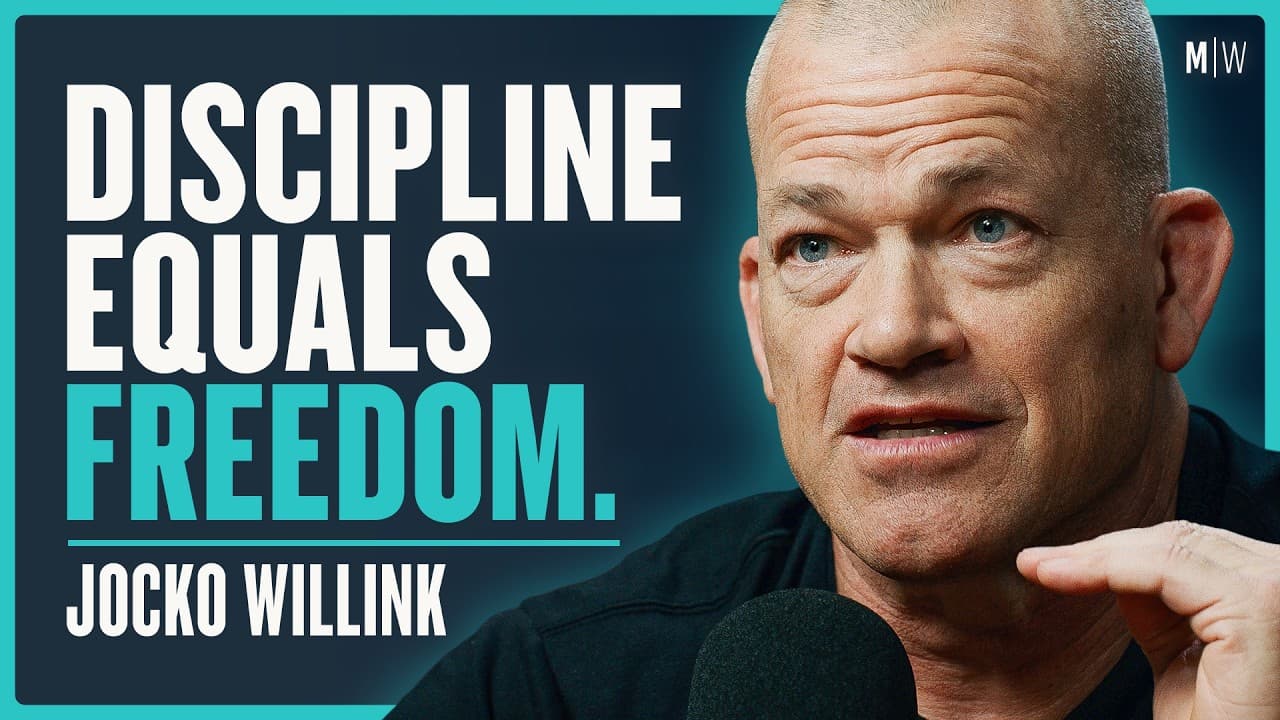
Confidence grows fastest by admitting you don't know something instead of faking it. Saying 'I'm not sure what to do here' lowers self-expectation, invites better ideas from experienced people, and raises their respect for you. Combined with prioritizing one thing at a time and accepting trade-offs, this savage-simple mindset makes hard decisions easier.
Transcript
I know that you're a fan of the Thomas Soul quote, there are no solutions, only trade-offs. What's that mean to you? That you're never going to completely solve anything in your life or in the world. And there's always going to be compromises that you have to make. And if you aren't willing to make those compromises or you don't keep your mind open... Read More
Key Insights
- There are no solutions, only trade-offs. You will never completely solve anything in life, so keeping your mind open to compromises prevents the real problems that come from refusing to make them.
- You can be anything you want, but you can't be everything you want. Spreading yourself too thinly across many things means you won't become truly great at any of them.
- Prioritize and execute is a law of combat taught in SEAL teams and now to businesses. You must identify the single biggest priority at any given moment, whether family, business, or health, since you can't do them all at once.
- Detaching and taking a step back is how you assess whether your attention is in the right place. Without detaching, people work until they have no family left, or over-focus on family and lose their job.
- Health is foundational and should never be fully abandoned. Jocko hasn't taken more than two or three days off working out in decades, and abandoning fitness for a month or two is when injuries and backsliding start.
- Decentralized command, the fourth law of combat leadership, means you can't do everything yourself. You must let subordinate leaders step up and take charge if you want to execute on more than one thing.
- Confidence comes largely from being okay saying 'I'm not exactly sure what to do right now.' Admitting you don't know everything makes the world easier and is a fast way to gain real confidence.
- Faking confidence is problematic, while genuine humility raises others' respect. Handing the lead to a more experienced person, rather than pretending to know more, increases rather than decreases their regard for you.
Install to Summarize YouTube Videos and Get Transcripts
Explore YouTube Video Summarizer or Get YouTube Transcript Extractor
Questions & Answers
Q: What does 'there are no solutions, only trade-offs' mean?
It means you're never going to completely solve anything in your life or in the world, and there are always compromises you have to make. Putting more effort into one area takes effort away from another, so you can't do everything at once. If you aren't willing to make those compromises, or you don't keep your mind open to them, you're going to run into real problems. Recognizing this keeps you flexible instead of stuck.
Q: How do you decide what to prioritize when everything feels important?
You have to figure out what the single biggest priority is at any given time, recognizing you can't do them all simultaneously. Certain things become higher priority at certain moments while others pick up later. Sometimes family needs to be the priority, sometimes a business, another business, or health. Jocko calls this prioritize and execute, a law of combat from the SEAL teams that he now teaches to businesses: identify the priorities, then execute on them one at a time.
Q: How can people be more confident in their decisions?
Some confidence comes from experience, but one of the most profound moves is becoming okay with saying 'I'm not exactly sure what to do right now.' No one knows everything or makes all perfect decisions, so admitting you don't know is a fast way to gain confidence. If a boss says he's unsure, someone experienced can suggest a move and the team gets started. Pretending to be confident when you're not is problematic and harder to sustain.
Q: Why does admitting you don't know something make you more confident?
Admitting you don't know lowers the bar of self-expectation, but not to a negative point of low standards. Jocko explains that if he worried the whole drive to an interview about being asked something he didn't know, his confidence would be shaken. Instead, being ready to say 'I'm not 100% sure about that, what do you know?' is liberating. It removes paranoia and pressure, letting you engage openly rather than pretending to know what you're talking about.
Q: What is decentralized command and why does it matter?
Decentralized command is the fourth law of combat leadership, meaning you can't do everything yourself and must allow subordinate leaders to step up, lead, and make things happen. If something is going on with your family, hopefully your spouse takes action; in a business, you assign a plan to someone in a department who takes charge and runs with it. Jocko calls it mandatory if you're going to execute on more than one thing in life, because one person can only do so much at a time.
Q: How important is health when you're busy launching a business?
Health is foundational because everything else you're trying to do is built on top of it. When launching a new business you probably won't be in your best condition, but you shouldn't totally walk away from health at any time. Jocko says he hasn't taken more than two or three days off working out in decades, aside from neck surgery recovery, and even then returned to his garage gym after three days. Abandoning health for a month or two is where injuries start and you really go backwards.
Q: Why does handing lead to a more experienced person increase respect?
In the military you can be in charge of people with more experience than you, and flexing to act like you know more makes you uncomfortable and looks worse. Jocko gives the example of being the senior guy but telling someone who has run those operations before to take the lead. When asked whether respect goes up or down, the answer is it goes up. Pretending to know what you're doing when the experienced person can clearly see you don't makes you look like an idiot.
Q: How do you know when to shift your focus to a different priority?
You have to detach and take a step back to assess what's going on in the world and in your own life. Without detaching, you won't recognize what's happening, which is how someone works until they have no family left or over-focuses on family and loses their job. You can get down in the weeds of a task for a day, week, or month, but then you must step back and look. This lesson is usually learned through pain, by letting your foot off the gas and seeing it go badly.
Summary & Key Takeaways
-
Jocko explains that there are no solutions, only trade-offs, meaning nothing is ever fully solved and effort placed in one area is taken from another. Overachievers feel pain watching something stagnate, but you must weigh priorities because you cannot grow everything simultaneously all the time.
-
Prioritize and execute, a SEAL law of combat, requires identifying the single biggest priority, whether family, a business, health, or a section within a business, and shifting focus as circumstances change. Decentralized command lets subordinate leaders take charge so you can execute on more than one thing.
-
Confidence comes from experience but grows fastest by admitting 'I'm not sure what to do here.' This lowers self-expectation, removes the paranoia of being asked something unknown, and invites better ideas. Genuine humility, like handing lead to an experienced person, raises respect rather than lowering it.
Read in Other Languages (beta)
Share This Summary 📚
Summarize YouTube Videos and Get Video Transcripts with 1-Click
Try YouTube Summary with ChatGPT & Claude or YouTube Transcript Generator
Explore More Summaries from Chris Williamson 📚






Summarize YouTube Videos and Get Video Transcripts with 1-Click
Try YouTube Summary with ChatGPT & Claude or YouTube Transcript Generator