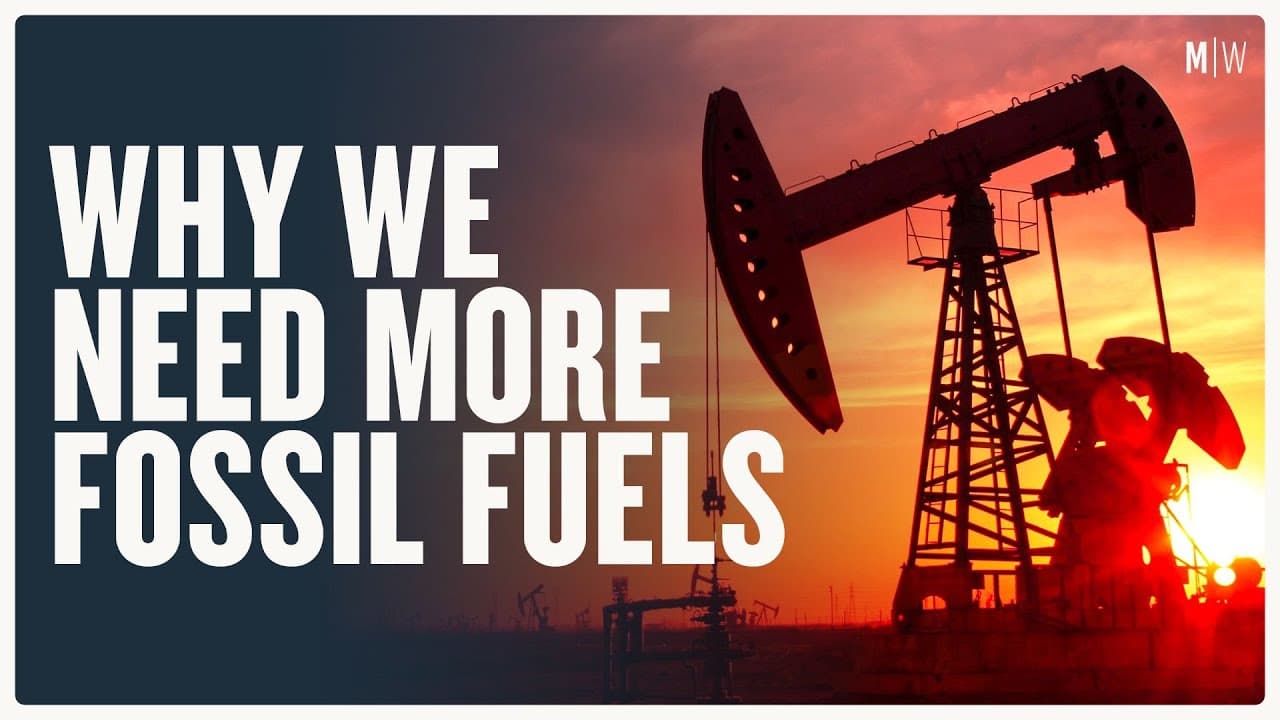
Can Fossil Fuels Save The World? - Alex Epstein | Modern Wisdom Podcast 324
TL;DR
Alex Epstein argues that fossil fuels can support human flourishing because energy powers machines, productive work and every other industry. He says the climate debate requires a generalist to weigh climate science, economics and whether solar and wind can replace fossil fuels, while philosophy exposes the values behind energy choices. Read on for his case about energy, nuclear power and clearer thinking.
Transcript
we've lost any real focus on human flourishing so we don't even notice how good the world is and when we talk about say polar bears right i love polar bears they're actually my favorite animal but it's crazy that we talk about polar bears like this polar brass to move from one piece of ice to another and that should make us cry but three billion pe... Read More
Key Insights
- "philosophy deals you can think of it as three things it deals with our methods our assumptions and our values" (1:20)
- "energy is the industry that powers every other industry and so our thinking about energy affects uh everything" (3:01)
- "energy is what powers our machines and our machines are what accomplish just about all the productive work that exists in the world" (3:07)
- "so you need you need some sort of generalist who has hopefully good judgment to then survey the relevant experts" (4:40)
Install to Summarize YouTube Videos and Get Transcripts
Explore YouTube Video Summarizer or Get YouTube Transcript Extractor
Questions & Answers
Q: Can fossil fuels save the world?
Alex Epstein argues that fossil fuels support human flourishing by supplying the energy that powers machines, productive work and other industries. He also says decisions that raise oil prices have ramifications throughout the world.
Q: Why does a philosopher study fossil fuels and energy?
Epstein describes philosophy as the study of methods, assumptions and values, which shape every thought process. He became interested in energy because it powers every other industry, so thinking about energy affects everything.
Q: Why is the world focused on renewable energy?
Epstein argues that the preference for renewable energy is ultimately a value issue. He says people value sources that can be repeated continuously or that draw on supposedly natural forces such as the sun and wind.
Q: Why does Alex Epstein favor cost-effective energy as a standard?
He questions why energy discussions prioritize whether a source is renewable instead of whether it is cost-effective or low carbon. His point is that choosing the standard involves moral values, not only scientific findings.
Q: What does Alex Epstein say about nuclear energy?
Epstein describes nuclear power as a non-carbon energy source. He believes it is much more promising than solar and wind, despite public opposition to it.
Q: Why does the fossil fuels and climate change debate require an interdisciplinary perspective?
Epstein says the issue includes how rising CO2 levels affect the global climate system, along with the economy and energy economics. It also requires examining whether solar and wind can replace what fossil fuels do.
Q: What role can a generalist play in the climate debate?
A generalist can survey specialists across the relevant fields and exercise judgment about their findings. Epstein says no one will be a specialist in every element of an interdisciplinary question.
Q: How does Alex Epstein connect energy with productive work?
He says energy powers machines, and machines accomplish just about all productive work. For that reason, a change such as doubling the price of oil would have ramifications across the world.
Summary & Key Takeaways
-
Fossil fuels are crucial for human flourishing as they provide cost-effective energy, powering our machines and industries, and improving the overall quality of life.
-
Nuclear energy is a promising alternative to fossil fuels, offering safe and efficient energy production. It has the potential to replace fossil fuels and mitigate environmental concerns.
-
The opposition to fossil fuels and nuclear energy stems from a philosophy that prioritizes minimizing human impact on nature, rather than maximizing human flourishing.
Read in Other Languages (beta)
Share This Summary 📚
Summarize YouTube Videos and Get Video Transcripts with 1-Click
Try YouTube Summary with ChatGPT & Claude or YouTube Transcript Generator
Explore More Summaries from Chris Williamson 📚





Summarize YouTube Videos and Get Video Transcripts with 1-Click
Try YouTube Summary with ChatGPT & Claude or YouTube Transcript Generator