Why IoT Security Must Cover Device Resale
TL;DR
IoT security must protect devices throughout ownership transfer and resale, not just during initial setup and use. Connected cars, home automation systems, and smart hubs can remain linked to identities or access privileges after transfer, even when the original owner deauthorizes accounts, removes personal information, and performs a factory reset.
Transcript
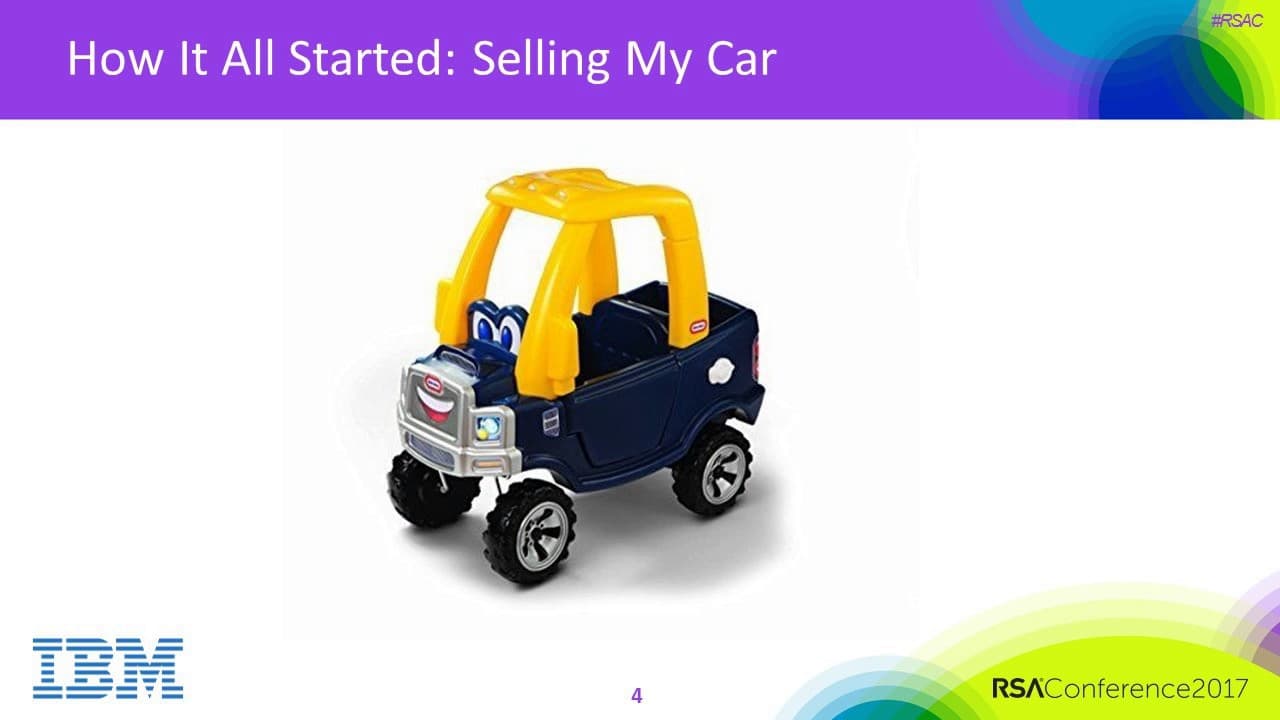
Hello, my name is Charles Henderson. I'm the global head of IBM's X-Force Red. X-Force Red is IBM's elite security testing division. I've been a researcher and a penetration tester throughout my career. One of the things that's always interested me in security is the, the little guy, the, the security vulnerability that no one's paying attention to... Read More
Key Insights
- IoT security is heavily focused on the first owner, including enrollment, user provisioning, device setup, passwords, communications, and session management. This leaves the later stages of device ownership with far less scrutiny from manufacturers, marketers, and the security industry.
- IoT devices are not necessarily disposable products. Connected cars, home automation equipment, and devices installed in a house may be resold, transferred to another person, or remain in place when the larger property changes ownership.
- Ownership transfer is a security boundary that deserves dedicated controls. Removing the first owner's information does not by itself answer whether remote access, identity associations, or privileges have been completely revoked across every connected service associated with the device.
- A connected car can expose capabilities beyond ordinary vehicle operation. Henderson's mobile application supported geolocation, climate control, navigation control, horn activation, and remote unlocking, making correct identity management and access termination important when the vehicle changes hands.
- Factory resets are primarily visible protections for locally stored information. Henderson reset his car's entertainment unit to remove phone numbers and personal information, but his later experience showed that broader post-sale security questions remain after local data has been cleared.
- Physical-key accounting is a security practice dealers already understand. The dealer collected Henderson's keys and checked whether additional keys had been issued, yet comparable attention was not necessarily applied to digital identities, connected accounts, and remote-control privileges.
- IoT life-cycle weaknesses extend beyond connected cars. After examining his vehicle's post-sale behavior, Henderson expanded the research to home automation, smart hubs, and other forms of IoT, where he found similar shortcomings in long-term security strategy.
- Complete IoT security requires attention to the beginning, middle, and end of ownership. Enrollment speed and easy ecosystem access are incomplete achievements unless manufacturers also provide reliable identity management and access-control processes for resale and transfer.
Install to Summarize YouTube Videos and Get Transcripts
Explore YouTube Video Summarizer or Get YouTube Transcript Extractor
Questions & Answers
Q: Why must IoT security cover the full device life cycle?
IoT products can remain in service after their first owner sells or transfers them. A connected car may be traded in, while home automation equipment may remain installed when a house is sold. Security therefore must address not only enrollment and everyday use, but also the reliable removal of identities, accounts, permissions, personal information, and remote access during ownership changes.
Q: What security risks arise when an IoT device is resold?
Resale creates the possibility that digital relationships established for the original owner will persist after the physical product changes hands. The transcript identifies remote vehicle functions such as geolocation, climate control, navigation control, horn activation, and unlocking. If identity management and access control do not handle transfer correctly, an earlier owner may remain associated with capabilities intended for the new owner.
Q: How did the connected-car experience begin the IoT research?
Henderson began the research after trading a connected car back to its original factory dealer. He had studied the security of its connected features but had concentrated on initial provisioning and application behavior. Events after the sale made him recognize that the end of ownership had received insufficient attention, prompting broader research into the life cycles of connected vehicles, home automation systems, and smart hubs.
Q: What steps did Henderson take before selling his connected car?
Henderson deauthorized his accounts, made sure the vehicle no longer contained his user information, and performed a full factory reset on the entertainment unit. His goal was to remove stored details such as phone numbers and personal information. The dealer also collected the physical keys and checked whether any additional keys had been issued so that every key could be accounted for.
Q: Why is a factory reset insufficient for IoT ownership transfer?
A factory reset can remove personal information stored on a local component, as Henderson intended when resetting his car's entertainment unit. However, the wider connected environment may also include mobile applications, remote services, user identities, account authorizations, and access privileges. The transfer process must therefore verify the termination of these relationships instead of treating deletion of locally visible data as the complete security solution.
Q: Which connected-car features make access control important?
The connected car included navigation, satellite radio, and a live-assistance function. Its mobile application could also provide geolocation and control climate settings, navigation, the horn, and remote unlocking. Because these features reveal information or permit remote actions, access control must accurately identify the authorized owner and reliably remove permissions when the vehicle is sold or transferred.
Q: What did the dealer understand about physical security?
The dealer understood that every physical vehicle key needed to be accounted for before resale. It collected the keys Henderson provided and checked whether additional keys had previously been issued. Henderson contrasts this established physical-security practice with the limited attention given to the digital side of ownership transfer, including connected accounts, application access, identities, and remote permissions associated with an IoT product.
Q: How should manufacturers improve IoT ownership transfers?
Manufacturers should treat resale and transfer as planned stages of the device life cycle. Their processes should address identity management and access control after the first owner's use ends, including deauthorization of accounts and removal of personal information. The central requirement is to examine the entire ownership life cycle rather than concentrating security resources almost exclusively on enrollment, initial setup, and ordinary use.
Summary & Key Takeaways
-
IoT manufacturers and security professionals concentrate heavily on initial ownership, including user provisioning, device setup, passwords, communications, and session management. Far less attention is given to the end of that ownership period, even though connected products are transferred, resold, or left installed when homes and vehicles change owners.
-
Henderson's investigation began when he traded a connected car back to its original factory dealer. Before the sale, he deauthorized his accounts, removed personal information, reset the entertainment unit, and helped account for every physical key. What happened after the sale exposed a broader weakness in connected-device ownership management.
-
The connected-car experience led Henderson to examine home automation, smart hubs, and other IoT products. He concluded that inadequate long-term security was not limited to vehicles. Effective protection requires identity management and access control across the complete device life cycle, including what happens after an original owner's access should end.
Read in Other Languages (beta)
Share This Summary 📚
Summarize YouTube Videos and Get Video Transcripts with 1-Click
Try YouTube Summary with ChatGPT & Claude or YouTube Transcript Generator
Explore More Summaries from RSAC Cybersecurity 📚
Summarize YouTube Videos and Get Video Transcripts with 1-Click
Try YouTube Summary with ChatGPT & Claude or YouTube Transcript Generator