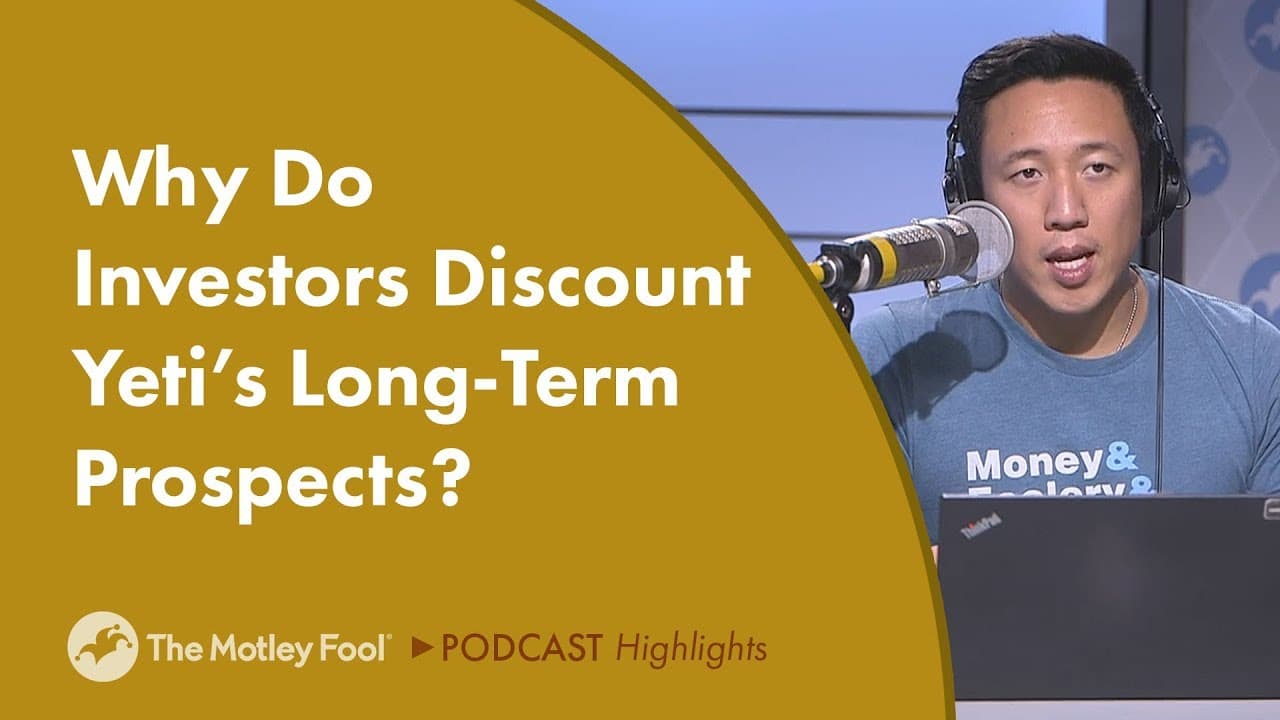
Why Do Investors Discount Yeti’s Long-Term Prospects?
TL;DR
Investors discount Yeti’s long-term prospects because its 2017 revenue fell about 22%, net income dropped 69%, and its recent growth raised concerns about fad-like popularity and staying power. Excess partner inventory, retail pressure, a delayed Bass Pro Shops–Cabela’s merger, and competing-product fire sales hurt results, while shares closed below the $18 IPO price on their first trading day. Read on to see Yeti’s response and the evidence behind investor caution.
Transcript
Vincent Shen: Something else that I think is worth mentioning in recent results. We talked about pretty solid growth in the first half of 2018. Revenue growth came in around 34% year over year. But there's a blip, also, in 2017 that I think really worried investors looking at the story, evaluating its long-term prospects. We saw the company putting... Read More
Key Insights
- 🤨 Yeti experienced a decline in revenue in 2017, raising concerns among investors about its long-term prospects.
- 🧑🏭 The decline in revenue was attributed to factors such as excess inventory, delayed mergers, negative retail trends, and lawsuits against competitors.
- 🈹 Yeti implemented several initiatives, including discounting products and focusing on digital channels, to stabilize and regrow its sales.
Install to Summarize YouTube Videos and Get Transcripts
Explore YouTube Video Summarizer or Get YouTube Transcript Extractor
Questions & Answers
Q: Why do investors discount Yeti’s long-term prospects?
Yeti’s revenue fell about 22% in 2017, while net income declined 69%, undermining confidence in its long-term growth. Investors also worried that the brand’s popularity might be fad-like and that it might not retain its position as a top-of-the-line cooler and drinkware brand.
Q: What caused Yeti’s revenue to decline in 2017?
Several headwinds occurred together: partners accumulated excess inventory, the Bass Pro Shops–Cabela’s merger was delayed, and negative retail trends affected outlets. Yeti’s successful lawsuits also led competitors to liquidate imitative products through fire sales, which hurt Yeti’s sales.
Q: What evidence showed investor concern during Yeti’s IPO?
Yeti priced its IPO at $18 per share, below the proposed $19–$21 range. On its first trading day, October 25, shares closed at $17, and as of the recording they had not exceeded the original $18 price.
Q: How did Yeti respond to its sales decline?
Yeti used pricing actions, described in the discussion as discounting, to stimulate demand while saying its premium positioning remained intact. It also emphasized its direct-to-consumer channel, particularly digital channels, and increased engagement with Dick’s Sporting Goods.
Q: How did Yeti change its retailer network?
Yeti removed about 1,100 underperforming retailers, leaving approximately 4,800 retailers. The goal was to eliminate inefficient retailers that were not sufficiently profitable for the company.
Q: How did Yeti improve manufacturing and product development?
Yeti reduced the number of manufacturers in its production base to negotiate better deals with those remaining. It also added executives and employees, including staff working on product development.
Q: How did Yeti expand its product offerings?
Yeti increased the number of products it offered, especially in drinkware and other categories. The expanded range included T-shirts, hats, and pet bowls.
Q: How much of Yeti’s IPO proceeds went to the company?
The IPO deal size was $280 million, but Yeti received about $37 million of the proceeds. The remaining proceeds went to Cortec, whose ownership declined from about 70% to about 55%.
Summary & Key Takeaways
-
Yeti experienced a decline in revenue in 2017 due to excess inventory, delayed mergers, negative retail trends, and lawsuits against competitors.
-
To address these challenges, Yeti has taken initiatives such as discounting products, focusing on digital channels, and increasing engagement with Dick's Sporting Goods.
-
The company has also rationalized its manufacturing base, added executives and employees, and expanded its product offerings in categories like drinkware, apparel, and pet accessories.
Read in Other Languages (beta)
Share This Summary 📚
Summarize YouTube Videos and Get Video Transcripts with 1-Click
Try YouTube Summary with ChatGPT & Claude or YouTube Transcript Generator
Explore More Summaries from Industry Focus - Deep Dives into the Stock Market's Biggest Sectors 📚
Summarize YouTube Videos and Get Video Transcripts with 1-Click
Try YouTube Summary with ChatGPT & Claude or YouTube Transcript Generator