How Did KFC and Taco Bell Keep Yum! Brands Growing While Pizza Hut Lagged?
TL;DR
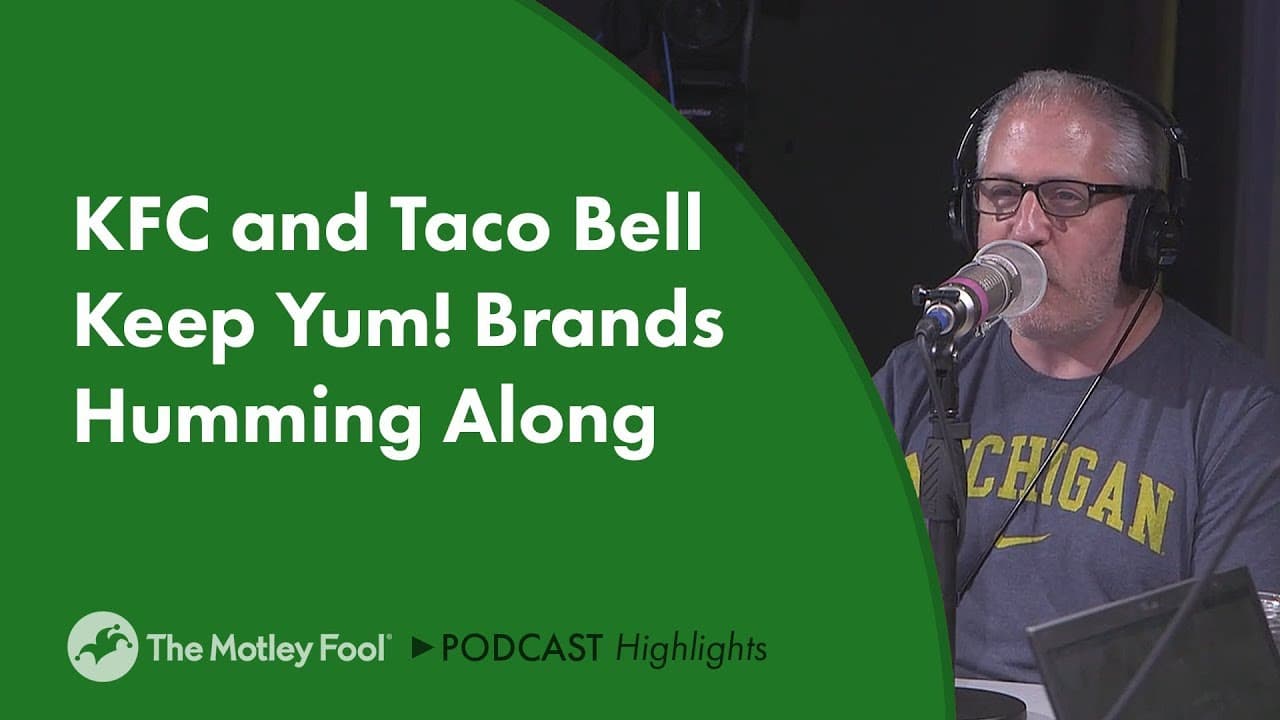
KFC and Taco Bell kept Yum! Brands growing in the third quarter, offsetting weakness at Pizza Hut and helping profits and revenue exceed expectations. Taco Bell generated about 30% of operating profit as system sales rose 8%, while KFC represented roughly half of operating profit and posted 3% same-store sales growth. Read on for the roles of delivery, promotions, franchising and shareholder returns.
Transcript
Chris Hill: Shares of Yum! Brands got close to an all-time high this week after third quarter profits and revenue came in higher than expected. Once again, Jason, we saw KFC and Taco Bell doing the heavy lifting, making up for weakness at Pizza Hut. Jason Moser: The old saying goes, two out of three ain't bad. That's essentially Yum!'s quarter in a... Read More
Key Insights
- Two brands carried Yum: KFC and Taco Bell compensated for Pizza Hut's weakness when Yum! Brands exceeded third quarter profit and revenue expectations. Their contribution was not described merely as broad momentum. Together, the two chains represented major portions of operating profit, explaining why Yum! shares approached an all-time high despite uneven performance across the portfolio.
- Taco Bell drove system sales: Taco Bell accounted for about 30% of Yum! Brands' total operating profit, while its system sales increased 8%. Those figures establish Taco Bell as a substantial earnings contributor, rather than a smaller brand benefiting only from publicity. Its operating importance also helps explain the attention given to its promotional execution later in the discussion.
- KFC supplied profit strength: KFC represented approximately half of Yum! Brands' operating profit and reported 3% same-store sales growth. That combination made KFC the largest identified profit contributor among the chains discussed. Its results provided an especially important counterweight to Pizza Hut, whose performance and product drew criticism from multiple speakers.
- Grubhub received significant capital: Yum! Brands bought $200 million of Grubhub stock earlier in the year. The investment gave Grubhub needed capital while tying the companies together around efforts to increase KFC and Taco Bell sales. The transcript identifies that commercial objective, but does not quantify any resulting delivery sales or claim that the partnership had already produced the quarter's growth.
- Pizza Hut missed an opening: Papa John's weakness over the previous 12 months appeared to give Pizza Hut an opportunity to gain ground. The speakers were surprised that Pizza Hut had not visibly taken advantage of those difficulties. Their criticism focused partly on the pizza itself, with the view that stronger sponsorship cannot remove the need to improve the core product.
- NFL sponsorship offered potential: Pizza Hut had taken over as the NFL's main sponsor, a role the speakers believed could help move the chain in the right direction. They did not present improvement as immediate or certain. Instead, they expected that the effect would become easier to assess by the same time the following year.
- Franchising target was reached: Yum! Brands had essentially achieved its goal of becoming 98% franchised. This marked a major element of management's operating direction as substantially complete. The transcript does not detail the remaining 2% or compare franchise economics with company-operated restaurants, so the supported conclusion is limited to reaching the stated franchise mix goal.
- Shareholders remained a priority: Management was committed to distributing $6.5 billion to $7 billion to shareholders through 2019. The planned methods were share repurchases and dividends. This capital-return commitment appeared alongside the 98% franchising milestone, showing that the discussion of Yum! Brands extended beyond restaurant sales to its broader corporate and shareholder strategy.
- Nacho fries reached many tickets: Taco Bell's nacho fries promotion appeared on more than one-quarter of all customer tickets. That specific level of participation supports the speakers' claim that Taco Bell handles promotional items effectively. The promotion mattered because it connected a limited menu offer with observable customer purchasing behavior, not simply increased brand visibility.
- Sports created another promotion: After Mookie Betts stole second base during the Red Sox victory referenced by the speakers, Taco Bell offered a free Doritos taco. The discussion suggests that customers likely visited to redeem the offer. Together with nacho fries, the example showed Taco Bell repeatedly using timely promotions to create reasons for restaurant visits.
- Shake Shack growth hid weakness: Shake Shack increased revenue by 26.5%, largely because it continued opening new stores. Underneath that expansion, comparable-store sales fell 0.7% and guest traffic declined 4%. The comparable-sales result was still an improvement from the previous quarter's 1.6% decline, creating a limited silver lining within otherwise concerning top-line operating indicators.
- Shake Shack valuation drew scrutiny: Even after its shares fell more than 11%, Shake Shack retained a market capitalization of about $1.8 billion. With 180 Shacks, the speakers calculated a value of $10 million per location. That figure appeared high to them, particularly alongside negative comparable sales and the need for revenue growth to reach margins and earnings.
Install to Summarize YouTube Videos and Get Transcripts
Explore YouTube Video Summarizer or Get YouTube Transcript Extractor
Questions & Answers
Q: How did KFC and Taco Bell perform for Yum! Brands in the third quarter?
Both chains supplied the strength that offset weakness at Pizza Hut. Taco Bell generated about 30% of total operating profit, and its system sales grew 8%. KFC represented approximately half of operating profit and recorded 3% same-store sales growth. Their performance helped Yum! Brands exceed third quarter profit and revenue expectations, pushing its shares close to an all-time high.
Q: Why was Pizza Hut lagging behind KFC and Taco Bell?
Pizza Hut remained the weak part of Yum! Brands while KFC and Taco Bell delivered growth. The speakers argued that Pizza Hut had work to do on the quality of its product. They also questioned why it had not capitalized on Papa John's weakness during the previous 12 months. Its NFL sponsorship offered a possible route toward improvement, but the results were expected to take time.
Q: What was the purpose of Yum! Brands' Grubhub investment?
Yum! Brands purchased $200 million of Grubhub stock earlier in the year. The investment supplied Grubhub with needed capital and formed a closer connection between the companies. Their stated focus was generating more sales for KFC and Taco Bell. The transcript links the arrangement to that goal but gives no separate sales figure produced by it.
Q: How did Taco Bell use promotions to support customer demand?
Taco Bell regularly created promotional reasons for customers to visit or add items to their orders. Its nacho fries promotion appeared on more than one-quarter of all tickets. It also offered a free Doritos taco after Mookie Betts stole second base in the Red Sox victory discussed by the speakers. These examples support the view that promotions were a meaningful part of Taco Bell's execution.
Q: What was Yum! Brands' franchising and shareholder-return strategy?
Yum! Brands had essentially reached its target of operating through a 98% franchised system. Management was also committed to returning $6.5 billion to $7 billion to shareholders through 2019. It planned to deliver those returns through repurchases and dividends. The transcript presents both commitments as important parts of the company's direction beyond individual restaurant sales.
Q: Why did Shake Shack shares fall after its third quarter report?
Shake Shack shares dropped more than 11% after results showed weak underlying store performance. Comparable-store sales declined 0.7%, although that was better than the previous quarter's 1.6% decline. Guest traffic fell 4%, which intensified concern about demand. Revenue increased 26.5%, but the speakers attributed much of that growth to continued store openings.
Q: How could Shake Shack grow revenue while comparable sales declined?
Shake Shack reported revenue growth of 26.5% even though comparable-store sales fell 0.7%. The speakers explained that the company kept adding locations, so new stores expanded total revenue. Shake Shack expected to open another 36 to 40 stores in 2019. The unresolved issue was whether that expansion would eventually produce stronger margins and earnings.
Q: Why did the speakers question Shake Shack's valuation?
Shake Shack still had a market capitalization of about $1.8 billion after its stock fell more than 11%. With 180 Shacks, that worked out to $10 million of market value for each location. The speakers considered that figure high in light of negative comparable-store sales and a 4% decline in guest traffic. They wanted revenue growth from new locations to filter through into margins and earnings.
Summary & Key Takeaways
-
Strong third quarter results: Yum! Brands reported third quarter profits and revenue above expectations, sending its shares close to an all-time high. KFC and Taco Bell again performed the heavy lifting while Pizza Hut remained weak. Taco Bell produced about 30% of total operating profit and increased system sales by 8%. KFC accounted for approximately half of company operating profit and delivered 3% same-store sales growth, making the two chains the clear sources of strength.
-
Connecting growth with Grubhub: Earlier in the year, Yum! Brands purchased $200 million of Grubhub stock. The transaction provided Grubhub with capital and connected the companies around a shared effort to generate more sales for KFC and Taco Bell. The discussion presents delivery as another way to extend the momentum already visible at those two restaurant brands, although it does not provide sales results attributable specifically to the investment or partnership.
-
Pizza Hut needs improvement: The speakers describe Pizza Hut as the weak member of Yum! Brands' three major chains and argue that its product needs work. They see an opportunity created by Papa John's weakness over the preceding 12 months, but question why Pizza Hut had not already taken advantage. Its position as the NFL's main sponsor could help move the business in the right direction, though the effect was expected to take time to become clear.
-
Franchising and shareholder returns: Yum! Brands had essentially reached its goal of operating through a 98% franchised system. Management was also committed to returning $6.5 billion to $7 billion to shareholders through 2019 using repurchases and dividends. Alongside those corporate priorities, Taco Bell demonstrated the commercial value of promotions. Its nacho fries appeared on more than one-quarter of customer tickets, and a Mookie Betts promotion offered customers a free Doritos taco.
-
Shake Shack exposes contrasts: Shake Shack shares fell more than 11% after weak third quarter results. Comparable-store sales declined 0.7%, improving from the prior quarter's 1.6% decline, while guest traffic dropped 4%. Revenue nevertheless rose 26.5%, largely because the company kept opening stores, and it expected 36 to 40 additional openings in 2019. The speakers contrasted its limited promotional activity with Taco Bell and questioned a $1.8 billion valuation spread across 180 Shacks.
Read in Other Languages (beta)
Share This Summary 📚
Summarize YouTube Videos and Get Video Transcripts with 1-Click
Try YouTube Summary with ChatGPT & Claude or YouTube Transcript Generator