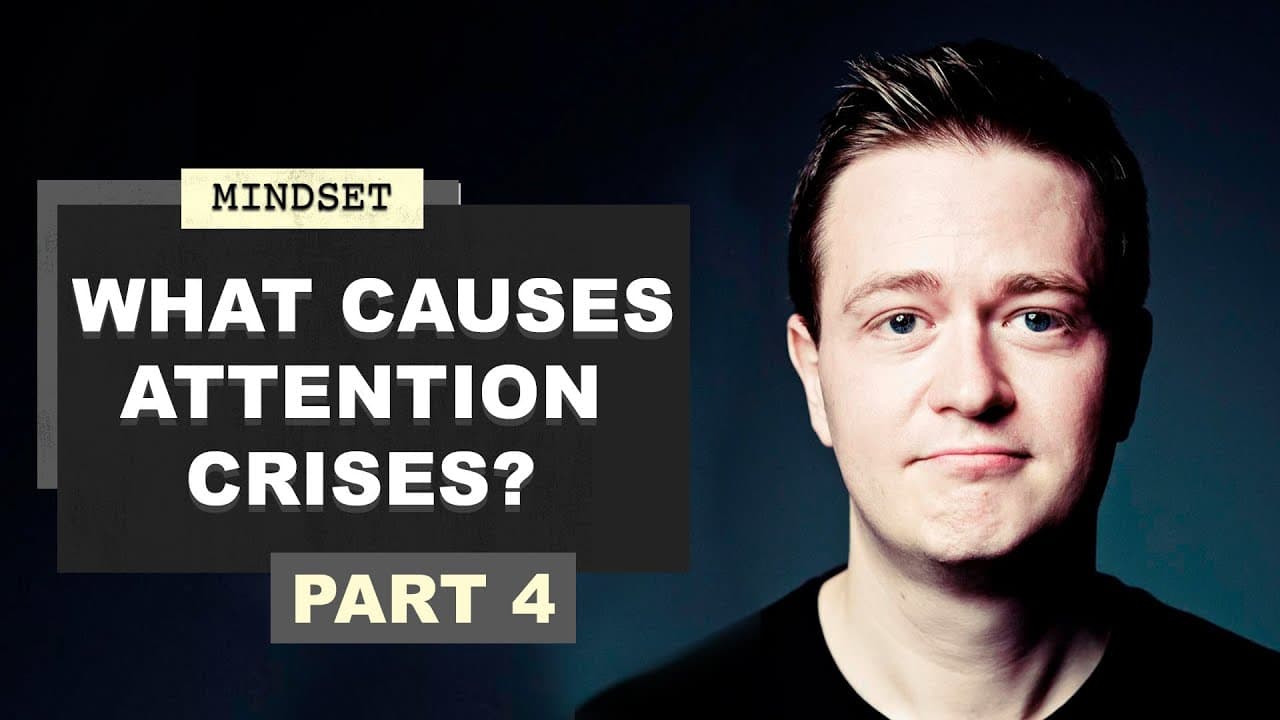
The real causes of our attention crisis | Johann Hari on How to Fix your Focus
TL;DR
The attention crisis is driven partly by technologies whose formats reward speed, brevity, appearance, and immediate approval. Johann Hari explains that after three months away from email and Twitter, his backlog took about an hour to clear, challenging his sense of importance. He contrasts Twitter’s 280-character bursts with books that encourage sustained thought and empathy, revealing why the medium itself shapes how we think.
Transcript
that sounds fun um there's there's a lot of twitter and about uh emails and stuff like that and there's actually one of my favorite moments in your book is is when you come back from provincetown and you've spent three months off emails and twitter and you open up and you realize that you're not that important um and you say and they say that your ... Read More
Key Insights
- 🥳 Social media platforms like Twitter and Instagram incentivize the worst parts of ourselves, promoting anger, superficiality, and the desire for immediate validation.
- ❓ The attention crisis is not only an individual problem but also a systemic issue that requires collective solutions.
- 💁 Our ability to pay attention is interconnected with our ability to form meaningful relationships and navigate complex issues.
- 🤯 An attention movement is necessary to reclaim our minds and protect the future of our children from the invasive nature of attention-grabbing technologies.
- 🤔 The attention crisis contributes to the rise of authoritarianism, as fragmented attention and lack of deep thinking make individuals more susceptible to manipulation.
- 🍉 Dismantling hyper capitalism and the neoliberal order is essential in addressing the attention crisis since these systems prioritize profit and instant gratification over long-term well-being.
- ❓ Solutions to the attention crisis involve both individual actions, such as practicing mindfulness, and collective actions, such as advocating for stricter regulations on attention-grabbing technologies.
Install to Summarize YouTube Videos and Get Transcripts
Explore YouTube Video Summarizer or Get YouTube Transcript Extractor
Questions & Answers
Q: What are the real causes of our attention crisis according to Johann Hari?
Johann Hari identifies constant email and social media use as forces that encourage flitting attention and feelings of self-importance. He argues that each medium also carries implicit messages that shape how people perceive the world.
Q: How does Twitter affect attention and thinking?
Twitter presents the world through 280-character bursts and emphasizes whether people immediately like and agree with those bursts. Hari says this format discourages careful treatment of complex subjects and rewards quick validation.
Q: What does Marshall McLuhan’s phrase "the medium is the message" mean?
It means a technology does more than carry information. Like a new pair of goggles, its structure changes how people see the world, regardless of the specific content passing through it.
Q: What message does Instagram communicate through its format?
Hari says Instagram implies that what matters is how people look on the outside. It also emphasizes whether other people approve of that appearance.
Q: What did Johann Hari learn after three months away from email and Twitter?
He expected to return to so many emails that clearing them would take weeks. Because his automatic reply said he was gone, the backlog took about an hour to process, making him realize the world had not needed him as much as he expected.
Q: Why can seeking immediate agreement block progress?
Hari argues that people who brought progress initially expressed ideas that most others disagreed with. Fear of anger or resistance can therefore prevent people from saying what may eventually produce change.
Q: How are books different from Twitter as a medium?
Hari says the printed book communicates a message to slow down and think about one thing for 10 hours. Novels can also simulate another person’s consciousness, helping readers imagine what it is like to be someone else.
Q: Why does Johann Hari believe Twitter can encourage harmful behavior?
He says his periods of getting many retweets were also times when he was most angry, condemnatory, glib, and superficial. In his view, Twitter’s incentives can draw out the worst version of a person rather than mercy, kindness, or usefulness.
Summary & Key Takeaways
-
Definition: A medium shapes perception through its structure, not only through the information it carries.
-
Who: Johann Hari connects email and social media use with flitting attention and an inflated sense of personal importance.
-
When: After three months away from email and Twitter, Hari returned expecting weeks of accumulated messages.
-
Number: Hari cleared his email backlog in about an hour after using an automatic reply saying he was gone.
-
Number: Twitter frames ideas as 280-character bursts and rewards immediate likes and agreement.
-
Compare: Instagram emphasizes outward appearance and whether other people approve of that appearance.
-
Compare: Television presents the world as fast, with events appearing to happen simultaneously.
-
Number: A printed book encourages readers to slow down and consider one subject for 10 hours.
-
Compare: Novels invite readers to simulate another person’s consciousness, while Twitter rewards brevity and immediate reaction.
-
Who: Hari says his most successful moments on Twitter coincided with being angry, condemnatory, glib, and superficial.
Read in Other Languages (beta)
Share This Summary 📚
Summarize YouTube Videos and Get Video Transcripts with 1-Click
Try YouTube Summary with ChatGPT & Claude or YouTube Transcript Generator
Explore More Summaries from How To Academy Mindset 📚




Summarize YouTube Videos and Get Video Transcripts with 1-Click
Try YouTube Summary with ChatGPT & Claude or YouTube Transcript Generator