How Do Living Shorelines Compare to Bulkheads in Protection?
TL;DR
Living shorelines provide better ecological benefits and resilience compared to bulkheads, which often suffer damage during storms. Studies show that living shorelines support higher biodiversity and protect coastal habitats effectively while recovering faster from storm impacts. Transitioning to living shorelines could lead to more sustainable coastal management.
Transcript
-Hi, welcome. I'm John Huth. I'm with the Physics Department and also the Radcliffe Institute for Advanced Study. So let me just say a few words about Radcliffe. We have multiple programs here. And its mission is explicitly to be cross-disciplinary, multidisciplinary, which distinguishes it from other institutes for advanced study. And to be engage... Read More
Key Insights
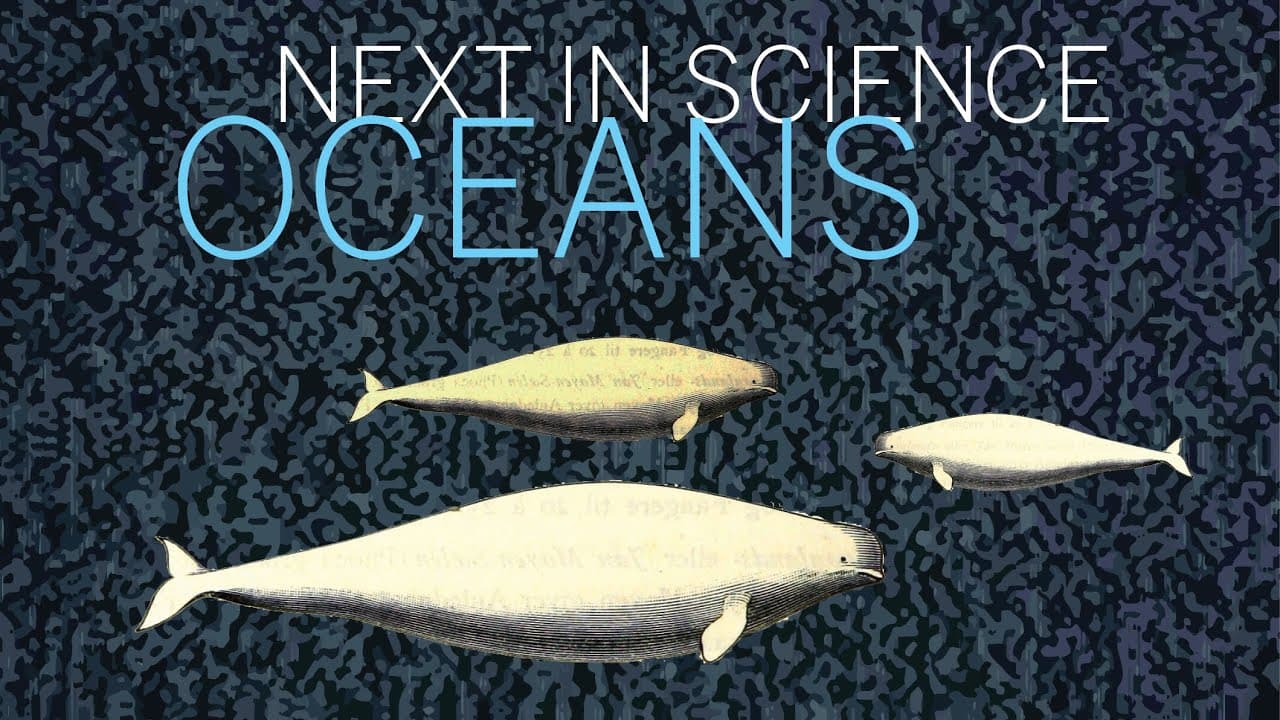
- 🔨 Bioacoustics is a valuable tool for studying and managing endangered marine species.
- 💙 Blue whale songs can be used to identify different populations and provide insights into their behavior and distribution.
- 🦻 Autonomous recording devices aid in collecting data on underwater soundscapes and the effects of anthropogenic noise on marine life.
Install to Summarize YouTube Videos and Get Transcripts
Explore YouTube Video Summarizer or Get YouTube Transcript Extractor
Questions & Answers
Q: What are some natural sources of sound in the ocean?
Natural sources of sound in the ocean include rainfall, waves, earthquakes, and other geophysical phenomena.
Q: What is the purpose of recording and analyzing blue whale songs?
Blue whale songs can help identify different populations of blue whales and provide insights into their distribution, behavior, and mating patterns. It can also aid in population assessment and conservation efforts.
Q: How are autonomous recording devices used in bioacoustics research?
Autonomous recording devices are deployed in the ocean to record sounds made by marine animals. These recordings can be used to study animal behavior, population dynamics, and the effects of anthropogenic noise on marine species.
Q: How has the management of whale populations evolved over time?
The International Whaling Commission (IWC) was established in 1946 to manage whaling, but its mission has expanded to include conservation of whales. The focus now is on understanding population structure and dynamics, using scientific research to inform management approaches.
Summary & Key Takeaways
-
Bioacoustics is the study of sounds made by animals in the ocean, including natural sources, animal vocalizations, and anthropogenic noise.
-
Blue whales are a species that produce distinct songs, which can help identify and understand different populations of blue whales worldwide.
-
Autonomous recording devices are used to study and record underwater sounds, providing valuable data for research on marine species.
-
Management of whale populations has shifted from a focus on whaling to conservation efforts, with a need for better understanding of population structure and dynamics.
Read in Other Languages (beta)
Share This Summary 📚
Summarize YouTube Videos and Get Video Transcripts with 1-Click
Try YouTube Summary with ChatGPT & Claude or YouTube Transcript Generator
Explore More Summaries from Harvard University 📚





Summarize YouTube Videos and Get Video Transcripts with 1-Click
Try YouTube Summary with ChatGPT & Claude or YouTube Transcript Generator