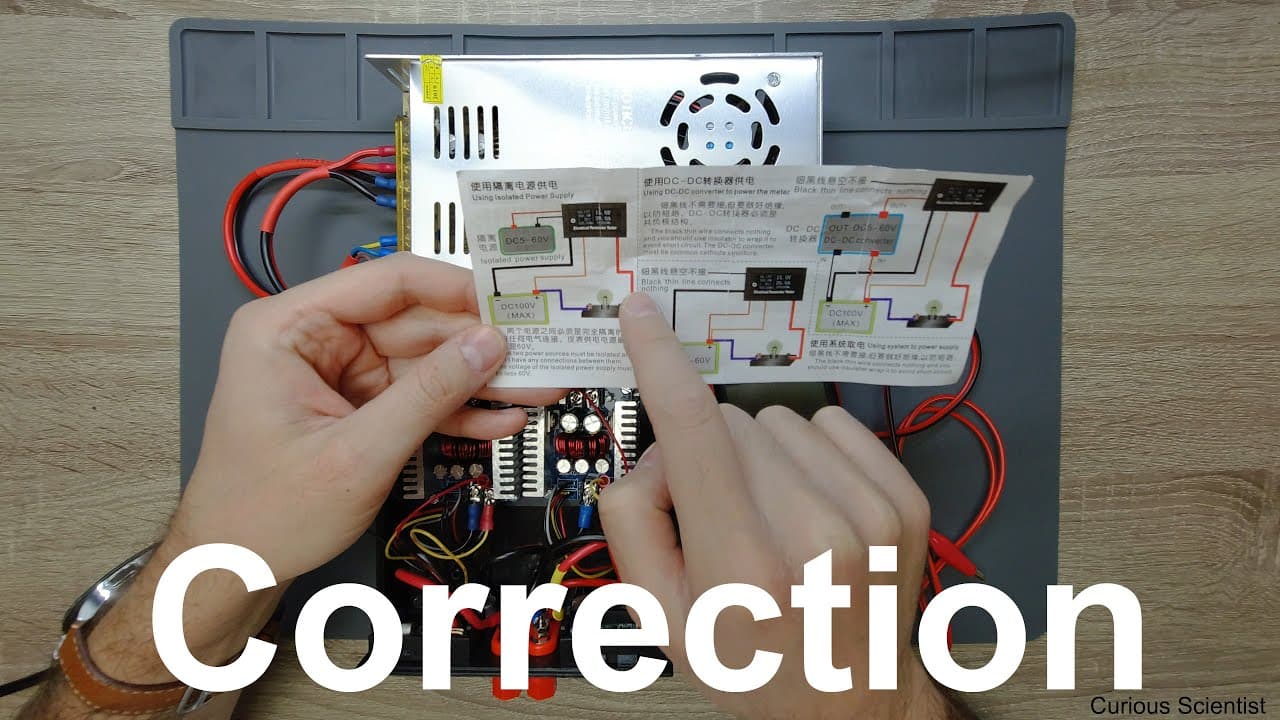
Correction for the wiring of the power meter for my DIY power supply
TL;DR
The video clarifies a mistake in connecting a power meter in a power supply circuit.
Transcript
welcome everyone this will be a short video I would like to correct or clarify a small mistake what I did in some of my previous videos so I built this power supply a few months ago and the basic principle of this power supply is that I have a main power supply which is a 12 volt and 30 ampere power supply and then the output of the power supply is... Read More
Key Insights
- 🤒 Accurate wiring in electronic circuits is crucial for effective measurement and operation of components like power meters.
- 🥺 Treating a power supply as isolated when it is not can lead to serious measurement inaccuracies.
- 🤒 Correct connection of power meter components ensures proper functioning and reliable data reporting during operations.
- ✊ The difference between isolated and non-isolated power supplies must be understood to avoid operational errors.
- ✊ Voltage stability is essential for keeping electronic screens powered on for consistent performance.
- 😘 Inaccuracy during low current measurements can mislead users about device functionality and safety.
- 🎨 Circuit design adjustments can significantly enhance performance reliability in electronic setups.
Install to Summarize YouTube Videos and Get Transcripts
Explore YouTube Video Summarizer or Get YouTube Transcript Extractor
Questions & Answers
Q: What is the main purpose of the power supply discussed in the video?
The power supply in the video is designed to deliver adjustable 12V output with a maximum current of 30Amps, regulated through two DC-DC converters, allowing users to power different loads and accurately measure their performance with a connected power meter.
Q: What mistake did the presenter make in earlier videos regarding the power meter?
The presenter mistakenly treated the power supply as an isolated system and incorrectly wired the power meter, which led to inaccurate measurements. The error was identifying the connections needed for proper operation of the meter to measure current accurately.
Q: How does the power meter function within this power supply setup?
The power meter requires connections to both power the internal electronics and measure the output voltage and current. It utilizes three thin wires for voltage measurement and two thick wires for current measurement, and accurate wiring is essential for proper function.
Q: What adjustments were made to correct the wiring mistake?
To resolve the wiring mistake, the presenter isolated the incorrect connection by using heat shrink tubing and rewired the meter correctly, ensuring that its measurement inputs and outputs reflect the actual current and voltage delivered to the load.
Q: Why is it important to keep the power meter's screen operational?
The power meter's screen must remain operational to display accurate readings. If the power supply voltage falls below 5 volts, the screen shuts off, which prevents the user from seeing measurements, thus requiring a stable input voltage to keep it functional.
Q: What did the presenter demonstrate regarding the accuracy of current measurements?
The presenter demonstrated that after correcting the wiring, the readings on the multimeter and the power meter aligned closely, showing values such as 2.4A and 2.3A, indicating that under operational conditions, the two devices provided comparative accuracy within an acceptable error margin.
Q: How does the new circuit design help maintain functionality?
The new circuit design ensures that the power meter receives a stable voltage while also measuring load conditions correctly. It separates the power supply rails for the meter and load, maintaining consistent operational parameters that avoid previous miswiring errors.
Q: What are the implications for someone using this setup incorrectly?
Users who follow the incorrect wiring may experience inaccurate measurements, which could lead to misleading results when assessing the performance of their electronic devices. Understanding these corrections is crucial for practical applications involving similar power supply setups.
Summary & Key Takeaways
-
The video discusses a correction to a previous setup involving a 12V, 30A power supply connected to DC-DC converters for output regulation.
-
The presenter highlights a mistake made in the connection of the power meter and explains the necessity of proper wiring to ensure accurate measurements.
-
A new diagram is presented to clarify the correct connections, showcasing how to maintain the power supply while effectively using the power meter.
Read in Other Languages (beta)
Share This Summary 📚
Summarize YouTube Videos and Get Video Transcripts with 1-Click
Try YouTube Summary with ChatGPT & Claude or YouTube Transcript Generator
Explore More Summaries from Curious Scientist 📚
![Building a coil winder [Part 6] - A few improvements thumbnail](/_next/image?url=https%3A%2F%2Fi.ytimg.com%2Fvi%2F3eyxG_g2iUA%2Fhqdefault.jpg&w=750&q=75)

Summarize YouTube Videos and Get Video Transcripts with 1-Click
Try YouTube Summary with ChatGPT & Claude or YouTube Transcript Generator