How Tesla's Robotaxis Are Changing Transportation
TL;DR
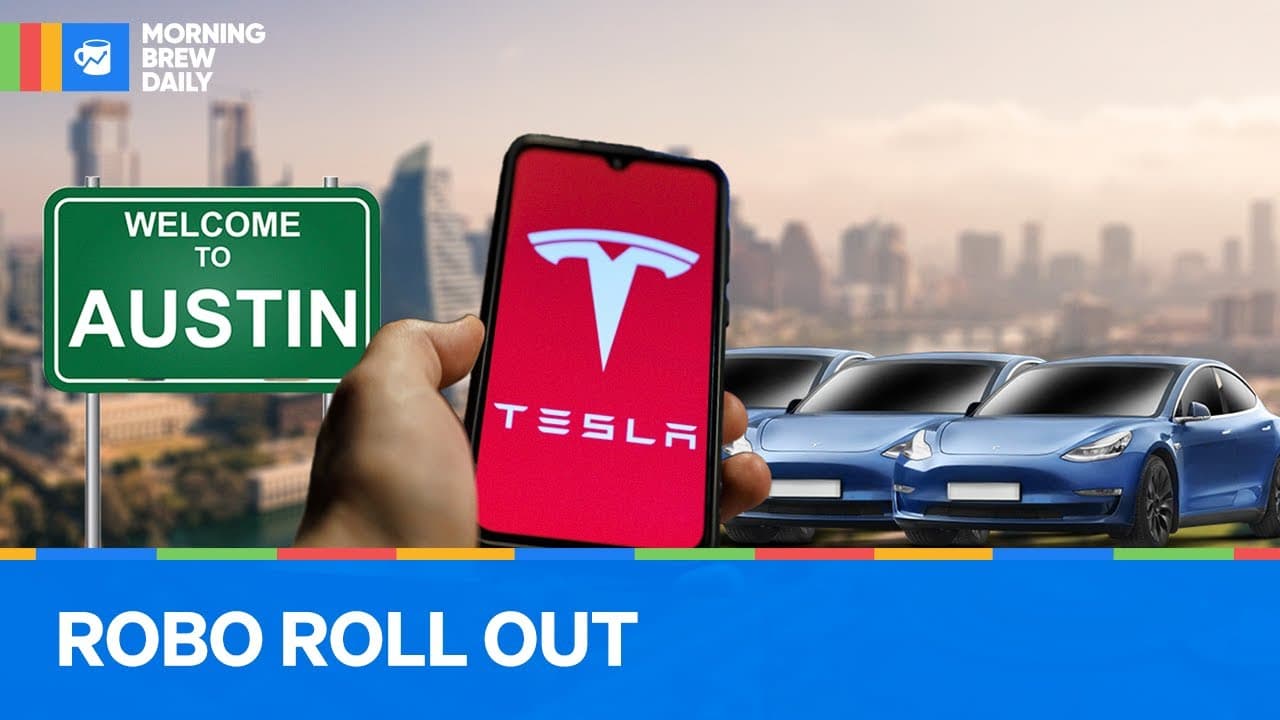
Tesla has launched its autonomous robotaxi service in Austin, Texas, marking a significant milestone in the company's self-driving ambitions. The service, priced at $4.20 per ride, uses a camera-only system, differing from competitors like Waymo. While Tesla's rollout is limited, the company aims to expand its autonomous fleet, potentially revolutionizing urban transportation.
Transcript
Good Morning Brew Daily Show. I'm Neal Freyman. And I'm Toby Howell. Today, markets are on edge, but not panicking after the U.S. struck Iran nuclear sites. Then driverless Teslas are cruising through Austin, Texas, after the company finally launched its autonomous robo taxis. It's Monday, June 23rd. Let's ride! The business world lost one of its l... Read More
Key Insights
- Tesla's robotaxi service has launched in Austin, Texas, using a camera-only system.
- The service is priced at a flat fee of $4.20 per ride.
- Tesla's approach differs from Waymo, which uses lidar, radar, and cameras.
- The initial rollout includes 10 to 20 Model Y vehicles in a limited zone.
- Tesla aims to expand its autonomous fleet, potentially revolutionizing urban transport.
- The service avoids bad weather and difficult intersections, and doesn't carry passengers under 18.
- Tesla's valuation heavily relies on the success of its self-driving technology.
- Elon Musk has been promising autonomous capabilities for over a decade.
Install to Summarize YouTube Videos and Get Transcripts
Explore YouTube Video Summarizer or Get YouTube Transcript Extractor
Questions & Answers
Q: How does Tesla's robotaxi service differ from Waymo's?
Tesla's robotaxi service differs from Waymo's by using a camera-only system for navigation, whereas Waymo employs a combination of lidar, radar, and cameras. This makes Tesla's approach potentially more cost-effective but also more prone to errors in bad weather or low-light conditions. Tesla's strategy aims to leverage its existing fleet for data collection and mapping.
Q: What is the cost of a ride in Tesla's robotaxi service?
A ride in Tesla's robotaxi service costs a flat fee of $4.20. This pricing is part of Tesla's strategy to make autonomous rides affordable and accessible, potentially transforming urban transportation. The service is currently limited to a select number of vehicles operating within a specific zone in Austin, Texas.
Q: Why is Tesla's autonomous vehicle rollout limited?
Tesla's autonomous vehicle rollout is limited to ensure safety and reliability in its initial phase. The service avoids bad weather, difficult intersections, and does not carry passengers under 18. This cautious approach allows Tesla to test its camera-only system in a controlled environment before expanding to broader markets.
Q: What are the potential benefits of Tesla's robotaxi service?
Tesla's robotaxi service could revolutionize urban transportation by offering affordable, autonomous rides. It leverages Tesla's existing fleet for data collection and mapping, potentially reducing costs compared to competitors. The service could also decrease traffic congestion and emissions, contributing to more sustainable urban environments.
Q: What challenges does Tesla face with its robotaxi service?
Tesla faces several challenges with its robotaxi service, including competition from established players like Waymo, which uses more advanced sensor technology. The camera-only approach may struggle in adverse weather or low-light conditions. Regulatory hurdles and public trust in autonomous technology also pose significant challenges to widespread adoption.
Q: How long has Elon Musk been promising autonomous capabilities?
Elon Musk has been promising autonomous capabilities for over a decade. He first projected that Tesla cars would operate autonomously for 90% of miles driven back in September 2013. Despite delays, the recent launch of Tesla's robotaxi service in Austin represents a significant step towards fulfilling this long-standing vision.
Q: What is the significance of Tesla's robotaxi launch in Austin?
The launch of Tesla's robotaxi service in Austin is significant as it marks the first real-world implementation of Tesla's autonomous driving technology. It represents a milestone in Tesla's strategy to transition from selling vehicles to becoming an autonomous ride provider, a move that could drastically impact the company's future earnings and valuation.
Q: How does Tesla's robotaxi service impact its valuation?
Tesla's robotaxi service is crucial to its valuation, as much of the company's $1 trillion market cap hinges on the success of its self-driving ambitions. Analysts project that Tesla's autonomous ride-hailing unit could become a multi-billion-dollar business, significantly boosting the company's earnings and transforming its business model.
Summary & Key Takeaways
-
Tesla has launched its autonomous robotaxi service in Austin, Texas, marking a major step in its self-driving goals. The service offers rides for a flat fee of $4.20 and uses a unique camera-only system, setting it apart from competitors like Waymo. Despite a limited initial rollout, Tesla aims to expand its autonomous fleet, potentially transforming urban transportation.
-
Tesla's robotaxi service in Austin uses a camera-only system, differing from competitors like Waymo, which use lidar, radar, and cameras. The service is priced at $4.20 per ride and includes 10 to 20 Model Y vehicles operating in a limited zone. Tesla's success in autonomous driving is crucial to its valuation.
-
Elon Musk's vision for Tesla's autonomous vehicles has been in the making for over a decade. The recent launch in Austin is a significant milestone, though the rollout is limited to avoid bad weather and difficult intersections. Tesla's approach, relying solely on cameras, aims to revolutionize urban transport.
Read in Other Languages (beta)
Share This Summary 📚
Summarize YouTube Videos and Get Video Transcripts with 1-Click
Try YouTube Summary with ChatGPT & Claude or YouTube Transcript Generator
Explore More Summaries from Morning Brew Daily 📚

Summarize YouTube Videos and Get Video Transcripts with 1-Click
Try YouTube Summary with ChatGPT & Claude or YouTube Transcript Generator