How to Grow a YouTube Channel from 0 to 10 Million
TL;DR
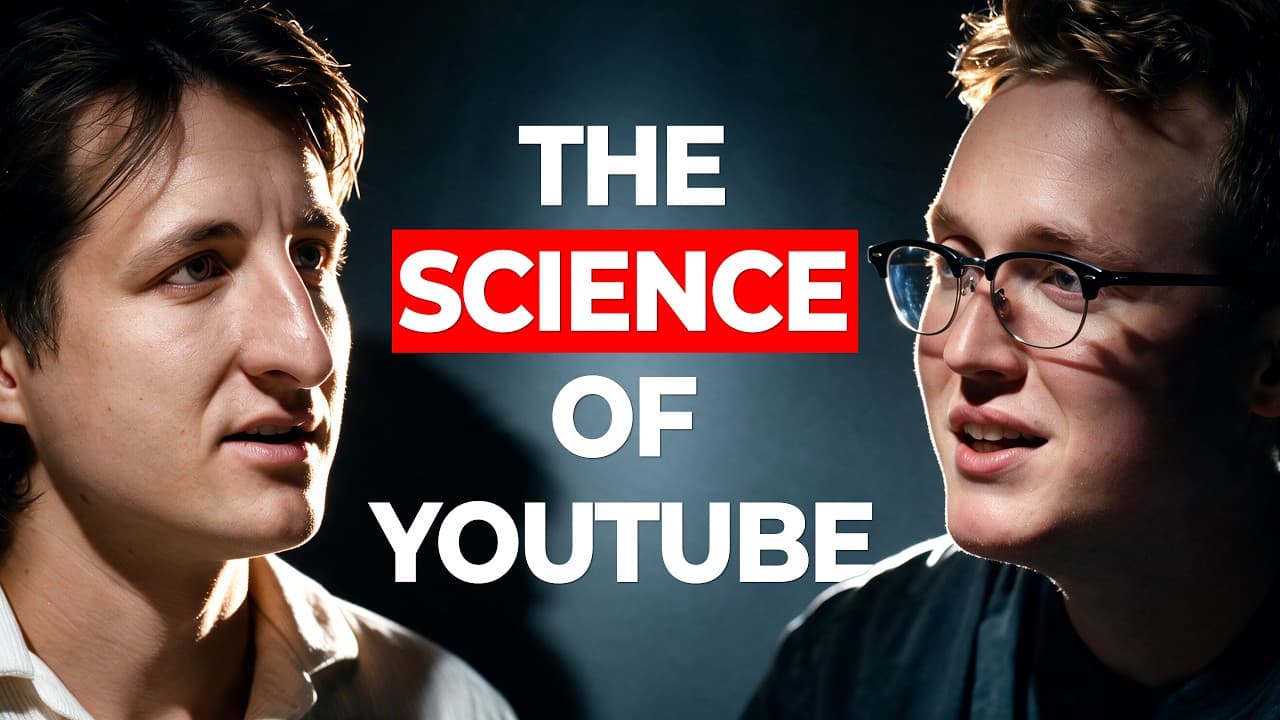
Start with educational content that solves a clear audience problem, publish consistently, and use performance data from successful channels to choose ideas. Frequent uploads create more opportunities for YouTube to identify overlapping audiences and expand impressions, while simple production enables faster validation and iteration than waiting for perfect equipment.
Transcript
Vexian, I would like to have all of these plaques. >> Okay. >> I need you to walk me through the step by step of how to go from nothing to a th000 subscribers, >> okay? >> To 10,000 subscribers, then to 100,000 subscribers, then to a million subscribers, and then lastly, I want you to help me figure out how I'm supposed to get to 10 million subscri... Read More
Key Insights
- YouTube viewing is driven mainly by education and entertainment in the framework presented. Educational viewers seek a practical outcome, while entertainment viewers trade their time for an enjoyable feeling without necessarily expecting to acquire a skill or solve a problem.
- Educational content is the easier starting path toward 1,000 subscribers because its value exchange is direct. A creator identifies a problem, provides a solution, and gives satisfied viewers a low-friction reason to subscribe in return for the value they received.
- Effective educational content is organized around the audience's desired outcome. Personal struggles are useful only when they reflect problems viewers are likely to encounter and help explain how those viewers can move from their current situation toward a workable solution.
- Perfection can prevent creators from obtaining real evidence about their ideas. Publishing with an iPhone or similar available device allows faster market validation, shorter feedback loops, and more frequent iteration than waiting until every piece of equipment and preparation is complete.
- Consistent publishing increases the number of opportunities for YouTube to test content with potential viewers. A predictable cadence can also condition an audience to expect new releases and help the platform understand when viewers are available for another upload.
- Click-through rate is the share of impressions that produce clicks on a video's thumbnail and title. The example given is 10,000 impressions with a 10 percent click-through rate, producing 1,000 viewers who click and watch long enough to register as a view.
- The impression snowball works by expanding distribution as YouTube learns which audiences respond to successive uploads. A video receiving 50 views may inform the targeting of the next upload, which might reach 70 views before later videos gain substantially broader exposure.
- Content research can begin by tracking the top 20 percent of relevant creators in a spreadsheet. Comparing a recent video's performance with the preceding five-video average can reveal an unusually strong premise that another creator can reverse engineer and adapt.
Install to Summarize YouTube Videos and Get Transcripts
Explore YouTube Video Summarizer or Get YouTube Transcript Extractor
Questions & Answers
Q: How should a new creator choose between education and entertainment?
A new creator seeking the clearest path to 1,000 subscribers should consider educational content. Education begins with a viewer who wants a specific outcome, such as learning how to change a tire. If the creator solves that problem effectively, the viewer receives direct value and has a simple reason to subscribe. Entertainment can also succeed, but it requires a higher bar for earning the initial click.
Q: How can educational YouTube videos attract subscribers?
Educational videos attract subscribers by connecting a known problem to a useful solution. The creator should identify the outcome viewers want, explain the obstacles they are likely to face, and provide a broadly applicable path forward. This produces a clear value exchange: viewers receive practical help, then may reciprocate by subscribing. Personal stories should support the solution instead of becoming the video's main purpose.
Q: What mistakes do new educational creators make?
A common mistake is producing content that the creator personally wants to watch even though it does not help the intended audience. Another is emphasizing personal struggles mainly to reinforce the creator's image or create an emotional story. Those experiences are relevant only when viewers are likely to encounter similar difficulties and the story helps them understand how to reach their desired outcome.
Q: Do you need professional equipment to start a YouTube channel?
Professional equipment is not required to begin testing a YouTube idea. A creator can pick up an iPhone and publish material that seems interesting or useful to a potential audience. Starting simply makes it possible to validate demand, receive feedback, and iterate faster. Waiting for ideal equipment can consume time before the creator even knows whether the proposed topic has a market.
Q: Why does a consistent YouTube upload schedule matter?
A consistent schedule increases exposure by giving YouTube more opportunities to place videos before people who may benefit from or enjoy them. It can also condition viewers to expect releases at a familiar time, similar to a regularly scheduled television show. From the platform's perspective, repeated uploads provide information about the audience, its active sessions, and the viewers most likely to respond.
Q: What is click-through rate on YouTube?
Click-through rate, or CTR, is the proportion of impressions that lead people to click a video's thumbnail and title. The transcript illustrates the calculation with 10,000 impressions and a 10 percent CTR, resulting in 1,000 people clicking and watching long enough to count as a view. In the explanation, that viewing threshold is described as roughly 30 seconds.
Q: How does the YouTube impression snowball work?
The impression snowball describes how consistent uploads can compound attention. An initial video might receive 50 views, after which YouTube gains information about the responding audience. The next upload might reach 70 views as distribution expands to overlapping viewers. Continued publishing gives the platform more chances to identify primary, secondary, and tertiary audiences, potentially increasing impressions and views over time.
Q: How can creators find YouTube video ideas in their niche?
Creators can identify ideas by listing the top 20 percent of channels that reach their desired audience and checking those channels every week. A spreadsheet is sufficient. For each recent upload, compare its performance with the channel's previous five videos. If it outperforms that average within three days, the core idea or premise may be working and can be reverse engineered for a relevant original video.
Summary & Key Takeaways
-
For the first 1,000 subscribers, educational content offers a clear exchange of value. A viewer arrives with a problem, receives a useful solution, and may subscribe through reciprocity. Creators should focus on broadly applicable audience needs instead of personal struggles that provide emotional context but do not help viewers reach an outcome.
-
Creators do not need perfect equipment or advanced technical skills before publishing. Starting with a phone creates faster feedback loops, validates whether an audience exists, and supports rapid iteration. Excessive preparation can delay discovery of what actually works, while consistent motion produces evidence that can guide future choices about topics, formats, and production.
-
Consistent publishing increases exposure and helps YouTube identify primary, secondary, tertiary, and overlapping audiences. Creators can generate ideas by tracking leading channels in their niche and comparing each recent upload with the previous five videos. Early outperformance can signal that the core premise, often represented by the title, deserves adaptation.
Read in Other Languages (beta)
Share This Summary 📚
Summarize YouTube Videos and Get Video Transcripts with 1-Click
Try YouTube Summary with ChatGPT & Claude or YouTube Transcript Generator
Explore More Summaries from Grant Owen 📚


Summarize YouTube Videos and Get Video Transcripts with 1-Click
Try YouTube Summary with ChatGPT & Claude or YouTube Transcript Generator