How to turn street interviews into paid ads for brands
TL;DR
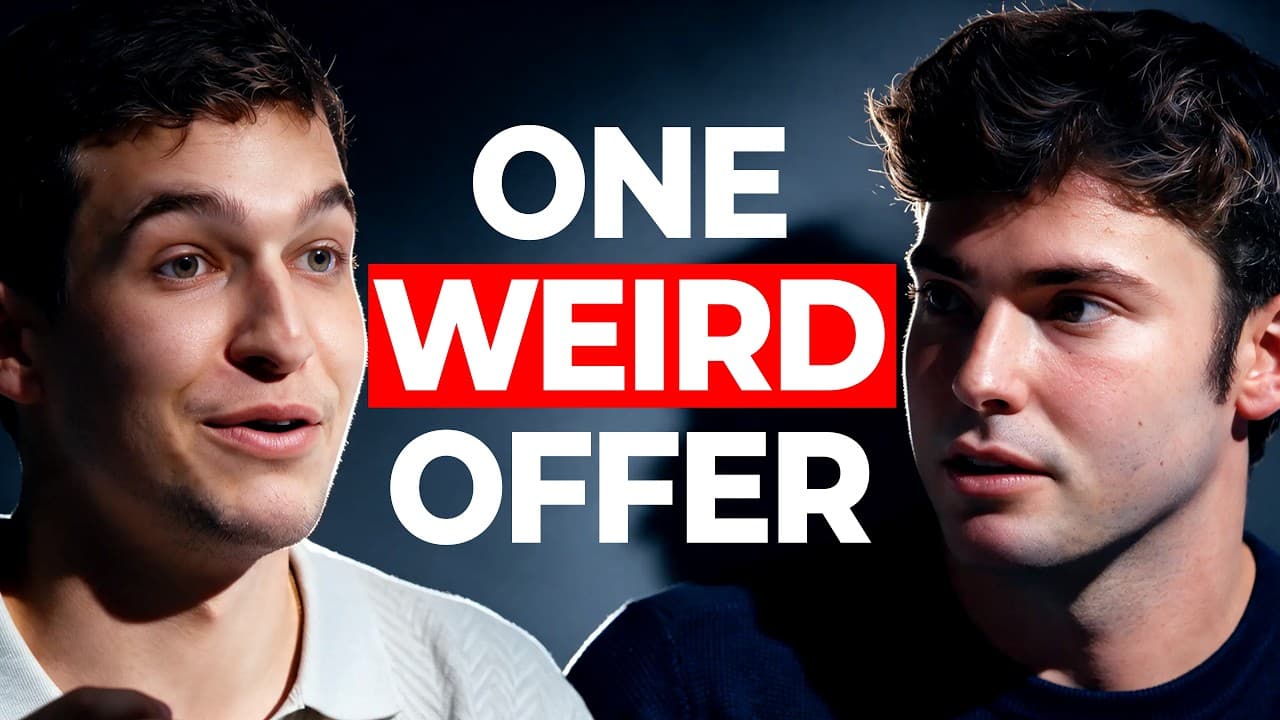
The core idea is to identify a high value, repeatable service and execute it at scale. Start by learning from a rich contact and offering a simple, authentic content format that can be used across multiple brands. Scale by delivering 20–30 ad creatives per client and growing a team to handle demand.
Transcript
Let's just say that you're talking to yourself at 18. What would you say to them? Find the richest person that you've ever met in your entire life and ask what you can do for them and just be around them as much as possible. That's number one. Number two, figure out what they're spending money on, what they're thinking about. Figuring out a service... Read More
Key Insights
- The richest lesson is to find a repeatable service that you enjoy delivering and can scale.
- The street interview format proved highly effective because it felt like authentic content rather than a traditional ad.
- Success came from recognizing the demand for this creative format and delivering it at scale to many brands.
- Productizing content creation allows you to reuse a single creative across multiple brands, boosting efficiency.
- The founder relied on hands on testing and direct outreach to win early clients, then expanded to 85 brands in a single season.
- A strong personal brand and network can accelerate opportunities, as seen with tweets that drew potential clients.
- Hiring and team building were essential to sustain the growth of output beyond the founder’s solo capacity.
- The business mindset stressed urgency and commitment, including quitting a conventional internship to chase the opportunity.
Install to Summarize YouTube Videos and Get Transcripts
Explore YouTube Video Summarizer or Get YouTube Transcript Extractor
Questions & Answers
Q: How did the founders start turning street interviews into a paid service?
The process began with a single paid gig for 20 street interviews at $2,000 and quickly expanded when the founder realized there was demand for this kind of content. By delivering 20 to 30 ads per client and leveraging word of mouth, the service scaled to dozens of brands. The key was treating street interviews not as a novelty but as a repeatable content system that could be monetized across multiple products.
Q: What made street interview content effective as ads according to the video?
Street interview content works because it resembles organic social media activity rather than a traditional ad, building trust and curiosity. It provides real reactions and social proof, which makes the advertising feel more native and less intrusive. The format is also adaptable to different brands since the same interview structure can be repurposed for multiple products.
Q: How did the founder transition from intern to full time entrepreneur?
The founder started as a college student with an internship that paid little and had a dream of building something bigger. After securing initial client demand and realizing the potential revenue, they chose to quit the internship and go all in. This shift happened when early gigs proved scalable and profitable, allowing a full-time commitment to the new business.
Q: What was the scale of initial success and what did it enable?
Initial success included earning around $36,000 in the first month of pure profit and serving 85 brands by the end of the summer. This level of revenue demonstrated the viability of the model and enabled expansion into production at scale, creating a steady stream of ad creatives and a growing team to support demand.
Q: How many ad creatives did they produce per client during growth?
They reported delivering between 20 and 30 ads per client during the growth phase. This volume per client indicates a robust content pipeline and the ability to test multiple angles for each brand, increasing the likelihood of finding advert formats that resonate with audiences and perform well on paid social platforms.
Q: What role did collaboration and networking play in growth?
Collaboration and networking played a pivotal role, with mentors and peers prompting the founder to recognize the opportunity. Tweets and referrals helped attract new clients, turning personal contacts into a pipeline of business. The strategy relied on social proof and leveraging existing networks to expand client reach and legitimacy.
Q: How did the team approach building and scaling the operation?
Scaling involved merging sales with operations, building a team to handle content creation, and establishing a workflow to produce large quantities of interviews. The business relied on a repeatable process, a robust pipeline of clients, and a mindset oriented toward rapid experimentation and continuous delivery of new ad creatives.
Q: What is the mindset recommended for aspiring founders based on the video?
The keynote mindset centers on chasing dreams with urgency, dropping limiting beliefs, and being willing to start with imperfect knowledge. It emphasizes learning by doing, treating branding as building media, and staying relentlessly focused on delivering a compelling service that others find valuable. The cumulative effect is sustained momentum even when starting with minimal resources.
Summary & Key Takeaways
-
The video outlines a blueprint for turning street interviews into a scalable paid ad format, showing how authentic, unrehearsed reactions can drive brand performance.
-
It follows the founder from sleeping on a couch to producing thousands of creatives monthly, emphasizing the value of organic style content that still performs as ads.
-
The discussion covers sales, operations, and mindset shifts needed to build a business around a niche content service.
Read in Other Languages (beta)
Share This Summary 📚
Summarize YouTube Videos and Get Video Transcripts with 1-Click
Try YouTube Summary with ChatGPT & Claude or YouTube Transcript Generator
Explore More Summaries from Grant Owen 📚



Summarize YouTube Videos and Get Video Transcripts with 1-Click
Try YouTube Summary with ChatGPT & Claude or YouTube Transcript Generator