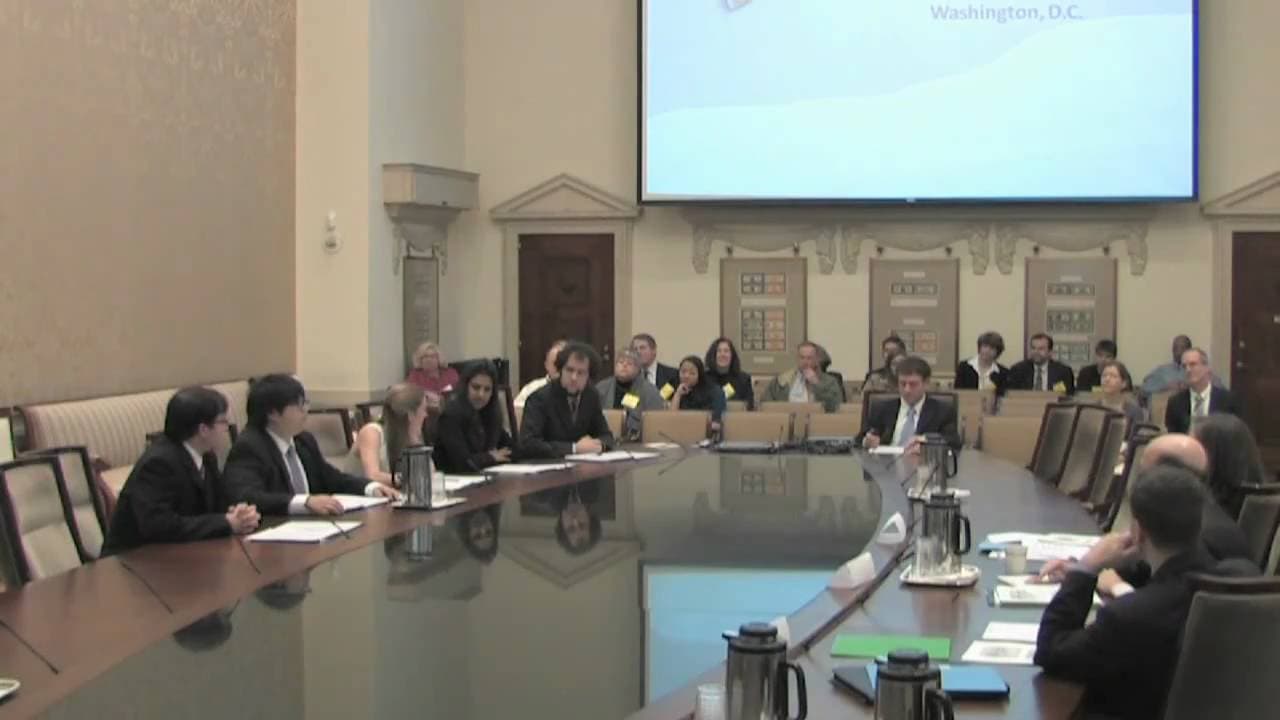
What Monetary Policy Did the Lafayette College Team Propose at the 2010 College Fed Challenge National Finals?
TL;DR
The Lafayette College team argued that continued monetary easing was necessary to support a weak recovery while limiting deflation risk. Their presentation cited five straight quarters of GDP growth, unemployment above 9% in October 2010, core PCE inflation of 0.8%, and a plan to purchase $600 billion in Treasuries by the second quarter of 2011. Read on for their policy reasoning, economic evidence, and proposed exit measures.
Transcript
Good morning. I'm Dillon McNamara >>I'm Katie Betar [phonetic] >>I'm Haley Ephons [phonetic] >>I'm Mio Wong [phonetic] >>I'm Nick Stacey [phonetic] >>I'm Alex Olbrecht, the Executive Director of the Eastern Economic Association and my claim to fame is I participated in a high school Fed challenge [laughter] in 1996 where my judge told me one day ... Read More
Key Insights
- 😘 FOMC members believe that maintaining an expansionary stance is necessary to address economic slack, high unemployment, and low inflation.
- 🙈 Quantitative easing is seen as a tool to reduce the threat of deflation, improve lending, and stimulate economic growth.
- ☠️ The impact of quantitative easing on interest rates, inflation, and lending activities is a subject of debate among FOMC members.
- 📼 FOMC members highlight the challenges and importance of developing a clearly defined exit strategy for asset purchases and future monetary policy measures.
- 🤩 Concerns about the sustainability of the recovery, weak consumer confidence, and structural shifts in the labor market are key factors influencing policy decisions.
- 👋 FOMC members view foreign economic growth, weakening dollar, and improved financial market conditions as potential drivers of U.S. growth through increased demand for goods and improved access to capital markets for firms.
Install to Summarize YouTube Videos and Get Transcripts
Explore YouTube Video Summarizer or Get YouTube Transcript Extractor
Questions & Answers
Q: What monetary policy did the Lafayette College team propose at the 2010 College Fed Challenge National Finals?
The team supported maintaining the federal funds rate between zero and 25 basis points and continuing the second round of quantitative easing. It presented the planned purchase of $600 billion in Treasuries by the second quarter of 2011 as necessary to aid the recovery, while emphasizing that incoming information could justify adjustments.
Q: Why did the team support a second round of quantitative easing?
The team argued that quantitative easing could reduce the threat of deflation and keep long-term interest rates lower. These conditions were intended to improve lending, investment, and spending while the economy still faced weak demand and substantial slack.
Q: What economic conditions did the Lafayette College team identify?
The presentation noted that U.S. GDP had expanded for five straight quarters, with growth reaching 5% annualized before slowing to 2% in the previous two quarters. It also cited unemployment above 9% in October 2010 and core PCE inflation of 0.8%.
Q: Why was deflation considered a risk to the recovery?
One participant warned that a deflation cycle could leave the economy stagnant with unemployment at its elevated level. High real debt burdens could become harder for consumers to repay, while consumption and investment spending could be postponed.
Q: Did everyone on the team agree that deflation threatened the economy?
No. One participant supported maintaining asset purchases as long as necessary to reduce deflation risk, while another said deflation was not a threat and saw no strong evidence that growth was about to cease.
Q: What exit strategy did the team discuss for quantitative easing?
The team stressed the need for a clearly defined exit strategy and continued testing of tools for removing reserves from the banking system. Measures discussed included term deposits, term reverse transactions, raising the interest rate on excess reserves, and possibly increasing the federal funds rate.
Q: What evidence suggested that the economic recovery was sustainable but weak?
The presentation cited continued industrial production growth, strong profit margins supporting capital spending, and capacity utilization near 75%. One participant described the recovery as sustainable but weak, while others cautioned that declining consumer confidence and labor-market slack still threatened demand.
Q: Why was consumer spending weak during the recovery?
The team linked weak consumption to economic uncertainty, low consumer confidence, and labor-market slack that kept wage and salary growth below overall economic growth. It also noted that consumers had become more hesitant after the crisis and that the saving rate had risen and remained at 6%.
Summary & Key Takeaways
-
FOMC members discuss the positive economic growth of the US GDP for the past five quarters, but express concerns over the high unemployment rate and low inflation.
-
They debate whether to continue quantitative easing as a necessary measure to reduce the threat of deflation and maintain lower long-term interest rates.
-
FOMC members also discuss the challenges and potential exit strategies for quantitative easing, the impact on the housing market, and the potential risks of inflation.
Read in Other Languages (beta)
Share This Summary 📚
Summarize YouTube Videos and Get Video Transcripts with 1-Click
Try YouTube Summary with ChatGPT & Claude or YouTube Transcript Generator
Explore More Summaries from Federal Reserve 📚


Summarize YouTube Videos and Get Video Transcripts with 1-Click
Try YouTube Summary with ChatGPT & Claude or YouTube Transcript Generator