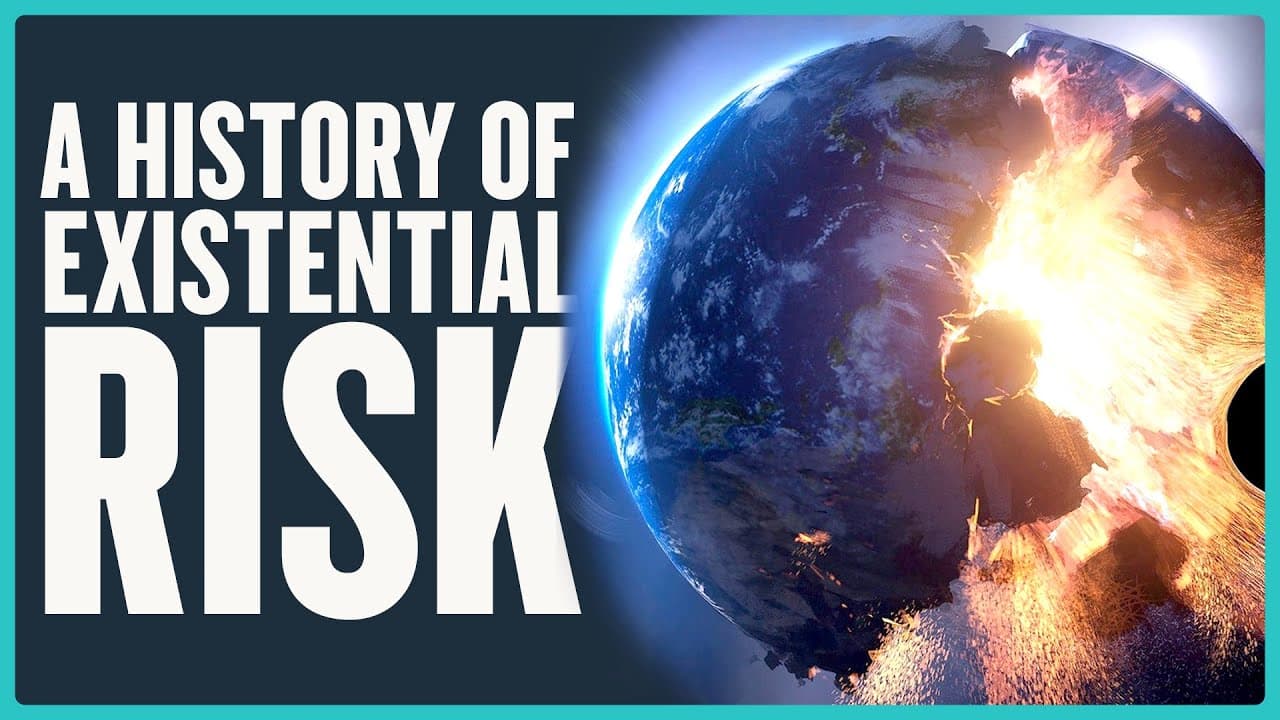
A History Of Existential Risk - Thomas Moynihan | Modern Wisdom Podcast 306
TL;DR
Studying existential risk historically reveals that humanity’s ability to foresee extinction and recognize how bad it would be is itself a major intellectual achievement. Although 99.9% of all species that ever existed are now extinct, humans can identify threats, realize when they are wrong, and correct themselves. That tension between vulnerability and intellectual progress explains why a history of human annihilation can offer hope, and why the discussion is worth exploring further.
Transcript
99.9 of all species that have ever existed are now extinct so it's extinction is the rule survival is the exception that's an important thing to know is that you know potentially we have come close before this isn't something that is completely unprecedented if we're worried about existential risks annihilating our future why spend any time studyin... Read More
Key Insights
- 📏 Extinction is the rule in nature, with 99.9% of all species that have ever existed now extinct.
- ❓ Recognizing the possibility of human extinction is a recent intellectual achievement, separate from ancient narratives of cyclical catastrophes.
- 🪈 Extinction frustrates morality and value, while apocalypse implies the fulfillment of moral order.
- 🤞 The modern understanding of extinction offers hope in realizing how far we've come and the potential for correcting our mistakes.
- 🌍 The unprecedented ability to correct ourselves and the capacity to make the world a better place are unique to humans.
- 🌸 Understanding our vulnerability and the potential loss of human potential emphasizes the need for collective action and precautionary measures.
- 🙏 The distinction between apocalypse and extinction highlights the importance of shaping our values to align with a reality that is independent of our desires and wishes.
Install to Summarize YouTube Videos and Get Transcripts
Explore YouTube Video Summarizer or Get YouTube Transcript Extractor
Questions & Answers
Q: Why study the history of existential risk?
Looking backward shows how far humanity has come in recognizing dangers that could annihilate its future. The ability to notice existential risks and understand how bad human extinction would be is described as a huge, distinctly modern intellectual achievement.
Q: How common is extinction among species?
According to Thomas Moynihan, 99.9% of all species that have ever existed are now extinct. He therefore describes extinction as the rule and survival as the exception.
Q: Why can thinking about human extinction be hopeful?
Examining the history of discovery and intellectual progress reveals humanity’s capacity to recognize errors and correct them. Moynihan calls this historical perspective a cure for despondency because it balances attention to future risks with awareness of how far humanity has come.
Q: What makes the ability to grasp human extinction significant?
It allows humanity to see risks on the horizon and appreciate the severity of losing its entire future. The discussion presents this awareness as a significant intellectual achievement that separates humans from other animals.
Q: Why is human extinction worse than many other disasters?
Human extinction would foreclose the whole future, rather than only harming people in the present. Jonathan Schell articulated this asymmetry while writing in the 1980s amid Cold War thermonuclear proliferation.
Q: How do inherited ideas conceal humanity’s intellectual progress?
Ideas learned through cultural osmosis can feel obvious even though earlier generations required centuries or decades of effort and error correction to develop them. Moynihan uses perspective drawing as an example: drawing a cube may come naturally to a child today, but it would not have six or seven centuries earlier.
Q: What does error correction contribute to humanity’s future?
Recognizing that current beliefs may be wrong creates the possibility of knowing better. Moynihan finds hope in humanity’s ability to identify mistakes and correct itself rather than treating its present understanding as final.
Q: What are Jonathan Schell’s two kinds of death?
The first is the familiar death of an individual. The other is human extinction, which differs because it closes off the whole future rather than ending only one person’s life.
Summary & Key Takeaways
-
Extinction is the rule, not the exception, and humanity has come close to extinction in the past through events like volcanic eruptions.
-
The ability to grasp the prospect of our own extinction is a modern achievement and a cure for despondency, as it shows how far we've come.
-
The distinction between apocalypse and extinction is crucial, with apocalypse implying fulfillment and extinction implying irreversible frustration of morality and value.
Read in Other Languages (beta)
Share This Summary 📚
Summarize YouTube Videos and Get Video Transcripts with 1-Click
Try YouTube Summary with ChatGPT & Claude or YouTube Transcript Generator
Explore More Summaries from Chris Williamson 📚





Summarize YouTube Videos and Get Video Transcripts with 1-Click
Try YouTube Summary with ChatGPT & Claude or YouTube Transcript Generator