How Should CISOs Brief a Board of Directors?
TL;DR
Effective CISO briefings connect the security program’s current condition to strategic actions with measurable business benefits, then report progress consistently over time. The goal is not merely to inform directors, but to gain their support for changes that employees, managers, administrators, and developers must make to improve security.
Transcript
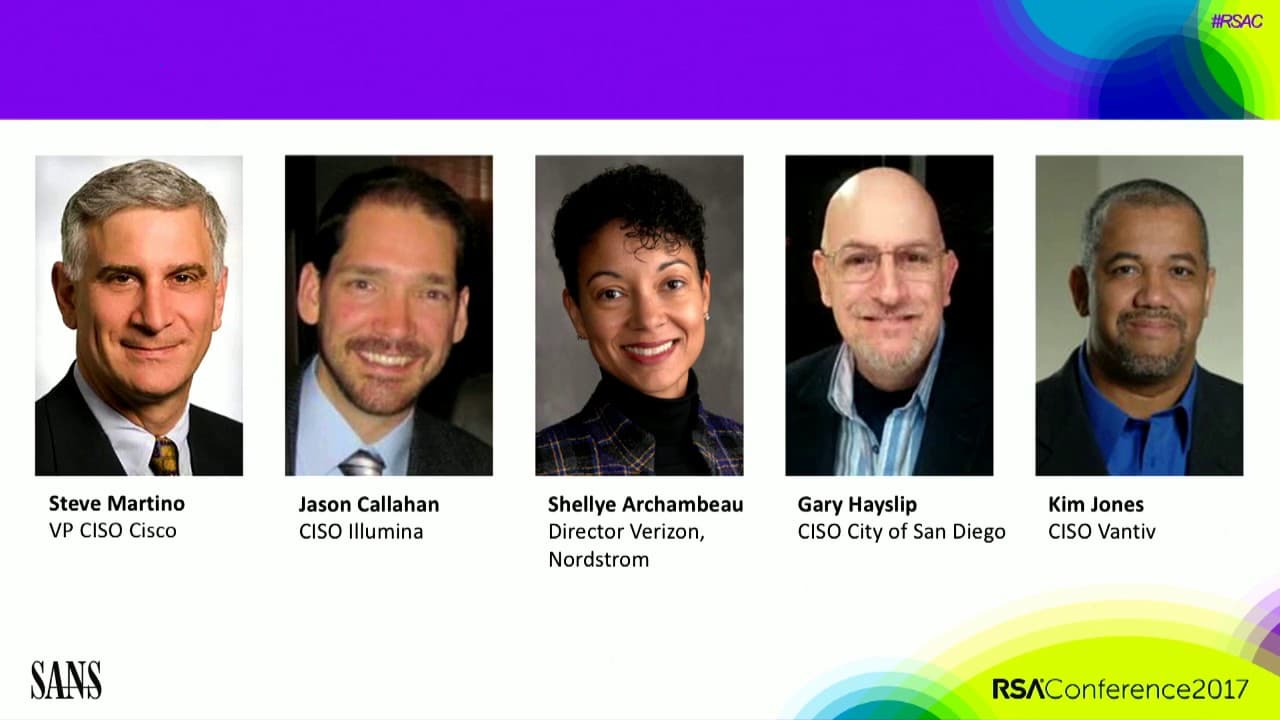
I'm gonna introduce John, who will chair this session. I'm Alan Paller, I'm the founder of SANS, and, um, for fourteen years, John ran Gartner's security group. And he wouldn't call me very often, but every single time he called me, it was to tell me how wrong I was. So about three and a half years ago, he calls me up and he says, "I wanna talk to ... Read More
Key Insights
- Successful cybersecurity programs are distinguished by their ability to persuade people outside the security team to take necessary action. Users, business managers, IT administrators, and software developers often control whether important security practices are implemented consistently across the organization.
- A board briefing is both an information session and an opportunity to secure executive support for organizational change. Directors should understand what is happening, what actions are proposed, and how their backing can help the CISO influence peers and operational teams.
- Effective CISOs are grounded in security concepts while also understanding their industry, company, threats, valuable assets, and internal decision processes. This combination helps them select measures that fit the organization instead of applying technically valid but operationally unsuitable solutions.
- A security solution is ineffective when its operational burden is as harmful as the problem it addresses. CISOs must balance protection with business needs, recognizing that an approach suitable for retail may not work in manufacturing, healthcare, or academic environments.
- The board needs a clear connection between the security program’s current condition and proposed strategic actions. Recommendations become more useful when they include measurable business benefits and create a basis for reporting whether the organization has improved over time.
- Consistent reporting is familiar and useful to directors because boards regularly receive recurring financial information in a stable format. Security leaders can make progress easier to evaluate by reporting the same meaningful measures repeatedly rather than changing the presentation each time.
- Security success includes limiting the impact of incidents, not only preventing every intrusion. Faster detection, stronger protection of important databases, and rapid mitigation can keep an event from becoming a much more damaging breach.
- Board support is a force multiplier for the CISO because many security improvements require action by other departments. When directors endorse a necessary change, the security leader has greater leverage to align business units, technology teams, and developers around it.
Install to Summarize YouTube Videos and Get Transcripts
Explore YouTube Video Summarizer or Get YouTube Transcript Extractor
Questions & Answers
Q: How should a CISO brief a board of directors?
A CISO should describe the security program’s current condition, connect that condition to proposed strategic actions, and explain the measurable business benefit expected from each action. The briefing should also establish a consistent method for reporting progress from the earlier position to the current one. This structure helps directors understand the situation and support changes across the organization.
Q: What is the main purpose of a cybersecurity board briefing?
The main purpose is to inform directors and obtain their support for meaningful change. Security outcomes often depend on actions by users, business managers, IT administrators, and software developers rather than the security team alone. A strong briefing gives the board enough context to endorse practical changes and help the CISO influence the groups responsible for implementing them.
Q: What information do boards want from security leaders?
Boards want a connected account of the security program’s current status, the strategic actions being proposed, and the measurable business benefits those actions should produce. They also want continuing reports that show where the organization started and where it stands now. This approach makes security progress visible and gives directors a practical basis for supporting decisions.
Q: Why must CISOs understand how their company operates?
CISOs need to understand how the company makes money, how projects and services receive approval, how IT operates, and where security enters those processes. They must also understand the organization’s threats and motivations. Without that business context, a technically sound control may disrupt operations, fail to gain adoption, or create consequences worse than the original security problem.
Q: How can board support improve a security program?
Board support can help a CISO persuade other parts of the organization to perform necessary security work. Employees may need to change behavior, managers may need to approve new practices, administrators may need to maintain systems differently, and developers may need to improve software security. Director backing gives these requests greater authority and helps turn security recommendations into coordinated action.
Q: What makes a CISO successful at driving security improvements?
A successful CISO combines a foundational understanding of security and vulnerabilities with detailed knowledge of the company, its industry, its threats, and its internal decision processes. The CISO then balances business demands against available protections and chooses solutions that people can realistically implement. The decisive capability is turning that judgment into action by others.
Q: Why should cybersecurity reporting remain consistent over time?
Consistent reporting allows directors to compare the organization’s previous security condition with its current position. Boards are accustomed to receiving recurring financial information in a stable form, including unfavorable results, so security leaders can use a similar pattern. Repeated, meaningful measures make improvement or deterioration easier to recognize and keep attention focused on agreed strategic actions.
Q: Can a security program succeed even when a breach occurs?
A security program can still demonstrate success when it detects an intrusion quickly, protects more of the organization’s important data, and mitigates the incident before the damage expands. Prevention remains important, but the discussion emphasizes that rapid detection and response also matter. Success includes controlling what happens and limiting the breach’s effect on the company and its customers.
Summary & Key Takeaways
-
Successful security programs depend on more than technical controls and skilled security staff. CISOs must understand the organization’s threats, business model, approval processes, and working culture. That knowledge allows them to recommend protections that people can adopt without creating operational consequences that are worse than the security problem itself.
-
A board briefing should explain the security program’s current condition, identify strategic actions that can improve it, and connect those actions to measurable business benefits. Consistent follow-up reporting helps directors compare the organization’s earlier position with its current position and determine whether approved changes are producing meaningful progress.
-
The central purpose of briefing directors is to drive action throughout the organization. Security often depends on users, business managers, IT administrators, and software developers changing their behavior. Board support gives a CISO greater ability to influence those groups, strengthen protection, and potentially reduce unnecessary security spending through better practices.
Read in Other Languages (beta)
Share This Summary 📚
Summarize YouTube Videos and Get Video Transcripts with 1-Click
Try YouTube Summary with ChatGPT & Claude or YouTube Transcript Generator
Explore More Summaries from RSAC Cybersecurity 📚




Summarize YouTube Videos and Get Video Transcripts with 1-Click
Try YouTube Summary with ChatGPT & Claude or YouTube Transcript Generator