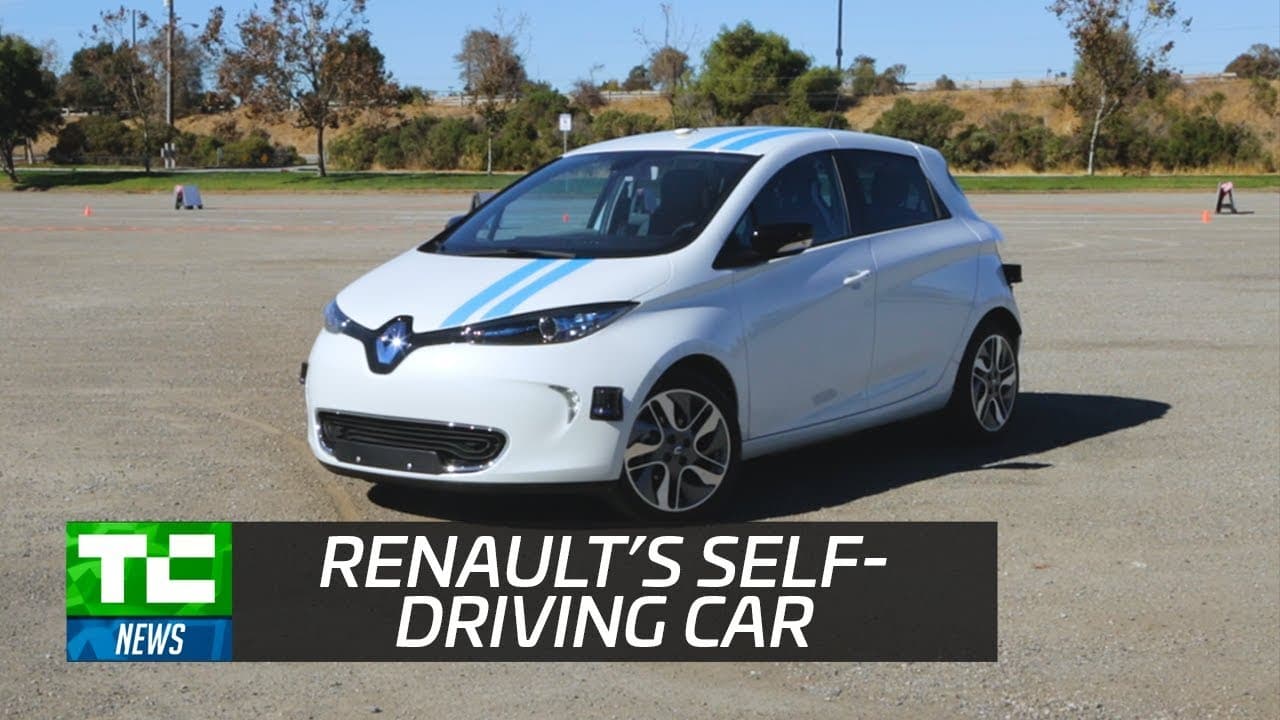
Renault’s self-driving car avoids obstacles as well as pro drivers
TL;DR
Renault’s autonomous control system can perform emergency obstacle-avoidance maneuvers at speeds matching a professional test driver. The demonstration tests speeds of around 27 miles per hour on loose gravel using six inflatable obstacles deployed in pairs. The technology is inspired by professional test drivers and aims to meet or beat the human safety benchmark. Read on for the test conditions and design rationale.
Transcript
(uptempo house music) - So tell me, what are we about to see here today? - Today we're announcing an autonomous control system that's able to successfully complete obstacle avoidance maneuvers in emergency situations, up to the same speeds as a professional test driver. - Nice. And can you tell me a little bit about the technology itself? - Sure. T... Read More
Key Insights
- 🏆 The autonomous control system is designed to match the obstacle avoidance skills of professional test drivers.
- 😨 Learning from the best human drivers is crucial for enhancing the safety and performance of autonomous cars.
- 🚨 The system can achieve the same levels of performance as test drivers in emergency situations.
- 🌍 Inflatable obstacles are used to simulate real-world scenarios that require quick evasive maneuvers.
- 😀 Speed limitations for obstacle avoidance depend on conditions and scenarios, with testing up to 27 miles per hour in the demonstration.
- 🦺 The autonomous control system aims to surpass human driving safety benchmarks for increased road safety.
- ❓ Loose gravel surfaces offer unpredictable conditions for obstacle avoidance systems to navigate.
Install to Summarize YouTube Videos and Get Transcripts
Explore YouTube Video Summarizer or Get YouTube Transcript Extractor
Questions & Answers
Q: How well can Renault’s self-driving car avoid obstacles?
The autonomous control system can complete emergency obstacle-avoidance maneuvers at speeds matching a professional test driver. The demonstration is intended to show the same level of performance as a professional test driver during rapid evasive maneuvers.
Q: What inspired Renault’s autonomous control system?
The technology is inspired by professional test drivers and their exceptional driving skills. Its developers consider learning from the best drivers essential to improving autonomous-car safety.
Q: What obstacles are used in the demonstration?
The demonstration uses six inflatable obstacles. They are deployed in pairs to surprise either the driver or Callie and create a scenario demanding a very quick evasive maneuver.
Q: How fast is the car tested during obstacle avoidance?
The car is tested at speeds of around 27 miles per hour in the demonstrated scenario. The speaker emphasizes that the achievable speed depends greatly on the conditions and situation.
Q: What surface is used for the obstacle-avoidance test?
The test takes place on a loose gravel surface whose conditions change from day to day. The speaker describes its performance as roughly halfway between ice and a dry road.
Q: Why does the test deploy obstacles in pairs?
Deploying the inflatable obstacles in pairs creates an unexpected situation for the driver or passenger. This setup simulates an emergency requiring a very quick evasive maneuver.
Q: What human-driving safety benchmark does the system aim to beat?
The speaker says drivers in most developed countries achieve fewer than one fatality per 100 million miles. Meeting and beating that benchmark is presented as essential for autonomous-car safety.
Q: Did the car hit a cone during the demonstration?
Megan asks whether the car hit the cone after the maneuver. Shad replies that it did not.
Summary & Key Takeaways
-
A new autonomous control system is announced, capable of performing emergency obstacle avoidance maneuvers at speeds matching professional test drivers.
-
The technology is inspired by the exceptional driving skills of humans, aiming to surpass their safety benchmark.
-
The system is demonstrated with inflatable obstacles that require quick evasive maneuvers.
Read in Other Languages (beta)
Share This Summary 📚
Summarize YouTube Videos and Get Video Transcripts with 1-Click
Try YouTube Summary with ChatGPT & Claude or YouTube Transcript Generator
Explore More Summaries from TechCrunch 📚






Summarize YouTube Videos and Get Video Transcripts with 1-Click
Try YouTube Summary with ChatGPT & Claude or YouTube Transcript Generator