The $2 BILLION Cruise Ship Is Ready to Set Sail
TL;DR
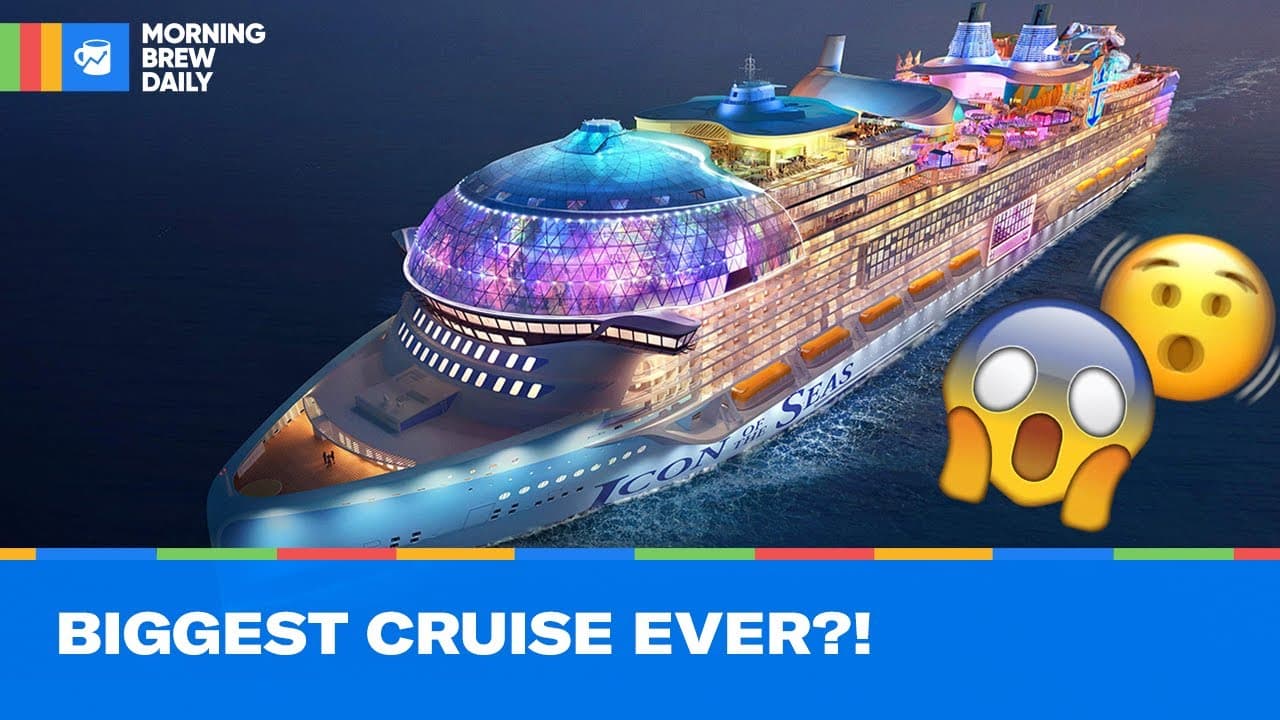
The world's largest cruise ship, Icon of the Seas, embarks on its maiden voyage.
Transcript
Good Morning Daily Show. I'm Neal Freyman. And I'm Toby Howell. Today we're going to make a pina colada and toast to the world's largest cruise ship that's about to set sail on its maiden voyage. Then US GDP numbers came in and they showed an economy firing on all cylinders. It's Friday, January 26th. Let's ride a. All right. Imagine you open up yo... Read More
Key Insights
- The Icon of the Seas is the largest cruise ship ever, capable of carrying about 10,000 people, marking a significant milestone for the cruise industry post-pandemic.
- The ship symbolizes the cruise industry's recovery from COVID-19, with Royal Caribbean experiencing record bookings despite previous financial losses.
- The cruise ship's size and luxury have sparked online debates about excess and capitalism versus affordability for middle-class vacations.
- Environmental concerns are addressed with the ship using liquefied natural gas, which is 25% less polluting than traditional fuel oils.
- The U.S. economy grew at a robust 3.3% in Q4, exceeding expectations and showing resilience despite global economic challenges.
- Media industry layoffs have surged, affecting iconic publications like the Los Angeles Times and Business Insider, highlighting the sector's struggles.
- Chinese stocks have significantly declined, losing $6 trillion in value due to economic uncertainties and government policies.
- French farmers are protesting against EU regulations, claiming they are overburdened and undervalued, which could impact upcoming EU elections.
Install to Summarize YouTube Videos and Get Transcripts
Explore YouTube Video Summarizer or Get YouTube Transcript Extractor
Questions & Answers
Q: What makes the Icon of the Seas significant for the cruise industry?
The Icon of the Seas is the largest cruise ship ever built, capable of carrying about 10,000 people. Its launch marks a significant recovery for the cruise industry post-pandemic, which had been severely affected by COVID-19. The ship's size and luxury features have sparked debates about capitalism and affordability, but it also represents a major engineering achievement for the industry.
Q: How has the U.S. economy performed recently?
The U.S. economy grew at a robust 3.3% in the fourth quarter, surpassing expectations and indicating strong economic resilience. This growth occurred despite various global challenges such as disrupted trade routes, high interest rates, and geopolitical instability. Consumer and government spending were key drivers, and inflation metrics showed promising signs of stability.
Q: What challenges is the media industry currently facing?
The media industry is experiencing significant layoffs, with major outlets like the Los Angeles Times and Business Insider cutting substantial portions of their staff. This trend highlights the industry's ongoing struggles to adapt to the digital age and changing consumer habits. Additionally, trust in journalism remains low, further complicating the industry's efforts to stabilize and grow.
Q: What is the current state of China's stock market?
China's stock market has lost $6 trillion in value over the past three years, making it one of the worst-performing major indices globally. Concerns about the country's long-term economic direction, real estate sector issues, and a shrinking population contribute to this decline. Despite government efforts to stimulate the market, investor confidence remains low.
Q: Why are French farmers protesting?
French farmers are protesting against EU regulations that they feel overburden them with rules while their incomes decline. These protests highlight broader frustrations with top-down regulations and economic pressures. The farmers' grievances also intersect with political concerns, as upcoming EU elections could see gains for far-right parties that support the farmers' cause.
Q: How does the Icon of the Seas address environmental concerns?
The Icon of the Seas uses liquefied natural gas, which is 25% less polluting than traditional fuel oils, to address environmental concerns. The ship also has shore power capabilities, allowing it to run on land-based power while docked, reducing emissions further. Despite these efforts, environmental activists argue that large cruise ships still contribute significantly to pollution.
Q: What is the public's reaction to the Icon of the Seas?
Public reaction to the Icon of the Seas is mixed. Some view it as a symbol of excessive capitalism and environmental disregard, while others see it as an affordable vacation option for the middle class. The ship's size and luxury features have sparked online debates, reflecting broader societal discussions about wealth, consumption, and environmental responsibility.
Q: What are the implications of the U.S. economy's recent performance?
The U.S. economy's recent performance, with unexpected growth and stable inflation metrics, suggests a resilience that defies traditional economic expectations. This growth could bolster consumer and investor confidence, potentially influencing domestic and global economic policies. However, economists caution that the full effects of recent interest rate hikes may not yet be fully realized, leaving some uncertainty about future economic stability.
Summary & Key Takeaways
-
The world's largest cruise ship, Icon of the Seas, is set to sail, symbolizing the cruise industry's revival post-COVID and sparking debates on luxury versus affordability.
-
The U.S. economy shows unexpected growth despite global challenges, while media layoffs highlight ongoing struggles in the journalism sector.
-
French farmers protest EU regulations, and China's stock market faces significant losses, reflecting broader economic and political tensions.
Read in Other Languages (beta)
Share This Summary 📚
Summarize YouTube Videos and Get Video Transcripts with 1-Click
Try YouTube Summary with ChatGPT & Claude or YouTube Transcript Generator
Explore More Summaries from Morning Brew Daily 📚


Summarize YouTube Videos and Get Video Transcripts with 1-Click
Try YouTube Summary with ChatGPT & Claude or YouTube Transcript Generator