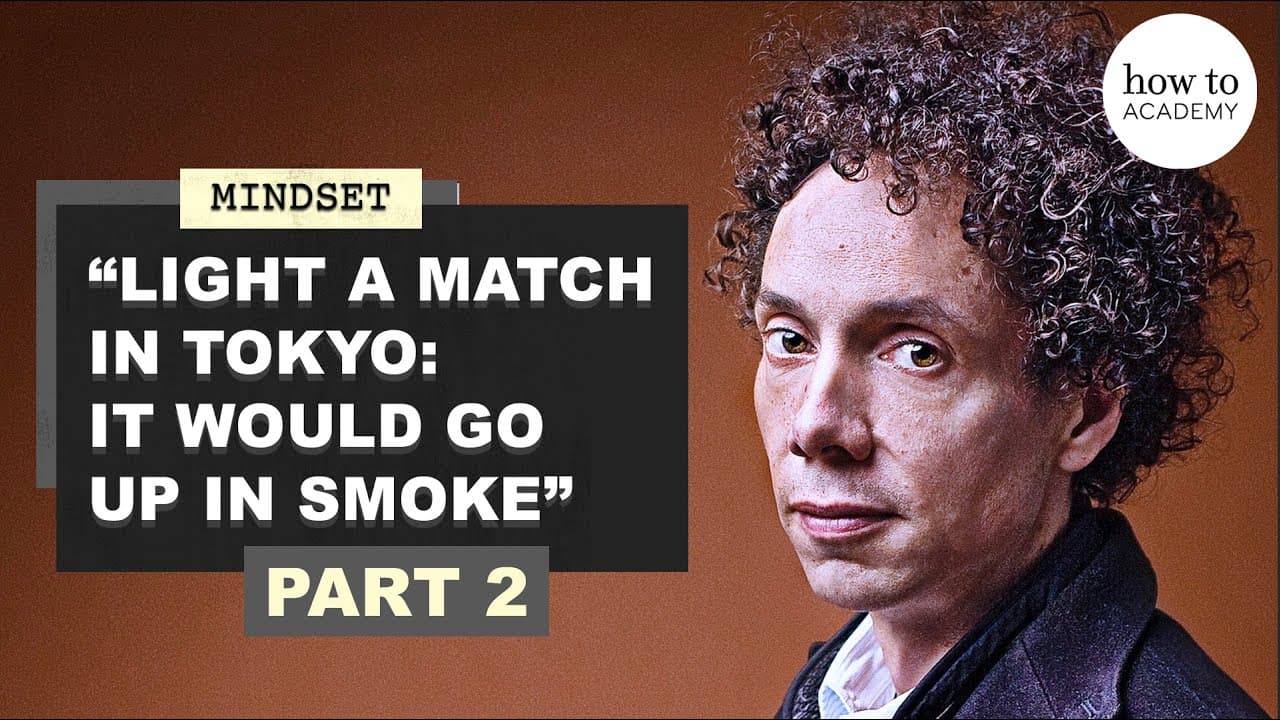
Malcolm Gladwell: Did bombing German cities prolong the war? | Part 2
TL;DR
A comprehensive analysis of the destructive effects of aerial bombing during World War II, focusing on the contrasting approaches of the Bomber Mafia and Curtis LeMay.
Transcript
you say that all of these were were young men that it was a young man's game and one of the things i was reminded of reading this book that of course aviation itself hadn't been around for that long the wright brothers flew in 1903 so this is really less less than 40 years later and when you introduce i'm gonna ask you about curtis lemay um so many... Read More
Key Insights
- 🚡 The contrasting approaches of the Bomber Mafia and Curtis LeMay reflect the differing philosophies on the effectiveness and morality of aerial bombing.
- 😒 The use of napalm and its devastating impact on Japanese cities during World War II is a largely overlooked aspect of the conflict.
- 🙃 Revenge was a motivating factor in bombing campaigns, with both sides seeking to destroy the enemy's cities in response to previous attacks.
- 🫱 The development of new technologies and tactics, such as the norton bomb site and napalm, shaped the strategies and outcomes of aerial bombing during the war.
- 😮 The rise of biology as a prominent scientific discipline in the 21st century mirrors the shift from physics and chemistry as the glamour fields of the 20th century.
- 🖤 The lack of historical recognition for the development of napalm can be attributed to the dominance of physics over chemistry in the popular imagination.
- 🍉 The ethical implications of aerial bombing, particularly in terms of collateral damage and civilian casualties, continue to be debated and have evolved over time.
- 🎙️ More videos with Malcolm Gladwell:
Install to Summarize YouTube Videos and Get Transcripts
Explore YouTube Video Summarizer or Get YouTube Transcript Extractor
Questions & Answers
Q: Who was Curtis LeMay and what was his stance on aerial bombing?
Curtis LeMay was a military leader who strongly believed in indiscriminate bombing as an effective strategy for defeating the enemy. He viewed the Bomber Mafia as impractical dreamers and advocated for ruthless and unsentimental tactics.
Q: What was the approach of the Bomber Mafia towards aerial bombing?
The Bomber Mafia advocated for targeted strikes on crucial military targets instead of indiscriminate bombing of civilian areas. They believed that destroying the enemy's manufacturing capacity and air force would be more effective in winning the war.
Q: How did the development of napalm impact the war?
Napalm, a jellied form of gasoline, was developed to burn down Japanese cities made mostly of flammable materials. Its deployment resulted in the incineration of 66 cities in Japan, causing the deaths of hundreds of thousands of civilians.
Q: Was revenge a motivating factor in bombing campaigns during World War II?
Yes, revenge played a significant role in the decision-making process of bombing campaigns. The British bombing campaign against Germany was partly driven by a desire to exact revenge for the damage caused during the Blitz.
Summary & Key Takeaways
-
The book explores the conflicting beliefs about aerial bombing during World War II, with the Bomber Mafia advocating for targeted strikes on crucial military targets, while Curtis LeMay favored indiscriminate bombing as a means of defeating the enemy.
-
The development and deployment of napalm, a jellied form of gasoline used to incinerate Japanese cities, resulted in the deaths of hundreds of thousands of civilians in Japan.
-
The book highlights the revenge-driven approach of bombing campaigns and questions the effectiveness of such tactics in achieving military objectives.
Read in Other Languages (beta)
Share This Summary 📚
Summarize YouTube Videos and Get Video Transcripts with 1-Click
Try YouTube Summary with ChatGPT & Claude or YouTube Transcript Generator
Explore More Summaries from How To Academy Mindset 📚




Summarize YouTube Videos and Get Video Transcripts with 1-Click
Try YouTube Summary with ChatGPT & Claude or YouTube Transcript Generator