How to Apply Habits of World-Class Performers
TL;DR
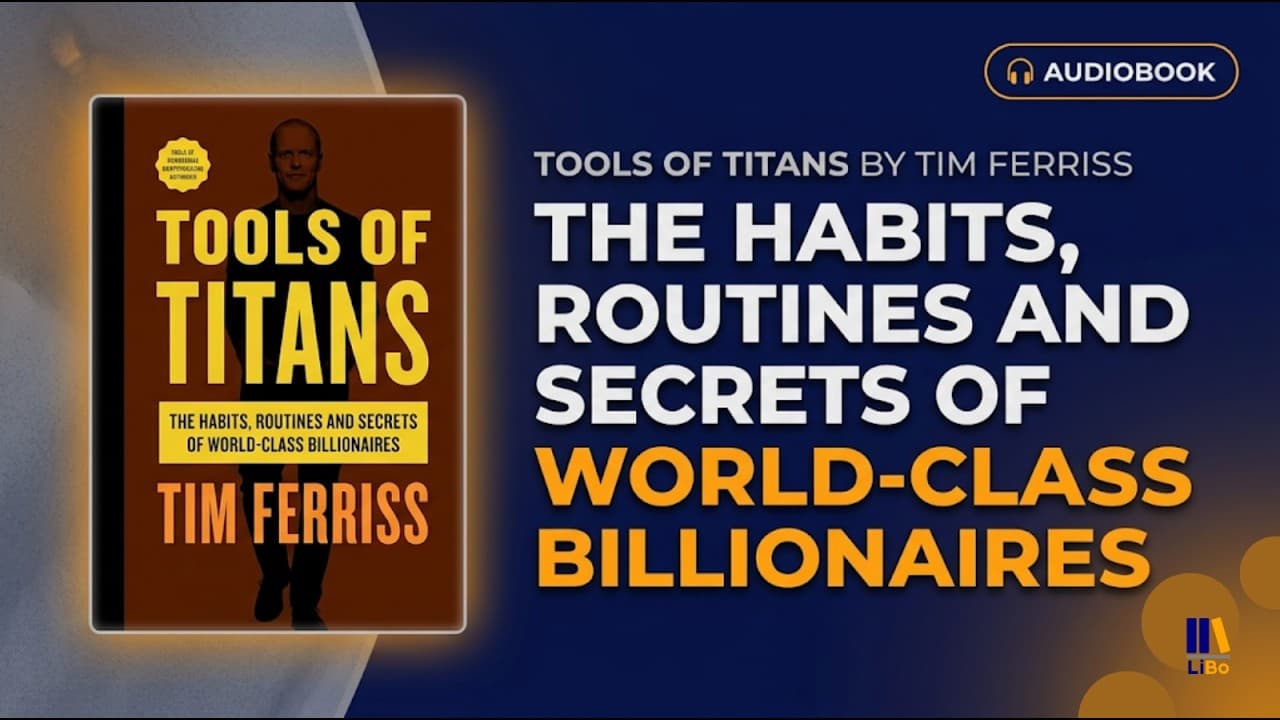
Extraordinary performance comes from testing useful ideas, building reliable routines, asking assumption-breaking questions, and learning from other people. Consistent systems outperform fluctuating motivation, while health, relationships, happiness, and wisdom keep achievement meaningful. The goal is not to imitate one successful person completely, but to identify practices that fit your circumstances and apply them repeatedly.
Transcript
Before we begin, think about this for a moment. What if you could sit across from the world's greatest performers, entrepreneurs, athletes, billionaires, artists, scientists, military leaders, and thinkers, and ask them one simple question? What are the tools, habits, beliefs, and principles that made you extraordinary? And what if instead of spend... Read More
Key Insights
- Greatness is learnable because high performers rely on habits, questions, principles, and systems that other people can study and test. Their results are not presented as products of inaccessible magical gifts, but as outcomes shaped by repeatable practices and consistent decisions.
- Success is supported by other people, including mentors, teachers, coaches, friends, partners, and strangers. Arnold Schwarzenegger rejects the self-made label despite his achievements, emphasizing that continued learning and assistance from others are essential parts of an exceptional career.
- Better questions create better answers by forcing the mind beyond familiar assumptions. Peter Thiel's question about completing a 10-year plan in six months is not necessarily a literal deadline, but a way to provoke higher-leverage strategies, partnerships, skills, and changes in direction.
- Routines are tools for ambitious people because motivation, creativity, and willpower are unreliable. Stable rituals allow athletes, entrepreneurs, and writers to act consistently even when they do not feel inspired, making habits stronger foundations for performance than temporary moods.
- Health is the foundation of sustained achievement because energy, mental clarity, recovery, sleep, discipline, and emotional balance affect every other pursuit. Wealth loses much of its value without physical well-being, while poor clarity can cause people to overlook valuable opportunities.
- Happiness is a practice during the journey, not a guaranteed reward that automatically follows money, status, or recognition. The interviews suggest that external achievement and happiness are not necessarily connected, so fulfillment must receive deliberate attention alongside professional ambitions.
- Experimentation turns borrowed wisdom into practical knowledge. Tim Ferriss describes himself as an experimenter who collects workouts, diets, routines, habits, and observations, then tests and refines them. The objective is to learn what works once, preserve it, and reuse it.
- Personal application matters more than copying another person's identity. The collection offers a toolbox rather than one universal formula, encouraging people to examine varied practices, discover what fits their own circumstances, and convert useful wisdom into repeated action.
Install to Summarize YouTube Videos and Get Transcripts
Explore YouTube Video Summarizer or Get YouTube Transcript Extractor
Questions & Answers
Q: How can you apply the habits of world-class performers?
Study the routines, questions, beliefs, and systems used by accomplished people, then test selected practices in your own life. Do not attempt to become an exact copy of one performer. Treat each idea as an experiment, observe whether it improves your results, refine it when necessary, and consistently reuse the approaches that prove effective for you.
Q: Why are routines important for high performance?
Routines create consistency when motivation, creativity, and willpower inevitably change. A champion, entrepreneur, or writer cannot depend on feeling inspired every day, so repeated rituals make productive action less dependent on mood. The transcript presents routines as signs of ambition because they turn small, useful decisions into dependable behavior that supports long-term achievement.
Q: What does the 10-year plan in six months question mean?
The question asks why an objective planned for 10 years could not be accomplished in six months. It is not presented as proof that every decade-long goal can literally fit into that period. Its purpose is to expose invisible limitations and encourage alternatives such as building a business, developing high-leverage skills, finding partners, changing industries, or thinking on a larger scale.
Q: Why does Tim Ferriss describe himself as an experimenter?
Tim Ferriss collects ideas to test, refine, and apply rather than merely keeping them for entertainment. He documents workouts, diets, routines, experiments, habits, and observations because he believes a successful method can be studied, repeated, and improved. His aim is to learn something useful once and continue benefiting from it instead of repeatedly starting over.
Q: What do successful people from different fields have in common?
The people discussed come from different professions and lifestyles, but recurring patterns appear across their experiences. Many use meditation or disciplined routines, ask unusual questions, deliberately face discomfort, value relationships over transactions, protect their health, and play long-term games. These similarities suggest that excellence often grows from shared principles even when specific careers and circumstances differ substantially.
Q: Why is no successful person truly self-made?
Major accomplishments depend on contributions from mentors, teachers, coaches, friends, partners, and other supporters. Arnold Schwarzenegger illustrates this principle by rejecting the self-made label and crediting those who helped him. The lesson challenges the lone-genius myth and encourages people to remain humble, continue learning, recognize assistance, and build relationships instead of treating success as an isolated achievement.
Q: How are health, wealth, and wisdom connected?
Health supplies the energy, clarity, recovery, and emotional balance required to pursue opportunities effectively. Wealth without wisdom can feel empty because material achievement alone does not provide direction or fulfillment. Wisdom also needs action, since unused knowledge remains unrealized potential. The three areas therefore work together as complementary parts of a meaningful and sustainable approach to success.
Q: Does professional success automatically create happiness?
Professional success does not necessarily produce happiness. People can spend decades pursuing money, status, and recognition while assuming fulfillment will arrive later, yet still find achievement emotionally empty. The central alternative is to practice happiness during the journey, while also protecting health and relationships. Happiness should be treated as a present discipline rather than a delayed prize for future accomplishments.
Summary & Key Takeaways
-
Tim Ferriss collected lessons from nearly 200 world-class performers, including entrepreneurs, athletes, investors, artists, scientists, military leaders, and spiritual teachers. Reviewing thousands of pages revealed recurring principles across different fields: use routines, ask unusual questions, maintain health, seek guidance from others, test ideas personally, and pursue long-term outcomes.
-
Exceptional performers depend on systems because motivation and willpower fluctuate. They also use ambitious questions, such as asking why a 10-year objective could not be pursued in six months, to challenge invisible assumptions and uncover different approaches. Excellence generally develops through small decisions practiced consistently, rather than through isolated breakthroughs.
-
Achievement alone does not guarantee happiness or fulfillment. The material therefore connects three areas: health, wealth, and wisdom. Physical energy supports performance, wisdom gives wealth direction, and action turns knowledge into results. Readers are encouraged to borrow proven ideas selectively, experiment with them, and retain the tools that work personally.
Read in Other Languages (beta)
Share This Summary 📚
Summarize YouTube Videos and Get Video Transcripts with 1-Click
Try YouTube Summary with ChatGPT & Claude or YouTube Transcript Generator
Explore More Summaries from LiBo 📚
Summarize YouTube Videos and Get Video Transcripts with 1-Click
Try YouTube Summary with ChatGPT & Claude or YouTube Transcript Generator