How one company defeated the world’s richest empire | William Dalrymple on the East India Company
TL;DR
The East India Company defeated the Mughal Empire through military force, subterfuge, bribery, corruption, Indian financing, and an Indian mercenary army. The private corporation then gained control of three of the empire’s richest provinces and carried substantial loot back to Britain, enriching estates such as Powis Castle while disadvantaging India. Read on to understand the alliances, documents, battles, and trade strategy behind its rise.
Transcript
good evening everyone and welcome i'm vas christa dulu the how to academy's deputy director and the producer of our weekly podcast series tonight's guest william dalrymple was born in scotland and now lives on a farm outside delhi he's the author of in xanadu the last mogul and nine lives among many other best-selling works and the winner of the wo... Read More
Key Insights
- 🇮🇳 Powis Castle in Wales holds numerous artifacts and loot plundered by the East India Company from India.
- 🇮🇳 The East India Company, a private corporation, successfully defeated the Mughal Empire and began the process of plundering and looting India.
- 🇮🇴 By leveraging Indian money, an army of Indian mercenaries, and alliances with Indian bankers, the East India Company conquered India.
- ™️ The company ultimately shifted its focus to trading textiles from Mughal India, becoming a key player in the global textile trade.
- 🇮🇴 The wealth accumulated by the East India Company through plundering and looting is often forgotten or overlooked when appreciating the grandeur of historical British estates.
- 🇮🇴 The East India Company was not part of the British government and operated as a corporation with significant power and influence.
- 😥 Thomas Smythe, the founder of the East India Company, played a crucial role in securing investors and appointing commanders for expeditions.
Install to Summarize YouTube Videos and Get Transcripts
Explore YouTube Video Summarizer or Get YouTube Transcript Extractor
Questions & Answers
Q: How did the East India Company defeat the Mughal Empire?
The private company used military force alongside subterfuge, trickery, bribery, and corruption to defeat Mughal armies. It also relied on borrowed Indian money, Indian bankers, and an Indian mercenary army to expand its control.
Q: How did the East India Company acquire so much wealth from India?
The company stripped assets and carried loot from India back to Britain while gaining access to valuable trade. Its wealth was also supported by control of three of the Mughal Empire’s richest provinces and by trading sought-after Indian textiles.
Q: What was the Dewani, and why was it important?
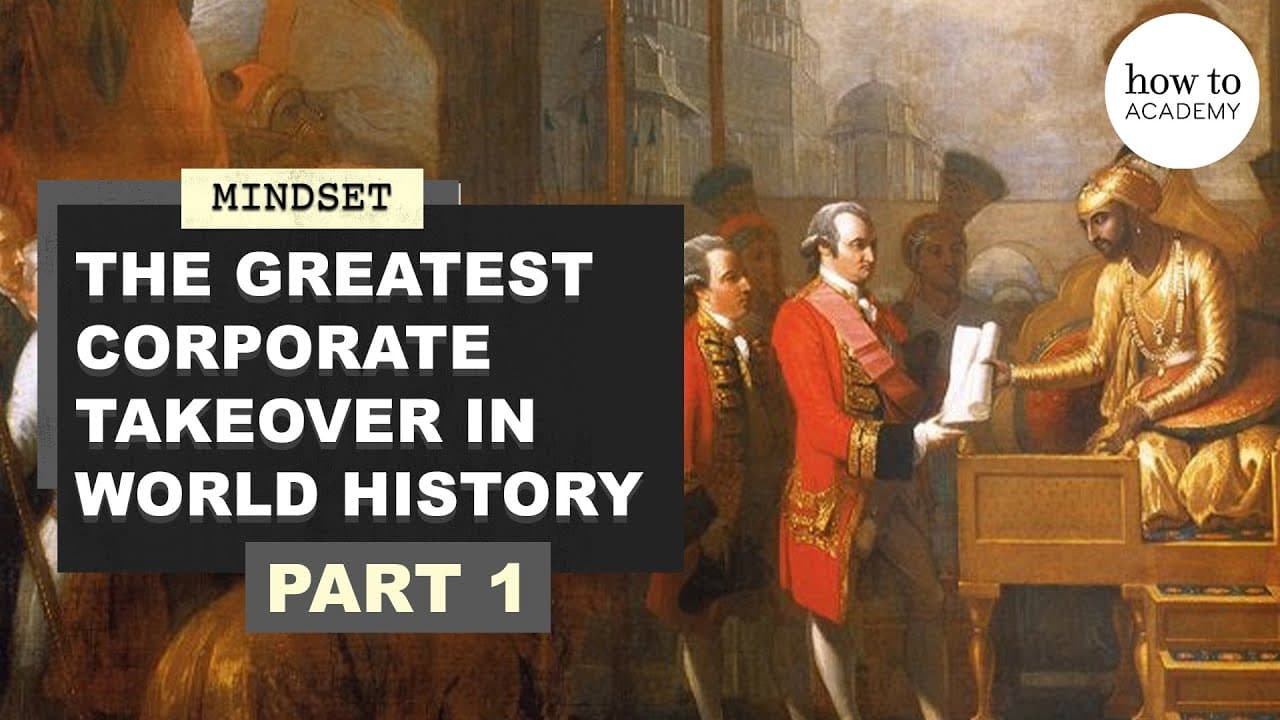
The Dewani was a document bearing the stamps of Mughal emperor Shah Alam and Lord Clive. It transferred three of the Mughal Empire’s richest provinces to a private company, marking a major expansion of the East India Company’s power.
Q: Was the East India Company part of the British government?
No. William Dalrymple emphasizes that Shah Alam handed authority to a private company rather than to the British government. Although Robert Clive held a commission from the Crown as an extraordinary colonel, he was acting in India through the company.
Q: Why is Powis Castle important to the East India Company’s story?
Powis Castle contains more Mughal loot than any museum in India, Pakistan, Bangladesh, or Afghanistan, according to the talk. Its collections include elephant armor, swords, shields, ivory chess pieces, Mughal clothing, miniatures, and other objects taken from India.
Q: What happened to Siraj ud-Daulah’s palanquin after the Battle of Plassey?
Siraj ud-Daulah fled the battlefield on horseback and left his ornate palanquin behind. It was taken as loot after the Battle of Plassey and later became part of the collection at Powis Castle.
Q: What happened after Tipu Sultan was defeated by the East India Company?
Tipu Sultan was defeated by the East India Company in 1799. His capital was looted and pillaged, and many valuable objects were subsequently taken to Powis Castle.
Q: Why did the East India Company begin trading textiles from Mughal India?
The company shifted toward Mughal Indian textiles after facing difficulties with the Dutch in the spice trade. Strong demand for the textiles helped it secure a semi-monopoly and become influential in global trade.
Summary & Key Takeaways
-
Powis Castle in Wales contains more Mughal loot than any museum in India, highlighting the extensive plundering carried out by the East India Company.
-
The East India Company, a private corporation, managed to defeat the armies of the Mughal Empire and gradually strip India of its wealth and resources.
-
The company successfully conquered India with the help of borrowed Indian money, an Indian mercenary army, and alliances with Indian bankers.
Read in Other Languages (beta)
Share This Summary 📚
Summarize YouTube Videos and Get Video Transcripts with 1-Click
Try YouTube Summary with ChatGPT & Claude or YouTube Transcript Generator
Explore More Summaries from How To Academy Mindset 📚





Summarize YouTube Videos and Get Video Transcripts with 1-Click
Try YouTube Summary with ChatGPT & Claude or YouTube Transcript Generator