What Did Pallas Chou Say in the Senior English Address at Harvard Commencement 2023?
TL;DR
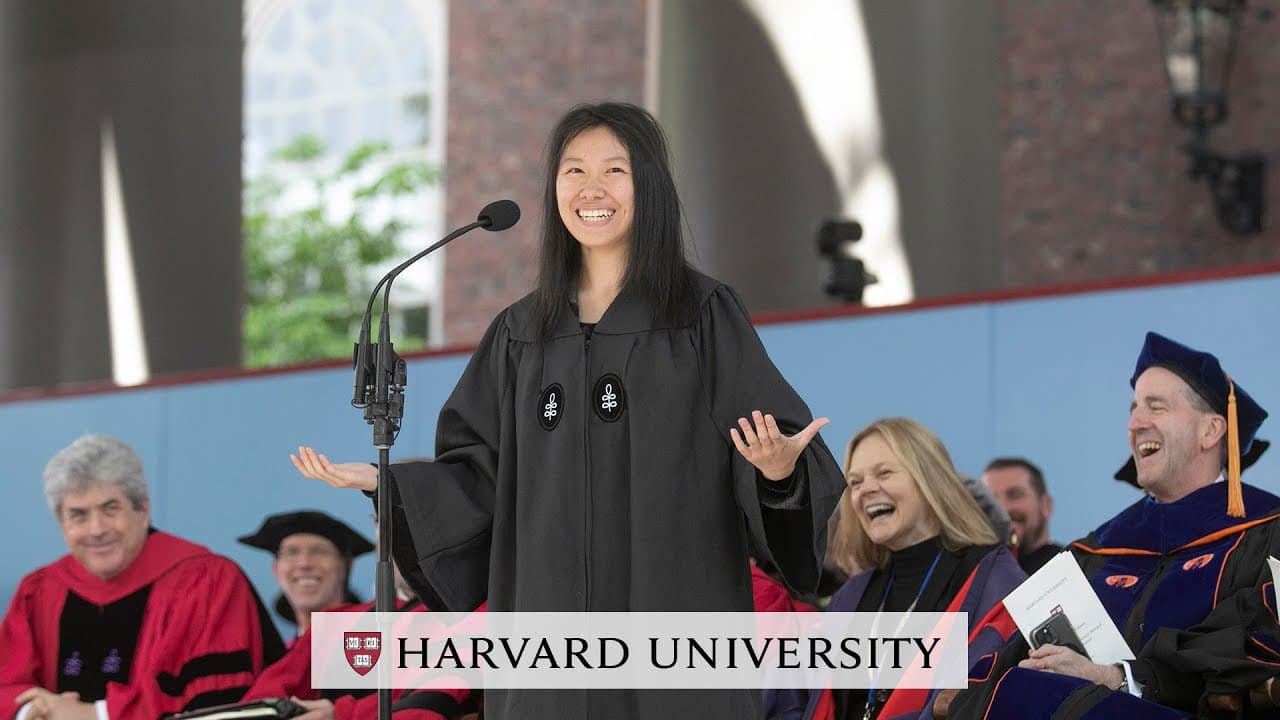
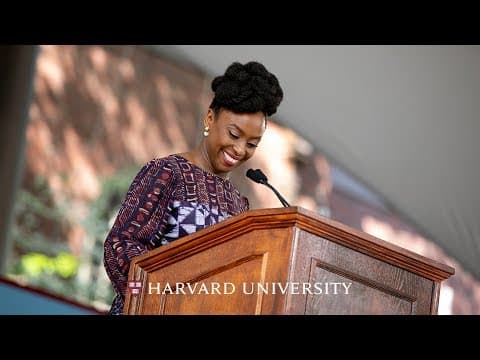
Pallas Chou argues that people, like enzymes, are shaped by their origins, their environment, and those around them. In the Senior English Address at Harvard Commencement 2023, she explains that enzymes bring molecules together and make impossible reactions possible, then urges graduates to recognize what they can collectively accomplish. Read on to explore her enzyme metaphor, Harvard experiences, and message about catalyzing change.
Transcript
- I love enzymes! (all laughing) Tiny molecular machines, too small to be seen by the naked eye. They're in each of our cells performing important life functions like helping us breathe and allowing us to eat yummy foods like the warm Taiwanese beef noodle soup my mother makes, niu rou mian (audience members cheering) and the creamy New England cho... Read More
Key Insights
- ❓ Enzymes are essential for various biological functions, such as digestion and respiration.
- 🎭 The unique structures of enzymes enable them to perform specific functions.
- ⛅ Enzymes are partly determined by DNA but are also shaped by other enzymes and the environment.
- 🧑🏭 Like enzymes, human characteristics are influenced by both genetic factors and interactions with others.
- 😨 Enzymes teach us that our abilities are limitless when we are shaped by those who care for us.
- 🧑🎓 Harvard University provides a diverse and enriching environment where students learn from each other.
- 👯 Together, people can catalyze change and accomplish great things, just like enzymes bring molecules together to catalyze chemical reactions.
Install to Summarize YouTube Videos and Get Transcripts
Explore YouTube Video Summarizer or Get YouTube Transcript Extractor
Questions & Answers
Q: What message does Pallas Chou deliver in the Senior English Address at Harvard Commencement 2023?
Pallas Chou says that people are shaped by their families, their environment, and their interactions with others, much like enzymes. She urges Harvard graduates not to underestimate what they can collectively accomplish and to continue shaping and being shaped by the world.
Q: Why does Pallas Chou compare Harvard graduates to enzymes?
She explains that enzymes bring molecules together to catalyze chemical reactions. Likewise, she has seen Harvard students bring people together to catalyze change, and she encourages them to serve as “enzymes of Veritas” after leaving Harvard.
Q: What are enzymes according to Pallas Chou's address?
Enzymes are tiny molecular machines found in cells that perform important life functions, including helping people breathe and eat food. They work by bringing different molecules together and causing them to interact.
Q: How does an enzyme's structure support its function?
An enzyme has distinctive creases, folds, loops, and bumps that enable its particular function. A gap may hold a molecule, while an extending branch may grab one.
Q: What determines the structure of an enzyme?
Part of an enzyme's structure is determined by the DNA that encodes it. Other enzymes in the cell and the surrounding environment also help shape it.
Q: How does Pallas Chou connect enzymes with family influence?
She compares DNA's role in enzyme structure with the way families partly determine individual characteristics. Her family shaped her upbringing by teaching her that nothing is too small to inspire passion and that library cards are the key to life.
Q: How did the Harvard community shape Pallas Chou's perspective?
She met people from Greece, Rwanda, Yemen, California, and elsewhere, sharing late-night conversations about their aspirations and interests. These relationships widened her perspectives on issues around the world.
Q: What challenges shaped Pallas Chou and her Harvard classmates?
They experienced the 2020 shutdown and a pandemic that reconstructed their perception of education. They also comforted one another while grieving loved ones and received encouragement from professors and classmates.
Summary & Key Takeaways
-
Enzymes are tiny molecular machines that perform important functions in our cells, allowing us to breathe and enjoy delicious foods.
-
They have unique structures with creases, folds, loops, and bumps that enable them to perform fascinating functions.
-
Enzyme structures are partly determined by DNA, but they are also shaped by other enzymes in the cell and the surrounding environment.
Read in Other Languages (beta)
Share This Summary 📚
Summarize YouTube Videos and Get Video Transcripts with 1-Click
Try YouTube Summary with ChatGPT & Claude or YouTube Transcript Generator
Explore More Summaries from Harvard University 📚
Summarize YouTube Videos and Get Video Transcripts with 1-Click
Try YouTube Summary with ChatGPT & Claude or YouTube Transcript Generator