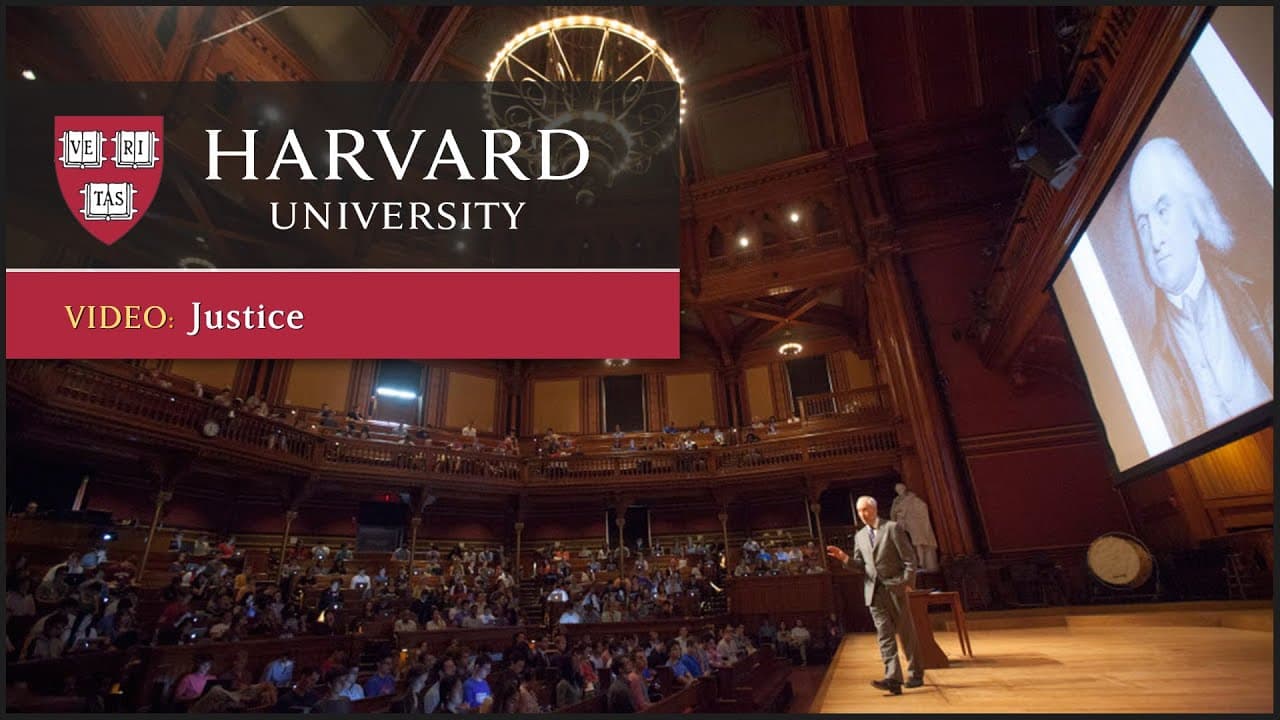
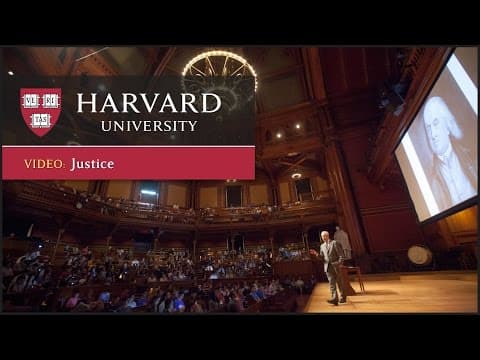
Justice: What's The Right Thing To Do? Episode 12: "DEBATING SAME-SEX MARRIAGE"
Transcript
[MUSIC PLAYING] NARRATOR: Funding for this program is provided by-- Additional funding provided by-- MICHAEL SANDEL: We ended last time talking about the narrative conception of the self. We were testing the narrative conception of the self and the idea of obligations, of solidarity or membership that did not flow from consent that claimed us for r... Read More
Install to Summarize YouTube Videos and Get Transcripts
Explore YouTube Video Summarizer or Get YouTube Transcript Extractor
Summary
In this video, the speaker discusses the narrative conception of the self and the idea of obligations of solidarity or membership that do not flow from consent. They explore whether there are obligations of this kind and whether all apparent obligations of solidarity and membership can be translated into consent or reciprocity. The speaker then defends the narrative conception of the person and argues for obligations of solidarity or membership. They also discuss the relationship between justice and the good and the different ways in which justice can be tied to the good. The video concludes with a discussion on same-sex marriage and whether it is possible to decide this question without taking a stand on the moral and religious controversies surrounding it.
Questions & Answers
Q: Is there a moral obligation of solidarity or membership that does not flow from consent?
Yes, there can be obligations of solidarity or membership that are not based on consent. These obligations can arise from shared narratives, history, and a sense of belonging to a community or group.
Q: Can all obligations of solidarity and membership be translated into consent or reciprocity?
No, not all obligations of solidarity and membership can be translated into consent or reciprocity. There may be obligations that arise from a sense of loyalty, patriotism, or a shared narrative identity that cannot be reduced to individual choice or agreement.
Q: Is the narrative conception of the self a valid way to understand personal identity?
The narrative conception of the self suggests that our identities are tied to the stories and narratives of our lives. It argues that our sense of self and our obligations can be shaped by our personal narratives. While this view has intuitive moral force, it may not be the only way to understand personal identity.
Q: Are there obligations of solidarity or membership that lend force to the idea of justice?
Yes, there are arguments that suggest obligations of solidarity or membership give force to ideas of justice. These obligations can shape our understanding of justice and our responsibilities towards others.
Q: What is the relationship between justice and the good?
The relationship between justice and the good is complex. While justice is often thought to be detached from questions of the good, the speaker argues that justice cannot be completely separated from questions of the good. They suggest that arguments about justice require an understanding of what is good, although the ways in which justice is tied to the good can vary.
Q: Should obligations of solidarity and membership always take precedence over universal duties?
This question raises the issue of whether our loyalty to a particular group or community should always take precedence over our universal duties towards all human beings. The answer is not straightforward, as it depends on individual perspectives and moral beliefs.
Q: Can justice be tied to the good in a non-relativist way?
Yes, justice can be tied to the good in a non-relativist way. This view suggests that principles of justice are justified by their alignment with important human goods and values. Instead of depending on the prevailing values of a community or tradition, justice is grounded in the moral worth of the ends that rights serve.
Q: How can we reason about the good when people hold different conceptions of the good?
Reasoning about the good becomes challenging when people hold different conceptions of what is good and valuable. In a pluralistic society, it is important to engage in dialogue and debate, considering different perspectives to arrive at shared understandings and principles that can guide our discussion about justice and rights.
Q: Can the question of same-sex marriage be decided without taking a stand on the moral and religious controversies surrounding it?
It is difficult to separate the question of same-sex marriage from the underlying moral and religious controversies surrounding it. The discussion about same-sex marriage often involves debates about the moral permissibility of homosexuality and the purpose of marriage as a social institution.
Q: Is it necessary to reason about the good when arguing about justice?
Yes, it is necessary to reason about the good when arguing about justice. The speaker suggests that reasoning about justice cannot be detached from questions of the good. While it may not be possible to have a single principle for the good life that applies to all moral and religious perspectives, engaging in dialogue and reflective equilibrium can help in finding shared understandings of justice.
Takeaways
The video highlights the complexity of understanding obligations of solidarity or membership and their relationship to justice. It argues that there are obligations that cannot be reduced to consent or reciprocity and defends the narrative conception of the self. The video also emphasizes the importance of reasoning about the good in discussions of justice, even though there may be disagreements and pluralism about moral and religious questions. Lastly, the video suggests that respectful engagement and deliberation can lead to a better understanding of justice and the good life in a pluralistic society.
Read in Other Languages (beta)
Share This Summary 📚
Summarize YouTube Videos and Get Video Transcripts with 1-Click
Try YouTube Summary with ChatGPT & Claude or YouTube Transcript Generator
Explore More Summaries from Harvard University 📚


Summarize YouTube Videos and Get Video Transcripts with 1-Click
Try YouTube Summary with ChatGPT & Claude or YouTube Transcript Generator