How Do Early Life Experiences Affect Our DNA?
TL;DR
Early life experiences, such as maternal care, can significantly influence the DNA of offspring through epigenetic changes. Behaviors like licking by mother rats can lead to different gene expressions, impacting stress levels and adaptability. This dynamic interaction between environment and genetics shapes not only individual development but also offers insights into addressing health issues like addiction and chronic diseases.
Transcript
So it all came to life in a dark bar in Madrid. I encountered my colleague from McGill, Michael Meaney. And we were drinking a few beers, and like scientists do, he told me about his work. And he told me that he is interested in how mother rats lick their pups after they were born. And I was sitting there and saying, "This is where my tax dollars a... Read More
Key Insights
- 🐀 Mother rats licking their pups in different ways can have a long-lasting impact on their adult offspring, affecting stress levels, sexual behavior, and overall well-being.
- 🔬 Cross-fostering experiments with rats show that it is the mother's care, not genetics, that determines these outcomes.
- 🧬 Epigenetic processes, which mark genes with chemical modifications, play a crucial role in translating the mother's behavior into changes in the offspring's DNA.
- 🌍 Early life experiences, including maternal care, can "program" genes to adapt to specific environmental conditions, such as abundance or scarcity of resources.
- ⚙️ This epigenetic programming is essential for allowing old DNA to function dynamically in new environments.
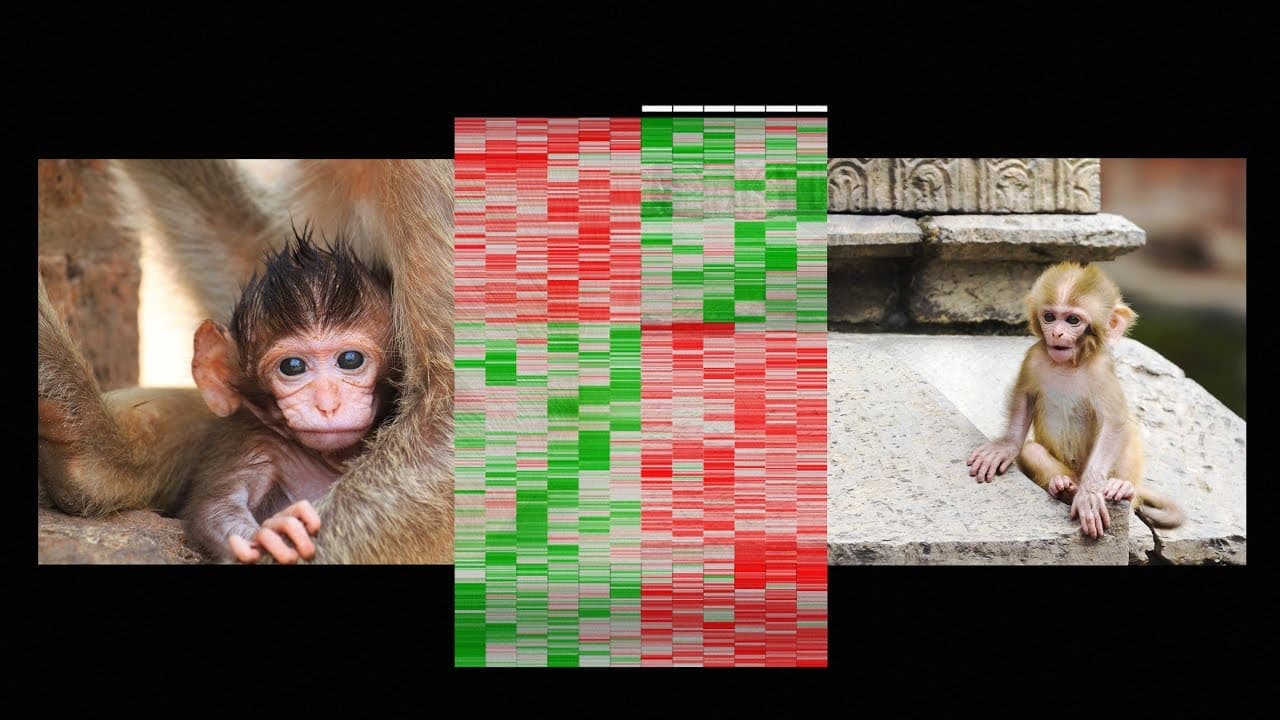
- 🐒 Similar findings have been observed in monkeys, with those raised without a mother displaying aggressive and alcoholic behaviors.
- ⛈️ Natural disasters, such as the ice storm of 1998 in Quebec, provide a unique opportunity to study the effects of stress on DNA methylation in humans.
- 🧠 Understanding epigenetic processes and their potential for intervention offers hope for addressing diseases like cancer, addiction, and mental health disorders.
Install to Summarize YouTube Videos and Get Transcripts
Explore YouTube Video Summarizer or Get YouTube Transcript Extractor
Questions & Answers
Q: What is the main focus of Michael Meaney's research on mother rats and their pups?
Michael Meaney is interested in studying how mother rats lick and groom their pups after they are born.
Q: How do different levels of licking and grooming from mother rats affect their adult offspring?
The adult rats that were heavily licked and groomed by their mothers exhibit different behavior and physiology compared to those that received less intensive care. They are less stressed, have different sexual behavior, and have a different way of living.
Q: How did researchers determine if the behavior of the biological mother or the fostering mother had an impact on the rats' characteristics?
The researchers conducted a cross-fostering experiment in which the pups were separated from their biological mothers at birth and placed with high-licking or low-licking fostering mothers. They found that it was the care of the mother that defined the rats' characteristics, rather than the genes they inherited.
Q: How does the mother's behavior affect the programming of the offspring's genes?
Through a cascade of biochemical events, the licking and grooming of the mother translate into biochemical signals that enter the nucleus and DNA of the offspring, causing it to be programmed differently. This programming prepares the offspring for the specific conditions of its environment.
Q: How can the early life experiences of rats have implications for human health and disease?
The early life experiences and the way genes are marked by epigenetic modifications can have significant impacts on human health and disease. It can provide an explanation for both positive and negative health outcomes, such as obesity, cardiovascular problems, mental health conditions, and diseases like cancer.
Q: How did researchers study the effects of early-life experiences on monkeys?
Researchers studied the effects of early-life experiences on monkeys by comparing monkeys that were separated from their mothers and raised by nurses with monkeys that were raised by their natural mothers. They observed that the monkeys raised without a mother exhibited different behaviors and had distinct DNA methylation patterns compared to those raised by their mothers.
Q: How did a natural disaster provide an opportunity to study the effects of stress on human offspring?
The ice storm of 1998 in Quebec, Canada, provided researchers with an opportunity to study the effects of stress on human offspring. By measuring objective stress levels experienced by pregnant mothers during the disaster, researchers found that increased stress was associated with an increased risk of autism, metabolic diseases, and autoimmune diseases in the children.
Q: How did researchers deprogram cocaine addiction in rats?
Researchers were able to deprogram cocaine addiction in rats by manipulating DNA methylation. By reducing the DNA methylation, the rats were no longer addicted to cocaine, demonstrating that epigenetic interventions can have a powerful impact on reversing addictive behaviors.
Summary & Key Takeaways
-
Mother rats licking their pups after birth can have a long-lasting impact on the behavior and physiology of the adult rats, indicating the role of early life experiences.
-
The mother's behavior can reprogram the genes of her offspring through a cascade of biochemical events, leading to different gene expression and adaptation to their environment.
-
Natural disasters and social experiences have been shown to affect DNA methylation patterns, demonstrating the influence of external factors on gene regulation.
Read in Other Languages (beta)
Share This Summary 📚
Summarize YouTube Videos and Get Video Transcripts with 1-Click
Try YouTube Summary with ChatGPT & Claude or YouTube Transcript Generator
Explore More Summaries from TED 📚



Summarize YouTube Videos and Get Video Transcripts with 1-Click
Try YouTube Summary with ChatGPT & Claude or YouTube Transcript Generator