How Can Art Foster Forgiveness and Healing in Democracy?
TL;DR
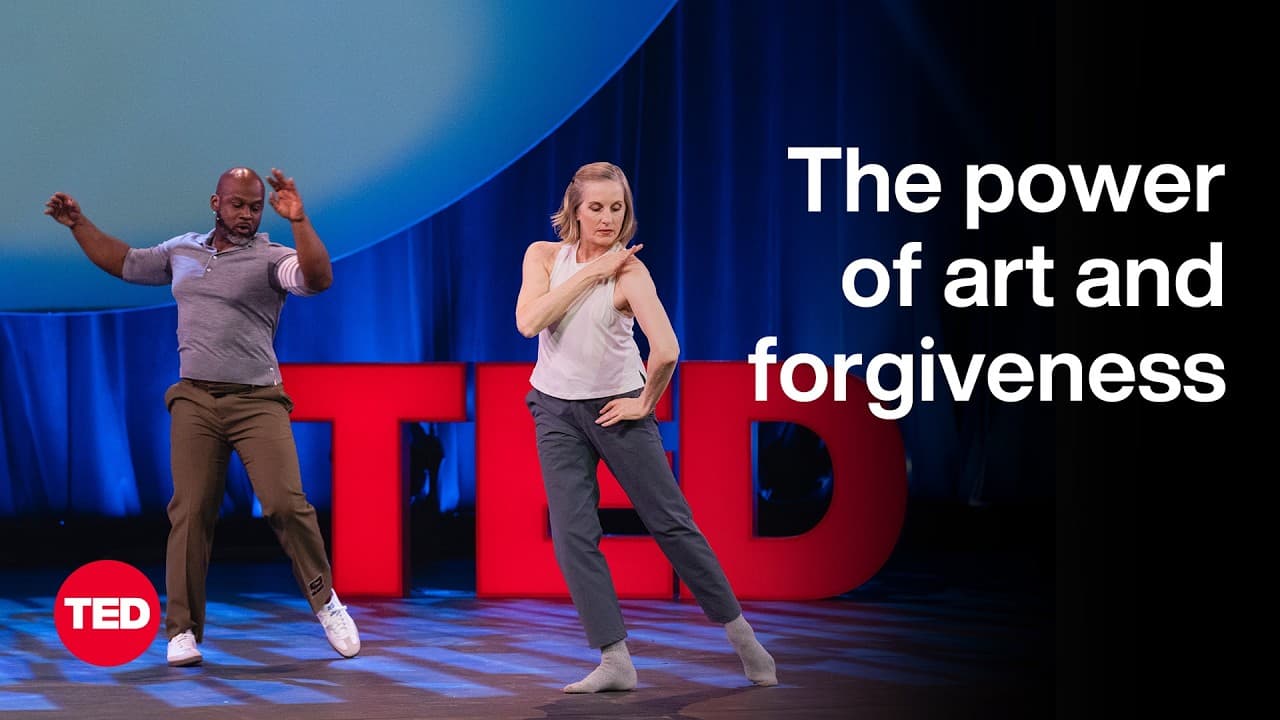
Art can play a crucial role in fostering forgiveness and healing in a divided democracy by creating empathy and encouraging remembrance of past injustices. Marc Bamuthi Joseph emphasizes that art should actively contribute to societal transformation, challenging both individuals and systems to acknowledge trauma and collective healing through artistic expression.
Transcript
About five years ago, I moved to Washington, DC, to become one of the vice presidents of the Kennedy Center. For the last 25 years, I've made a living writing everything from poems in Oakland to operas in Amsterdam. Living in DC, though, has made me obsessed with forgiving. And also with forgetting. Forgiving requires a deeply personal commitment t... Read More
Key Insights
- The speaker emphasizes the dual nature of forgiveness as both a personal and political act, questioning how citizens can forgive national injustices like January 6.
- Art is presented not just as a passive cultural element but as a tool for social impact, capable of fostering remembrance and forgiveness.
- The talk critiques the systemic forgetting through historical erasure and disinformation, highlighting the importance of remembering to forgive.
- The speaker challenges the audience to rethink how societal systems could function more like art, suggesting that empathy could be manufactured through artistic endeavors.
- The performance of 'The Carnival of the Animals' is reimagined to reflect on political events, using the cuckoo bird as a metaphor for cycles of inaction and injustice.
- There's a call to action for public health systems to focus more on public healing, acknowledging collective trauma and fostering community recovery.
- The cyclical nature of societal issues is likened to the repetitive song of the cuckoo, urging a remembrance of past mistakes to avoid repeating them.
- Art is depicted as a means to bridge divides, providing a platform for shared experiences and understanding in a fractured society.
Install to Summarize YouTube Videos and Get Transcripts
Explore YouTube Video Summarizer or Get YouTube Transcript Extractor
Questions & Answers
Q: How does the speaker view the role of forgiveness in society?
The speaker views forgiveness as a complex act that is both deeply personal and inherently political. It requires individuals to heal personally while also addressing broader societal injustices. Forgiveness is seen as a necessary step in reconciling with events like January 6, and it is intertwined with the act of remembering past wrongs to prevent their recurrence.
Q: What role does art play according to the speaker?
Art is portrayed as a powerful tool for social impact, capable of fostering empathy, remembrance, and forgiveness. The speaker argues that art should not be seen as a passive cultural element but as an active force in creating equitable societies. Art can manufacture empathy and help individuals and communities heal from collective trauma by providing a platform for shared experiences and understanding.
Q: How does the speaker relate art to public health systems?
The speaker suggests that public health systems should operate more like art, emphasizing the need for public healing alongside physical health. He argues that while public health focuses on managing trauma, it often neglects the healing process. Art can fill this gap by fostering community recovery and addressing the social and psychological aspects of trauma.
Q: What is the significance of 'The Carnival of the Animals' in the talk?
'The Carnival of the Animals' is used as a metaphorical framework to explore societal issues and political events, such as January 6. The performance reimagines the classical music piece to reflect on the cycles of inaction and injustice, using the cuckoo bird as a symbol for these recurring patterns. It serves as a call to remember and address past mistakes to avoid repeating them.
Q: What critique does the speaker offer about societal forgetting?
The speaker critiques societal forgetting as a systemic issue, exacerbated by historical erasure in education and the spread of disinformation. He argues that forgetting is facilitated by a culture that offers multiple realities and disputed facts, leading to a collective amnesia that hinders forgiveness and healing. Remembering is crucial to prevent the repetition of past injustices.
Q: How does the talk address the issue of empathy?
The talk emphasizes the need to manufacture empathy through art, suggesting that empathy is crucial for societal healing and forgiveness. By creating shared experiences and understanding, art can bridge divides and foster a sense of community. The speaker challenges societal systems to function more like art, promoting empathy as an integral part of their operation.
Q: What message does the speaker convey about cycles of inaction?
The speaker highlights the repetitive nature of societal issues, likening them to the cyclical song of the cuckoo bird. These cycles of inaction lead to repeated injustices, and the speaker stresses the importance of breaking these cycles by remembering past mistakes. By doing so, society can address the root causes of these issues and work towards meaningful change.
Q: How does the talk propose to address collective trauma?
The talk proposes addressing collective trauma through intentional public healing, facilitated by art. By acknowledging the social and psychological trauma of divisiveness and loss, art can provide a platform for community recovery. The speaker calls for a focus on healing together, emphasizing the need for societal systems to prioritize empathy and understanding in their operations.
Summary & Key Takeaways
-
Marc Bamuthi Joseph discusses the transformative power of art in fostering forgiveness and healing in a politically divided nation. He argues that art should be at the forefront of creating equitable societies by manufacturing empathy and remembrance.
-
The talk critiques the systemic erasure of history and the proliferation of disinformation, emphasizing the need for a collective commitment to remembering past injustices to truly forgive and heal as a society.
-
Using 'The Carnival of the Animals' as a metaphorical framework, Joseph and Wendy Whelan explore the cycles of inaction that lead to societal injustices, urging for an intentional focus on public healing and empathy through artistic expression.
Read in Other Languages (beta)
Share This Summary 📚
Summarize YouTube Videos and Get Video Transcripts with 1-Click
Try YouTube Summary with ChatGPT & Claude or YouTube Transcript Generator
Explore More Summaries from TED 📚

Summarize YouTube Videos and Get Video Transcripts with 1-Click
Try YouTube Summary with ChatGPT & Claude or YouTube Transcript Generator