What Started Pushback Against Wuhan "Lab Leak" Theory?
TL;DR
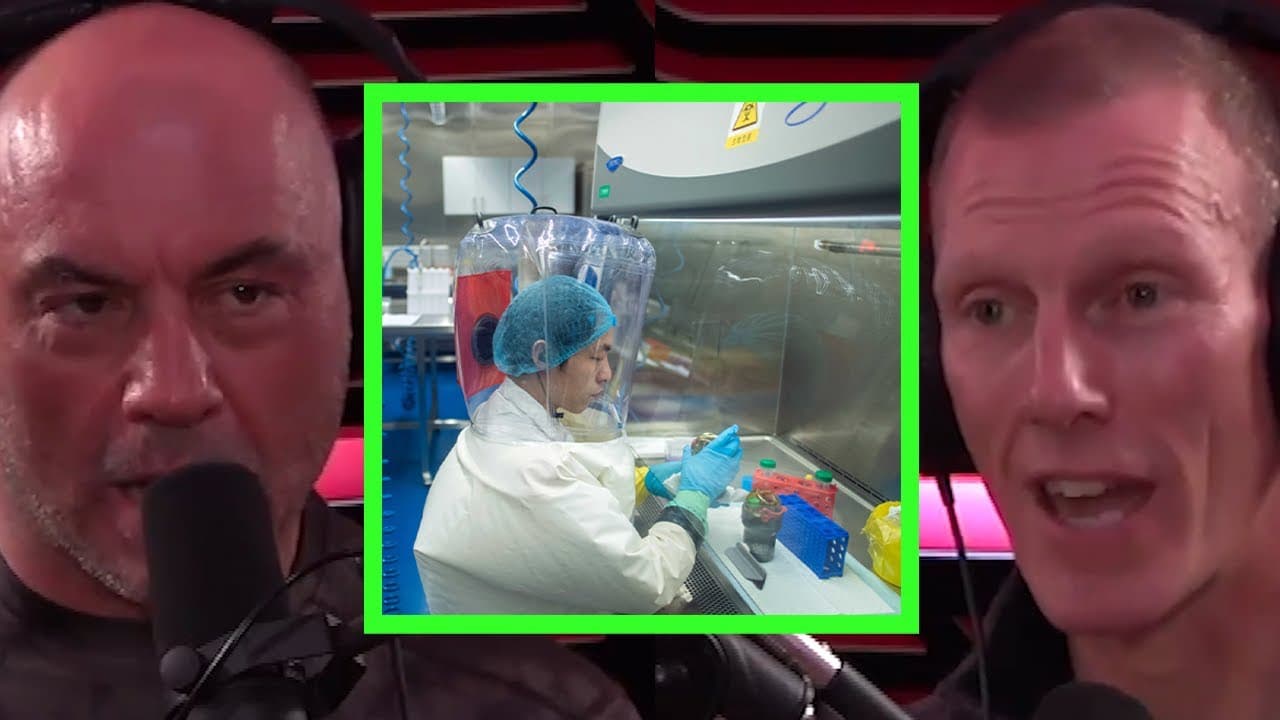
Pushback against the Wuhan lab leak theory began when a relatively small group of high-profile scientists and virologists promoted a zoonotic-jump explanation, published arguments against a leak, and labeled competing discussion conspiratorial. The speaker says the debate started opening in early 2021, but determining what happened still requires unrestricted access to laboratory records, samples, and scientists, making the details of that proposed investigation worth examining.
Transcript
the jurogan experience have any of the people that were initially skeptical or pushing back against the idea that it came from this level four lab are they coming around or are they still digging their heels in so some are are coming around and um so certainly there are people like like matt ridley who's a member of the house of lords in the in the... Read More
Key Insights
- Changing positions matter publicly: Matt Ridley is offered as a concrete example of someone who moved from firm opposition to greater openness about a laboratory origin. His role as a House of Lords member and well-known science communicator makes the change especially visible. The example supports the speaker's broader point that at least some early skeptics were no longer digging in their heels.
- Competing narratives carried consequences: The zoonotic-jump explanation was associated with greater attention to encroachment into wild spaces, climate change, and related concerns. By contrast, an accidental laboratory leak would have major implications for research being conducted by scientists, much of which the speaker considers well intentioned. These different consequences may have influenced how researchers approached the origin question.
- A small group held influence: The speaker does not describe universal scientific agreement against a laboratory leak. Instead, the account emphasizes a relatively small number of high-profile scientists and virologists who acted early and helped define acceptable discussion. Their status gave their publications and public statements substantial narrative influence, even though the underlying origin question had not received the full investigation the speaker wanted.
- The Lancet letter raised concerns: One early intervention was a letter published in the British medical journal The Lancet. The speaker says it was subsequently learned that the letter had been highly manipulated by a small number of people who may have possessed vested interests. That description makes the letter's formation and the interests behind it part of the controversy, not merely its stated conclusion.
- Nature Communications reinforced rejection: An academic paper in Nature Communications accompanied the Lancet letter in arguing that the outbreak was not caused by a laboratory leak. Together, the publications helped establish an early case against that possibility. The speaker presents their influence as part of a broader process that discouraged investigation before all relevant records, samples, and interviews were available.
- Labels narrowed legitimate inquiry: After the publications appeared, the speaker describes a concerted attempt to label anyone discussing a laboratory leak as a conspiracy theorist. The speaker found this personally uncomfortable because of a commitment to being data-driven rather than conspiratorial. The experience illustrates how labeling affected who could raise the hypothesis, even when the request was for investigation rather than a declaration of certainty.
- Early 2021 marked a turn: The public space for discussing a laboratory origin began to open at the beginning of 2021. The speaker connects this shift to several contributions, including personal writing, Nicholson Baker's New York Magazine piece, and reporting by The Wall Street Journal. These contributions did not settle the origin question, but they made consideration of the hypothesis less restricted.
- Headlines overstated WHO conclusions: Following the Wuhan press event, newspapers around the world reportedly framed the WHO as having said that a laboratory leak was essentially impossible. The speaker believed that interpretation was wrong and contacted friends at the organization. The episode shows how reporting about an official event could convert a contested recommendation into what appeared to be a definitive conclusion.
- Tedros restored investigative scope: The Wuhan press event occurred on a Tuesday, and Tedros Adhanom responded at a Friday press event three days later. As WHO Director-General, he said that every hypothesis needed to be investigated. The speaker interpreted that position as implicitly including the laboratory leak hypothesis and expressed satisfaction that the organization's public stance again allowed comprehensive inquiry.
- Proof was not the demand: The speaker carefully separates investigating the leak hypothesis from proving it true. The immediate objective is neither to establish that a leak happened nor to demonstrate that it did not. This distinction is central because it frames the controversy as a question of access and examination, rather than an attempt to replace one unproven certainty with another.
- Records and samples are essential: A credible inquiry would need unrestricted access to all relevant laboratory records and samples. The speaker also calls for an investigation protected from political influence. These requirements explain why public statements and published arguments alone are considered insufficient. The underlying evidence held by laboratories and researchers would need to be examined before reaching a dependable conclusion.
- Peter Daszak embodied conflicts: The speaker identifies Peter Daszak as a respected virology figure who helped explain the origin of the first SARS through EcoHealth Alliance. The same organization also funded the Wuhan Institute of Virology, specifically gain-of-function research there. The speaker does not describe this work as nefarious, but presents the funding relationship and Daszak's experience with natural outbreaks as relevant to understanding his perspective.
Install to Summarize YouTube Videos and Get Transcripts
Explore YouTube Video Summarizer or Get YouTube Transcript Extractor
Questions & Answers
Q: What started pushback against the Wuhan lab leak theory?
The speaker attributes the pushback to a concerted early effort by a relatively small number of high-profile scientists and virologists. They promoted the zoonotic-jump explanation and argued against a laboratory leak through a letter in The Lancet and a paper in Nature Communications. The account says scientists may have worried that a leak narrative would have major implications for their research, while a zoonotic narrative would encourage attention to wild-space encroachment and climate change. The effort became more forceful when people discussing a possible leak were labeled conspiracy theorists.
Q: Did early skeptics later reconsider the lab leak hypothesis?
Yes, the transcript gives Matt Ridley as a specific example. Ridley, a House of Lords member and well-known science communicator, had initially been firmly on the opposing side. He later became more open to a laboratory origin and was described as quite vocal about it. His change illustrates the speaker's claim that some early skeptics reconsidered their positions as the space for discussion opened.
Q: How did The Lancet and Nature Communications affect the debate?
The two publications supplied prominent academic support for rejecting a laboratory leak early in the pandemic. A letter appeared in The Lancet, while an academic paper appeared in Nature Communications, and both argued that the outbreak was not a lab leak. The speaker says the Lancet letter was later found to have been highly manipulated by a small number of people who may have had vested interests. Their importance lies in how they helped establish a dominant position that was followed by efforts to label dissenting discussion conspiratorial.
Q: Why did the discussion begin changing in 2021?
The speaker says the space began opening at the beginning of 2021 as more people publicly treated a laboratory leak as a possibility worth examining. The account mentions the speaker's own writings, Nicholson Baker's piece in New York Magazine, and coverage by The Wall Street Journal. These contributions helped make the hypothesis discussable after a period when raising it attracted conspiracy-theorist labels. The shift concerned permission to investigate the possibility, not proof that the possibility was correct.
Q: What happened at the Wuhan press event?
An independent committee and the Chinese government held a press event in Wuhan that the speaker considered ill-fated. They reportedly said not to investigate a laboratory leak and instead to investigate the frozen-food hypothesis. Newspapers around the world then presented the WHO as essentially saying a laboratory leak was impossible. The speaker contacted friends at the WHO because the organization itself had not made the definitive claim reflected in those headlines.
Q: What position did WHO Director-General Tedros Adhanom take?
Tedros Adhanom said that every hypothesis needed to be investigated. His statement came on a Friday, three days after the Tuesday press event in Wuhan. The speaker understood the statement as implicitly restoring the laboratory leak hypothesis to the set of possibilities requiring examination. This mattered because it corrected the impression that the WHO had conclusively ruled the hypothesis out.
Q: What would a thorough COVID-19 origins investigation require?
The speaker calls for the most thorough, unrestricted, and unpoliticized investigation possible. It would require access to all laboratory records, all samples, and the scientists in China who worked on the relevant issues. Very few of those scientists had been interviewed, and outside investigators did not have access to them. These elements matter because the objective is to determine what happened from underlying evidence rather than from political narratives or premature conclusions.
Q: Why is Peter Daszak relevant to the controversy?
Peter Daszak led EcoHealth Alliance and was highly respected by the speaker for work on understanding where the first SARS came from. EcoHealth Alliance also funded the Wuhan Institute of Virology, specifically gain-of-function research conducted there. The speaker says the purpose was not believed to be nefarious, but to study dangerous pathogens where those pathogens existed. His funding relationship and long experience with naturally emerging outbreaks are therefore presented as factors relevant to his viewpoint and possible interests.
Summary & Key Takeaways
-
Early resistance takes shape: Some people who initially opposed the lab leak hypothesis began reconsidering it, including House of Lords member and science communicator Matt Ridley. The speaker says Ridley moved from being firmly on the other side to becoming open and vocal about the possibility. According to the account, early resistance reflected concern that a laboratory accident narrative would carry major implications for research, while zoonotic jumps would reinforce attention to wild-space encroachment and climate change.
-
Two publications shape discussion: A relatively small number of prominent scientists and virologists reportedly advanced the position that COVID-19 did not originate through a laboratory leak. The speaker identifies a letter in The Lancet and an academic paper in Nature Communications as important parts of that effort. The Lancet letter was subsequently described as highly manipulated by people who may have had vested interests. A wider effort then portrayed people raising the alternative possibility as conspiracy theorists.
-
Coverage opens the debate: The speaker continued treating an accidental leak as a real possibility that deserved investigation, despite discomfort with the conspiracy-theorist label. The discussion began changing at the start of 2021. The speaker cites personal writings, a New York Magazine piece by Nicholson Baker, and coverage by The Wall Street Journal as contributions to a newly opening space. None of this is presented as proof of a leak, but it made public consideration of the hypothesis more possible.
-
Wuhan event creates confusion: At a press event in Wuhan, an independent committee and the Chinese government reportedly advised against investigating a laboratory leak and pointed toward a frozen-food hypothesis. Newspapers around the world then characterized the World Health Organization as effectively saying a leak was impossible. The speaker contacted friends at the WHO to argue that this was a misrepresentation. Three days after the Tuesday event, Director-General Tedros Adhanom said every hypothesis needed investigation, implicitly including a laboratory leak.
-
Investigation becomes the priority: The stated goal is not to prove immediately that a leak did or did not happen. Instead, the speaker calls for the most thorough, unrestricted, and unpoliticized investigation possible, including access to laboratory records, samples, and scientists in China who worked on the relevant issues. Very few of those scientists had reportedly been interviewed or made accessible. The speaker also raises concern that some may fear imprisonment or worse if they speak openly.
Read in Other Languages (beta)
Share This Summary 📚
Summarize YouTube Videos and Get Video Transcripts with 1-Click
Try YouTube Summary with ChatGPT & Claude or YouTube Transcript Generator
Explore More Summaries from PowerfulJRE 📚
Summarize YouTube Videos and Get Video Transcripts with 1-Click
Try YouTube Summary with ChatGPT & Claude or YouTube Transcript Generator