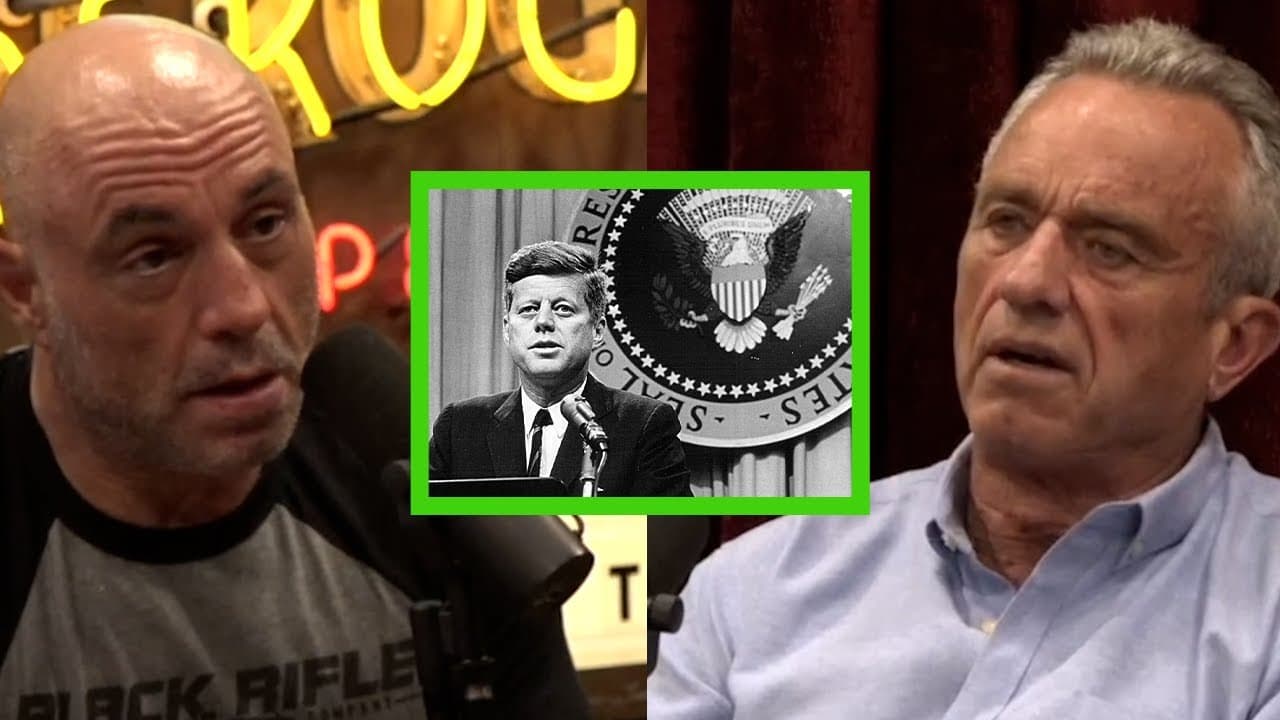
Robert Kennedy, Jr. on His Uncle JFK and the Military Industrial Complex
TL;DR
JFK opposed the military-industrial complex by rejecting calls for war in Cuba and Vietnam, advocating for peaceful resolutions instead. He believed the U.S. should project economic power through humanitarian efforts, not military might, which he felt would strengthen global alliances and improve perceptions of the U.S.
Transcript
The Joe Rogan Experience my uncle John Kennedy you know did that he he refused to go to war so he he was surrounded by military industrial complex and um and he learned very early and an intelligence apparatus that he realized early on that the purpose of the CIA and the intelligence apparatus was to create a constant pipeline of new Wars for them ... Read More
Key Insights
- 🫱 JFK resisted the military-industrial complex's agenda for war, advocating for peaceful solutions.
- ✊ He believed in using economic power to build alliances instead of military force.
- 🤨 JFK's assassination raises questions about the dangers of opposing powerful institutions.
- 🎖️ Eisenhower's warning about the military-industrial complex resonated with JFK's policies.
- ✌️ JFK's legacy includes promoting peace-building efforts and humanitarian aid.
- ✊ Countries aligning with China's peaceful economic strategies challenge the dominance of military power.
- 🫱 JFK's stance against war had long-lasting impacts on global perceptions of the US.
Install to Summarize YouTube Videos and Get Transcripts
Explore YouTube Video Summarizer or Get YouTube Transcript Extractor
Questions & Answers
Q: What did Eisenhower warn against in his speech before JFK's inauguration?
Eisenhower warned against the influence of the military-industrial complex and its tendency to push for perpetual war, setting the stage for JFK's stance against it.
Q: How did JFK respond to the pressure to invade Cuba?
JFK refused to send military forces to overthrow Castro in Cuba, recognizing the manipulation and deceit behind the push for war.
Q: Why did JFK believe in using economic power over military force?
JFK believed in the importance of building relationships through economic aid rather than military intervention to create a more positive global influence.
Q: How did JFK's approach differ from the prevailing policies of his time?
JFK's approach prioritized peace-building and humanitarian efforts over military interventions, setting him apart from the aggressive policies of his era.
Summary
In this video, the speaker discusses his uncle, John Kennedy, and his experiences with the military industrial complex and intelligence apparatus. He shares how President Kennedy realized the true motives of these entities and how they tried to manipulate him into going to war. Kennedy believed in promoting peace and economic power rather than military power. The speaker also mentions the influence of China in international relations, as they prioritize building infrastructure and institutions over aggression. He acknowledges the risks that come with opposing these powerful entities but remains cautious and takes precautions.
Questions & Answers
Q: What did President Eisenhower warn against in his notable speech?
President Eisenhower warned against the influence and power of the military industrial complex, highlighting its role in perpetuating wars and conflicts. He emphasized the need to be wary of their motives and to prevent their control over policy decisions.
Q: How did President Kennedy demonstrate his opposition to military intervention?
President Kennedy refused to involve the U.S. military in various situations that his advisors recommended, such as the invasion of Cuba and the escalation of troops in Vietnam. Instead, he focused on diplomatic efforts, sending military advisors and promoting non-violent initiatives to address issues.
Q: Why did President Kennedy choose to withdraw U.S. troops from Vietnam?
President Kennedy became increasingly disenchanted with the Vietnam War when he learned about the American casualties and the lack of progress. After hearing about the deaths of his Green Berets, he ordered a total casualty list and realized that even 75 American deaths were too many. As a result, he issued a national security order to withdraw all U.S. troops from Vietnam.
Q: How did President Kennedy believe America should be viewed abroad?
President Kennedy believed that America's image abroad should be one of peace and humanitarian efforts rather than military intervention. He advocated for sending Peace Corps volunteers, providing aid to impoverished regions through USAID, and promoting initiatives like the Alliance for Progress to build middle-class societies.
Q: What impact did President Kennedy's initiatives have globally?
President Kennedy's initiatives had a profound impact on the perception of America around the world. Today, there are numerous statues, boulevards, hospitals, schools, universities, and avenues named after him in major cities worldwide, especially in Africa. His legacy of promoting peace and development still resonates with many.
Q: How have the Chinese adopted a similar approach in their international relations?
The Chinese have adopted a strategy similar to President Kennedy's by focusing on economic power rather than military power. They prioritize infrastructure development, building roads, universities, and colleges in other countries. This approach has gained them allies and support, as more countries embrace their initiatives.
Q: What should America project globally according to the speaker?
The speaker suggests that America should project economic power instead of military power. By investing in infrastructure development and promoting economic cooperation, the nation can strengthen its position and create more sustainable relationships with other countries.
Q: How does the speaker view the dangers associated with opposing powerful entities?
The speaker acknowledges the risks that come with opposing powerful entities like the military-industrial complex and intelligence agencies. He believes that being aware and cautious is important, but he doesn't live in fear. He also stresses the importance of taking precautions to safeguard against potential harm.
Takeaways
The video highlights the influential role of the military-industrial complex and intelligence apparatus in shaping U.S. foreign policy. It sheds light on President Kennedy's efforts to prioritize peacebuilding and economic development over military intervention. The speaker encourages projecting economic power globally and emphasizes the need to remain cautious and take precautions when opposing powerful entities. Overall, the discussion prompts reflection on the impact of different approaches to international relations.
Summary & Key Takeaways
-
JFK understood the CIA's role in creating wars for the military-industrial complex.
-
He resisted pressure to invade Cuba and Vietnam, opting for peaceful resolutions.
-
JFK believed in projecting economic power globally over military strength.
Read in Other Languages (beta)
Share This Summary 📚
Summarize YouTube Videos and Get Video Transcripts with 1-Click
Try YouTube Summary with ChatGPT & Claude or YouTube Transcript Generator
Explore More Summaries from PowerfulJRE 📚
Summarize YouTube Videos and Get Video Transcripts with 1-Click
Try YouTube Summary with ChatGPT & Claude or YouTube Transcript Generator