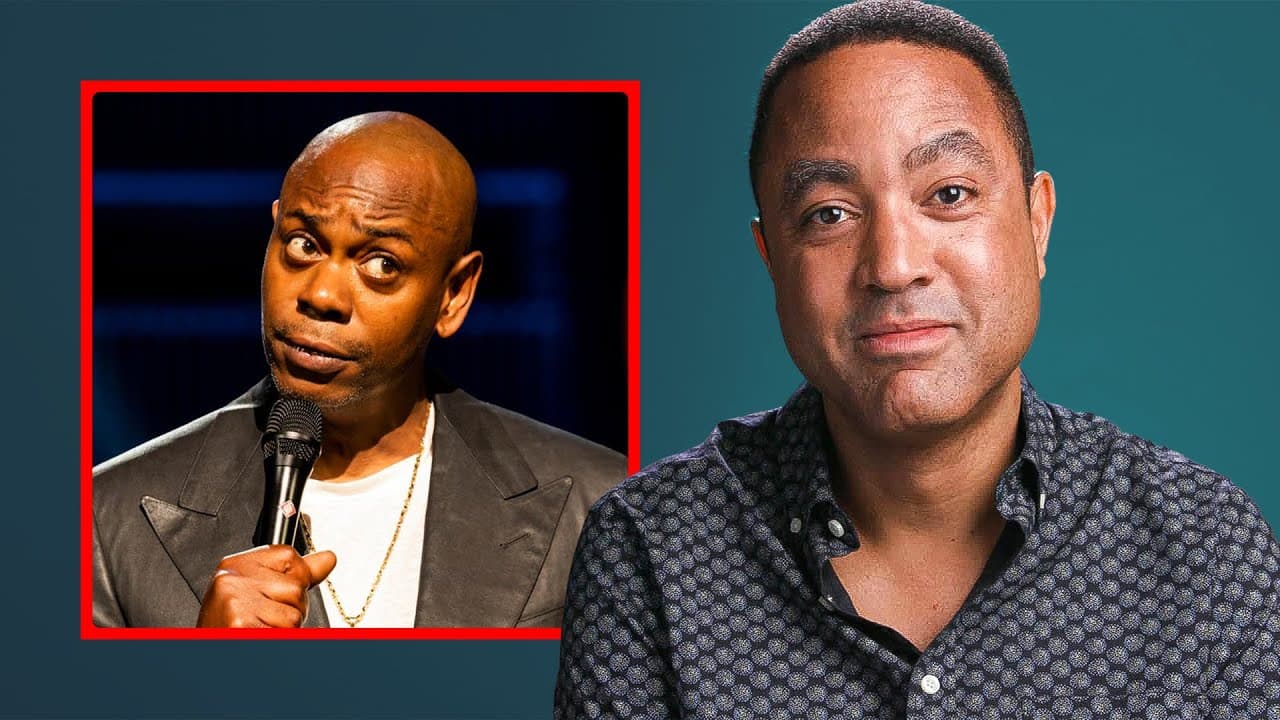
Dave Chappelle is now a White Supremacist? - John McWhorter
TL;DR
John McWhorter argues that calling Dave Chappelle a white supremacist over his comments about gay and trans people does not make sense. He says the label treats someone from an oppressed group as an “honorary white person” when that person expresses antipathy toward another group. The discussion then examines cultural appropriation, including its relationship to profit, imitation, power, and American popular music. Read on for McWhorter’s distinctions and examples.
Transcript
dave chappelle got called a white supremacist the other day because of his comments on gender like how do you square that circle well the idea is that there are white people and then there's everybody else and everybody else is dealing in intersectional fashion with oppression and denigration and not being seen at the hands of whites if you take on... Read More
Key Insights
- 🖤 Accusing Dave Chappelle, a black comedian, of being a white supremacist because of his opinions demonstrates the complexities of intersectionality and the misuse of antipathy.
- 🧡 Cultural appropriation is a contentious issue, with perspectives ranging from exploitation to appreciation and cultural exchange.
- 👊 Power dynamics and the idea of punching up versus punching down play a role in the discussions around cultural appropriation.
- 🙈 Some argue that cultural mixture and imitation occur naturally and should be seen as flattery rather than appropriation.
- ⛽ The debates surrounding cultural appropriation are often fueled by the imperatives of an ideology focused on identifying racism.
- 👥 Accusations of cultural appropriation may stem from a desire for some groups to feel aggrieved or seek attention.
- 🥋 Arguments against cultural appropriation often overlook the fact that cultural exchange has shaped popular music and other art forms throughout history.
Install to Summarize YouTube Videos and Get Transcripts
Explore YouTube Video Summarizer or Get YouTube Transcript Extractor
Questions & Answers
Q: Why was Dave Chappelle called a white supremacist?
Dave Chappelle was called a white supremacist because of his comments about gender, gay people, and trans people. McWhorter says the accusation reflects an intersectional framework in which a member of one oppressed group can be treated as an “honorary white person” for expressing antipathy toward another group.
Q: Does John McWhorter believe Dave Chappelle is a white supremacist?
No. McWhorter calls the accusation “play acting” and says everybody knows it does not make sense, especially given Chappelle’s Black identity and Black-oriented career.
Q: How does McWhorter describe Dave Chappelle becoming a heretic?
McWhorter says Chappelle is treated as a heretic because he is not aligned with prevailing views about gay and trans people. He compares this policing of unacceptable opinions to a religion in which participants condemn people who say the wrong thing.
Q: What does John McWhorter think about cultural appropriation?
McWhorter says the broad concern over cultural appropriation is absurd. He accepts that the term can describe someone powerful making money from the work or style of less powerful originators, but rejects applying it to every instance of white people imitating another culture.
Q: When does McWhorter consider cultural appropriation inappropriate?
He considers it inappropriate when someone “from on high” adopts something from people below and profits while the originators do not share comparable success. His example is Elvis Presley adopting Black rock-and-roll inflections, music, and moves while some Black originators remained less successful or obscure.
Q: Why does McWhorter defend cultural imitation and mixture?
He argues that imitation can be flattering and that people living near one another naturally imitate each other. He also says this exchange does not deprive the imitated group of its language or culture.
Q: How does cultural exchange relate to American popular music in McWhorter’s argument?
McWhorter argues that condemning cultural appropriation broadly would erase much of American popular music since about 1890. He specifically names ragtime, jazz, show tunes, rock and roll, and “Porgy and Bess” as products that would not exist without cultural mixture.
Q: What St. Patrick’s Day example is used in the cultural appropriation discussion?
The interviewer cites people wearing hats, ginger beards, and pots-of-gold imagery on St. Patrick’s Day, which falls on March 17. A brand reportedly called this “appreciation” rather than appropriation, prompting the speakers to question how that distinction differs from other forms of cultural imitation.
Summary & Key Takeaways
-
Dave Chappelle, despite his past as a prominent black comedian, is being labeled a white supremacist because of his opinions on transgender and gay individuals.
-
The concept of antipathy towards certain groups can lead to being considered an honorary white person, which is a misuse of the term.
-
Cultural appropriation is a contentious issue, with some arguing that it involves exploiting marginalized cultures, while others argue that it is simply imitation and appreciation.
Read in Other Languages (beta)
Share This Summary 📚
Summarize YouTube Videos and Get Video Transcripts with 1-Click
Try YouTube Summary with ChatGPT & Claude or YouTube Transcript Generator
Explore More Summaries from Chris Williamson 📚






Summarize YouTube Videos and Get Video Transcripts with 1-Click
Try YouTube Summary with ChatGPT & Claude or YouTube Transcript Generator