How to Master n8n Automation in 2026
TL;DR
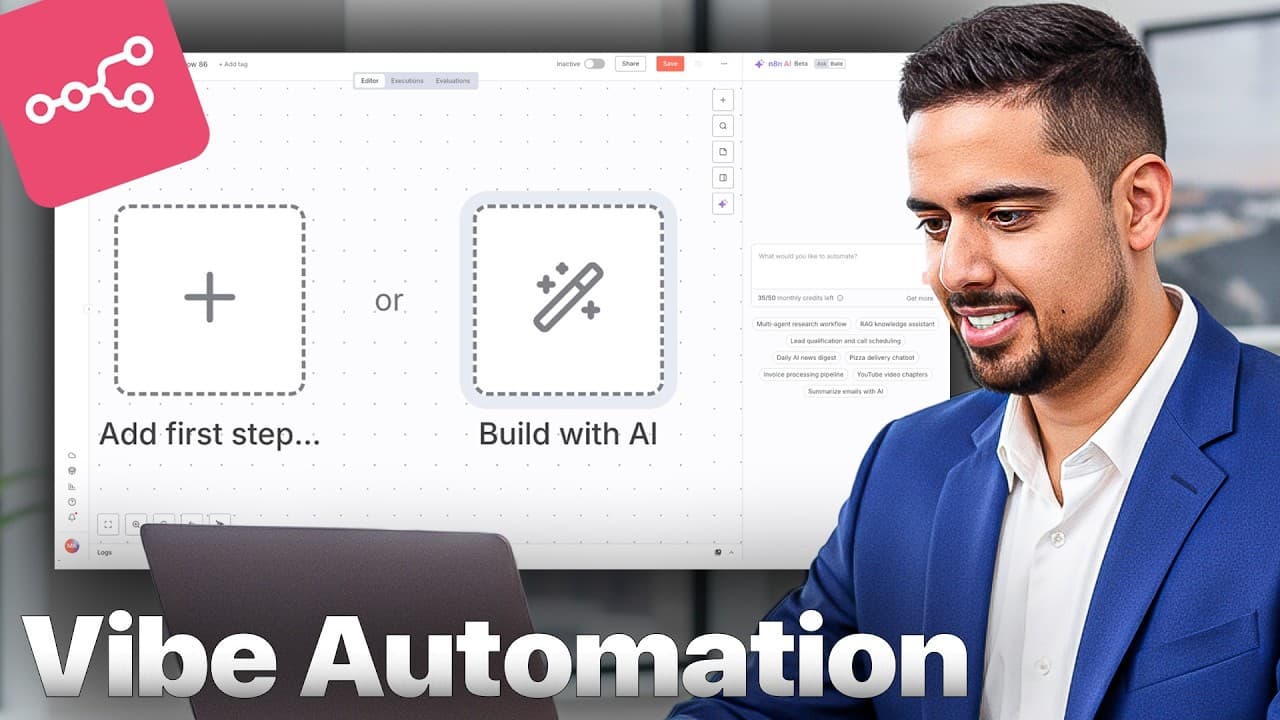
Learn a simplified approach to mastering n8n automation by visualizing workflows as a board game. Understand core concepts like triggers, nodes, and data manipulation to build efficient workflows. Use AI to streamline processes, reducing complexity and enhancing automation speed.
Transcript
Niden can feel daunting. You see those massive 100 node workflows and many times it can feel not only confusing but intimidating. And I personally find that a lot of people either overexlain it or make any feel a lot more complicated than it actually is. But what if you thought of any as more of a board game? A board game with all kinds of pieces a... Read More
Key Insights
- n8n workflows can be visualized as a board game, making complex concepts more approachable.
- Triggers initiate workflows, and understanding their types is crucial for effective automation.
- The manual trigger is useful for testing workflows without committing to a specific data source.
- Webhooks act as data entry points, allowing dynamic data integration into workflows.
- Nodes like Set, Split Out, and Merge help manipulate and organize data within workflows.
- Using AI and code nodes can significantly reduce the number of nodes needed in a workflow.
- Design thinking and planning are essential for building efficient and reliable automation solutions.
- Understanding the difference between LLM steps and AI agents helps optimize workflow performance.
Install to Summarize YouTube Videos and Get Transcripts
Explore YouTube Video Summarizer or Get YouTube Transcript Extractor
Questions & Answers
Q: How to visualize n8n workflows as a board game?
Visualizing n8n workflows as a board game involves thinking of each component as a game piece. Triggers are the starting point, nodes act as movers and shapers, and the workflow follows a path similar to a game board. This approach simplifies understanding and makes complex automation concepts more accessible.
Q: What is the role of triggers in n8n workflows?
Triggers in n8n workflows initiate the automation process. They can be manual, scheduled, or webhook-based, each serving different purposes. Understanding the right trigger to use is crucial for effective workflow design, as it determines how and when the workflow starts.
Q: How can AI reduce complexity in n8n workflows?
AI can reduce complexity in n8n workflows by automating repetitive tasks and consolidating multiple nodes into a single code node. This not only simplifies the workflow but also speeds up the automation process. AI can also assist in error handling and optimizing workflow performance.
Q: What is the difference between LLM steps and AI agents in n8n?
LLM steps are targeted uses of language models for specific tasks within a workflow, providing more robust and reliable results. AI agents, on the other hand, act as orchestrators that can invoke tools as needed but may introduce more variability and potential for errors.
Q: How do webhooks function in n8n workflows?
Webhooks in n8n workflows serve as entry points for external data. They allow workflows to dynamically receive data from various sources, acting as a 'magic portal' for data integration. Webhooks are versatile and can handle data of different shapes and sizes, making them essential for dynamic workflows.
Q: What are the benefits of using a manual trigger in n8n?
A manual trigger in n8n is beneficial for testing and debugging workflows without relying on specific data sources. It allows developers to focus on the core automation logic and verify that the workflow functions as expected before committing to a particular trigger type.
Q: How does design thinking improve n8n automation?
Design thinking improves n8n automation by encouraging a structured approach to problem-solving. It involves planning and visualizing the workflow architecture before building, ensuring that the solution is efficient, reliable, and meets the desired objectives. This mindset helps prevent common pitfalls and enhances overall workflow performance.
Q: What are some common design patterns in n8n workflows?
Common design patterns in n8n workflows include linear flows for straightforward processes, branching flows for decision-making, looping flows for processing lists, and AI sorter patterns for classifying data. Each pattern serves a specific purpose, helping to organize and optimize workflow design based on the task at hand.
Summary & Key Takeaways
-
Visualize n8n automation as a board game to simplify understanding. Triggers start workflows, and nodes manipulate data. Use AI to streamline processes, reducing node complexity and enhancing speed.
-
Mastering n8n involves understanding core concepts like triggers, movers, shapers, and routers. Planning and design thinking are crucial for building efficient automation solutions.
-
Using AI and code nodes can significantly reduce workflow complexity. Differentiate between LLM steps and AI agents to optimize performance and reliability in automation projects.
Read in Other Languages (beta)
Share This Summary 📚
Summarize YouTube Videos and Get Video Transcripts with 1-Click
Try YouTube Summary with ChatGPT & Claude or YouTube Transcript Generator
Explore More Summaries from Mark Kashef 📚






Summarize YouTube Videos and Get Video Transcripts with 1-Click
Try YouTube Summary with ChatGPT & Claude or YouTube Transcript Generator