How Does John Mueller Address SEO Issues in Google Webmaster Central Office-Hours?
TL;DR
John Mueller recommends separating major domain changes because moving a business site while replacing the old domain can prevent Google from treating the change as a site move and forwarding signals. He also explains that Penguin-related changes require an algorithm refresh and that referral spam in Google Analytics does not affect crawling, indexing, or web search. Read on for guidance about migrations, duplicate content, links, mobile usability, and traffic drops.
Transcript
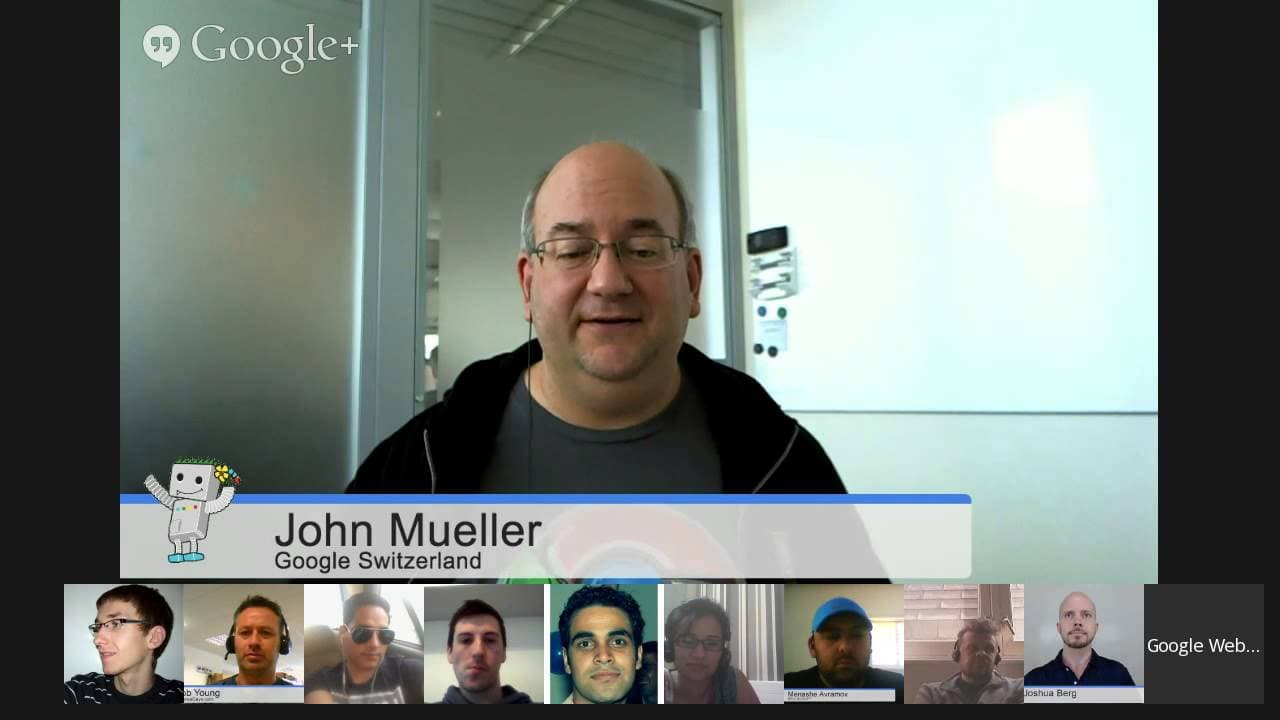
everyone to today's Google Webmaster central office hours hangouts my name is John Mueller I'm a webmaster trends analyst here at Google in Switzerland and the part of what I do is of course talk with webmasters and publishers like all of you to try to make sure that the information that we provide is useful and help you make better websites and th... Read More
Key Insights
- Google updates its algorithms frequently, with over a thousand changes annually, affecting site rankings variably.
- Webmasters should focus on creating high-quality, user-centric content rather than chasing algorithm changes.
- Using rel=canonical helps consolidate signals for duplicate content, avoiding potential confusion in search rankings.
- Mobile-friendliness is crucial; Google's algorithms prioritize mobile-friendly sites in mobile search results.
- Link building should be natural; artificial link schemes can lead to penalties and reduced visibility.
- Technical SEO, including proper use of noindex, nofollow, and canonical tags, can enhance site performance and indexing.
- Duplicate content across different sites is generally managed by Google, showing only one version in search results.
- Understanding user intent on different devices can help tailor content and improve search performance.
Install to Summarize YouTube Videos and Get Transcripts
Explore YouTube Video Summarizer or Get YouTube Transcript Extractor
Questions & Answers
Q: How should a business move its website to a new domain while keeping a product site on the old domain?
Avoid moving the business website and launching a different product website on the old domain at the same time. John Mueller says Google may then be unable to treat the change as a site move or forward the old signals; he suggests using separate domains or waiting about half a year between the changes.
Q: When do Penguin-related improvements affect a website?
If a site has an issue tied to the Penguin algorithm, its changes may not take effect until Penguin refreshes. Mueller provided no specific date, said he did not expect anything the following week, and hoped the interval would be shorter than a year.
Q: Does referral spam in Google Analytics hurt Google Search performance?
No. Mueller says referral spam visible in Google Analytics does not affect web search, crawling, or indexing, although it can make traffic reports harder to interpret.
Q: How should duplicate content across websites be handled?
Google generally recognizes equivalent pages and shows one version in search results rather than penalizing duplication automatically. Rel=canonical can indicate the preferred version, while an aggregation site offering no unique value may face manual action.
Q: What impact do Google algorithm updates have on website rankings?
Google makes over a thousand algorithm changes annually, and their effects vary by site. Because crawling, indexing, and ranking consider over 200 factors, webmasters should prioritize high-quality, user-focused content instead of chasing individual updates.
Q: How should webmasters approach link building?
Links should arise naturally from genuine interest in useful, relevant content. Buying links or making excessive directory submissions can lead to penalties and reduced search visibility.
Q: How does rel=canonical help with duplicate pages?
Rel=canonical identifies the preferred version among similar or duplicate URLs. It helps consolidate link signals and reduces confusion about which version Google should prioritize.
Q: How should a webmaster investigate a drop in organic traffic?
Check for algorithm updates, technical errors, insufficient hosting capacity, server-log problems, and changes in search-query data or user behavior. The hangout also illustrates that dropped sessions and Fetch as Google errors can warrant investigation, while Penguin-related recovery may still require an algorithm refresh.
Summary & Key Takeaways
-
John Mueller explains that Google's frequent algorithm updates aim to improve search quality, impacting sites differently. Webmasters should prioritize high-quality content and user experience over algorithm manipulation.
-
Technical SEO, including the use of rel=canonical and structured data, is essential for optimizing site performance and ensuring proper indexing by Google.
-
Mobile-friendliness is a significant factor in search rankings, with Google's algorithms favoring sites that provide a good mobile experience.
Read in Other Languages (beta)
Share This Summary 📚
Summarize YouTube Videos and Get Video Transcripts with 1-Click
Try YouTube Summary with ChatGPT & Claude or YouTube Transcript Generator
Explore More Summaries from Google Search Central 📚



Summarize YouTube Videos and Get Video Transcripts with 1-Click
Try YouTube Summary with ChatGPT & Claude or YouTube Transcript Generator