What Is Utopia by Thomas More About?
TL;DR
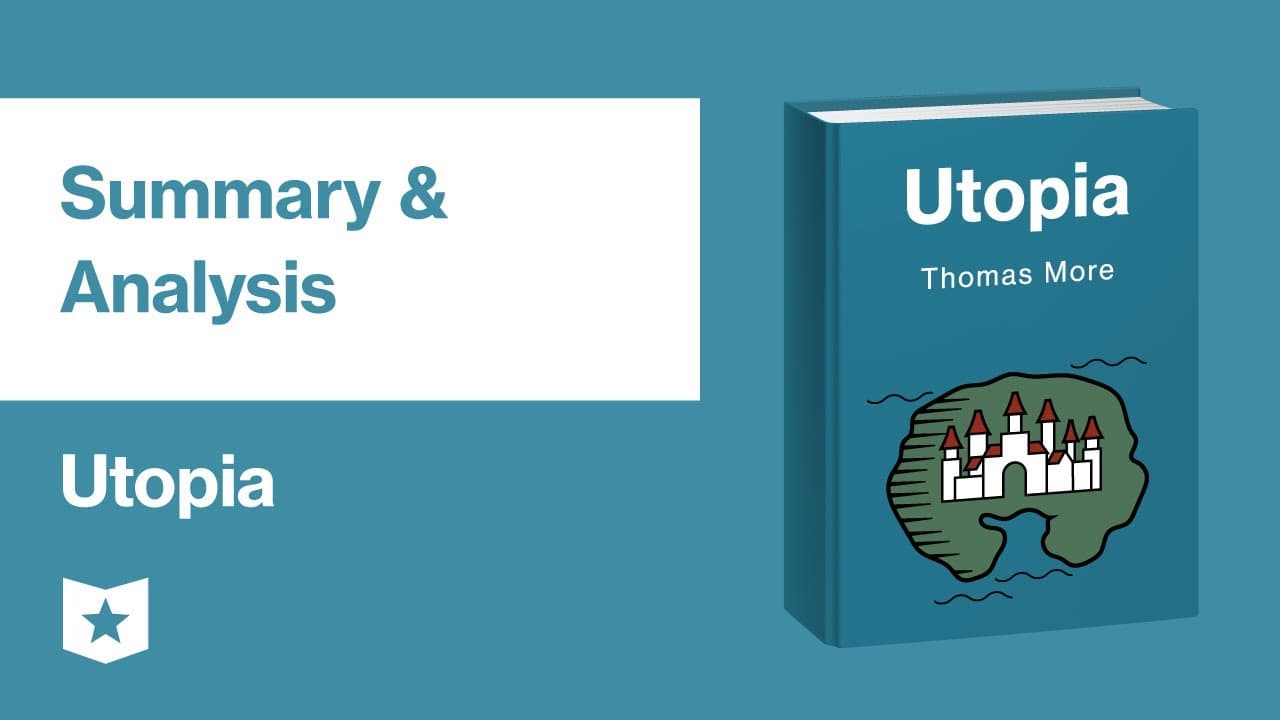
Utopia by Thomas More explores a fictional island that presents a unique society with shared property, communal living, and a system of laws aimed at prevention rather than punishment. The book critiques 16th-century societal norms by juxtaposing utopian ideals with the harsh realities of Tudor England, raising questions about wealth, governance, and human happiness.
Transcript
let's summarize the entirety of the book utopia at the onset of utopia more provides a number of made-up but intriguing items in a section called the front matter which include poems and an alphabet in the utopian language maps of utopia and letters that supposedly verify the existence of utopia after the frontmatter book one describes a trip that ... Read More
Key Insights
- 🫵 Utopia blends reality and fiction, with Thomas More as the narrator and Raphael Hythloday as an imaginary character presenting the views and observations of the utopian society.
- 😑 The character of Thomas More acts as a critical listener and debater, distancing the real author from potentially dangerous thoughts expressed in the book.
- 🤬 The symbols in Utopia, such as the island and gold, have deeper meanings, representing detachment, uniqueness, and a redefinition of wealth.
- 💯 The main ideas in Utopia revolve around property and wealth, the concept of a perfect society, and the themes of crime and punishment.
Install to Summarize YouTube Videos and Get Transcripts
Explore YouTube Video Summarizer or Get YouTube Transcript Extractor
Questions & Answers
Q: Who was Thomas More and why is Utopia his most famous work?
Thomas More was a writer, lawyer, philosopher, and politician who was revered in European history. Utopia, written in 1516, had a significant impact on political philosophy and literature, challenging society's norms and standards.
Q: What is the significance of the island in Utopia?
The island in Utopia symbolizes detachment and a separate world with unique norms and ethics. It allows Thomas More to present a fictional world without being tied to the realities of Tudor society.
Q: How does Utopia challenge the concept of wealth and property?
Utopians take a vow of poverty and believe in shared communal property, eliminating the need for theft. This idea influenced important social experiments in the 20th century, such as the revolutions in China and Russia.
Q: How does Utopia address crime and punishment?
Utopian laws rarely involve the death penalty, but punishments are harsh. Enslavement is used as a consequence, and Utopia raises questions about the effectiveness of punishments and the purpose of crime prevention.
Summary & Key Takeaways
-
Utopia is divided into two books, with Book 1 describing Moore's trip to Flanders and his encounter with Raphael Hythloday, who discovered the fictional island of Utopia.
-
Book 2 provides an in-depth description of the physical, social, and cultural aspects of Utopia, including its geography, government, work system, family structure, and religion.
-
The book explores themes of property and wealth, the idea of a perfect place, and the concept of crime and punishment.
Read in Other Languages (beta)
Share This Summary 📚
Summarize YouTube Videos and Get Video Transcripts with 1-Click
Try YouTube Summary with ChatGPT & Claude or YouTube Transcript Generator
Explore More Summaries from Course Hero 📚

Summarize YouTube Videos and Get Video Transcripts with 1-Click
Try YouTube Summary with ChatGPT & Claude or YouTube Transcript Generator