How Can You Reinvent Your Life? 8 Stoic Practices You’ll Actually Use
TL;DR
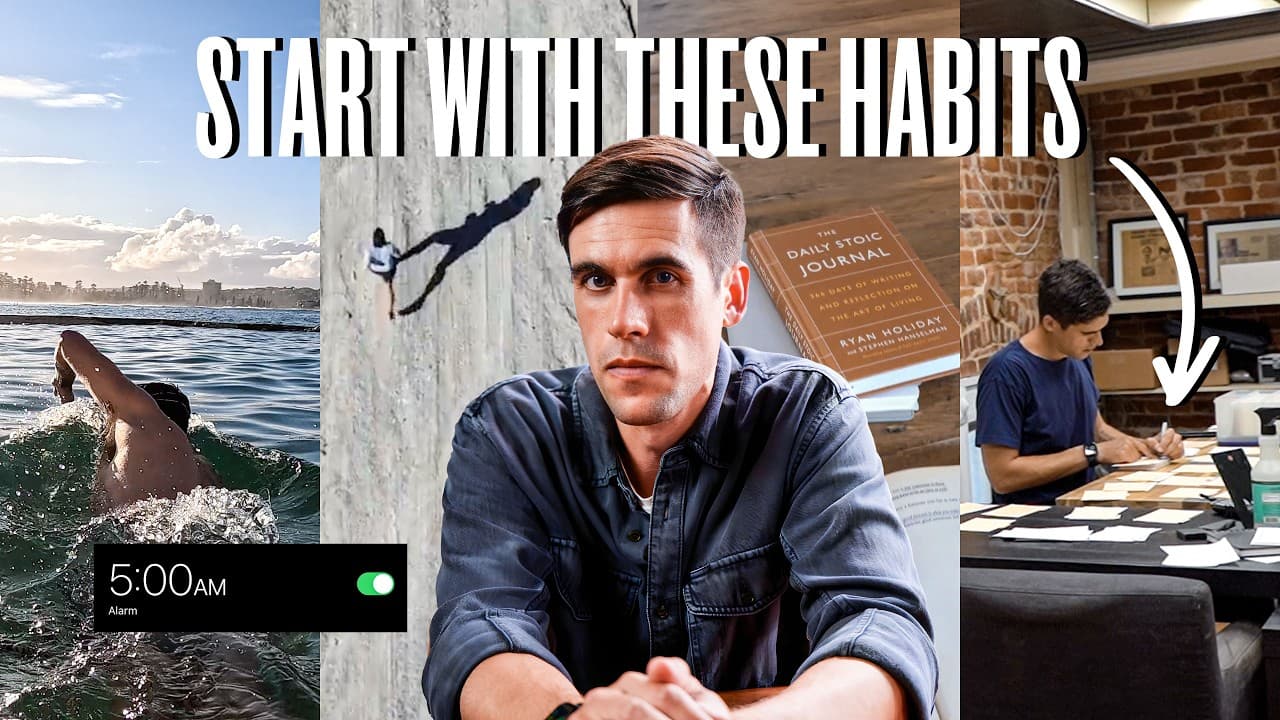
Reinvent your life by recommitting to your values and practicing eight Stoic habits: physical challenges, asking for help, intentional reading, daily walks, concentration, freedom from addictions, progress over perfection, and a guiding word for the year. Marcus Aurelius believed people could recover after drifting from who they wanted to be, while Seneca used rigorous physical challenges to strengthen the mind. Read on for practical ways to build resilience, clarity, and self-control.
Transcript
Marcus realus may have been very powerful in fact he was extremely powerful but he wasn't perfect he struggled like you and I he drifted from the person that he wanted to be the person that he knew that he could be so it's an interesting passage in meditations he says like you're a beast you're a monkey he's lamenting how low he has fallen but he s... Read More
Key Insights
- Marcus Aurelius emphasized the importance of rediscovering beliefs and committing to philosophy for personal transformation.
- Physical challenges are a metaphor for mental toughness; Stoics like Socrates and Seneca engaged in rigorous activities to build resilience.
- Seeking help is not a sign of weakness; it is essential for growth and overcoming challenges, as highlighted by Marcus Aurelius.
- Intentional reading is crucial; focus on meaningful works that contribute to personal growth rather than consuming large quantities of information.
- Daily walks can improve mental clarity and well-being, serving as a form of meditation and problem-solving.
- Concentration is a rare skill that enhances performance and insights; it can be cultivated through meditation and discipline.
- Breaking free from addictions is essential for freedom and personal development; Stoicism encourages awareness of dependencies.
- Perfectionism can hinder progress; focus on continuous improvement and the courage to finish tasks rather than seeking perfection.
Install to Summarize YouTube Videos and Get Transcripts
Explore YouTube Video Summarizer or Get YouTube Transcript Extractor
Questions & Answers
Q: How can you reinvent your life with Stoic practices?
Start by returning to the beliefs, philosophy, wisdom, and virtue that reflect the person you want to be. The eight practices presented are physical challenges, seeking help, intentional reading, daily walks, concentration, breaking dependencies, choosing progress over perfection, and selecting a guiding word for the year.
Q: Why do Stoics practice physically challenging activities?
Stoics treated rigorous physical practice as a path to mental toughness, not vanity. Seneca said the body should be treated rigorously so it is not disobedient to the mind, and the transcript describes Stoics hunting, wrestling, lifting weights, running, and enduring cold.
Q: How does keeping a physical commitment build resilience?
A demanding physical practice teaches you to keep promises to yourself and continue when you feel cold, tired, or reluctant. Pushing beyond the point where you want to stop can build confidence that you can handle other challenges during the day.
Q: Why is asking for help consistent with Stoicism?
Marcus Aurelius compared it to a wounded soldier accepting a comrade’s help while storming a wall: the mission still needs to be accomplished. Asking for therapy, advice, assistance from a teammate, or an answer to a question is presented as refusing to give up rather than admitting defeat.
Q: How can intentional reading support personal growth?
Intentional reading means choosing meaningful works that address your goals and challenges instead of consuming information merely for quantity. The Stoic approach associated with Seneca is to linger on the work of master thinkers so that reading produces deeper understanding and useful wisdom.
Q: What role do daily walks play in Stoic practice?
Daily walks can function as meditation and provide space for problem-solving. The existing insights describe walking outdoors as a way to refresh the mind, improve clarity, ease burdens, and support more constructive thinking.
Q: How can Stoic practice improve concentration?
Concentration can be strengthened through meditation, discipline, and sustained attention to the task at hand. Marcus Aurelius advised focusing each minute with seriousness and justice, making presence and reduced distraction part of the practice.
Q: How do Stoics approach addiction and perfectionism?
Stoicism encourages recognizing addictions and dependencies because they reduce freedom and control over your life. It also favors continuous improvement over perfectionism, emphasizing the courage to finish and make progress instead of letting an unattainable standard prevent action.
Summary & Key Takeaways
-
Embrace Stoic practices to start the new year with renewed focus and resilience. Engage in physical activities to build mental toughness and seek help when needed to overcome challenges. Intentional reading and daily walks enhance mental clarity and personal growth.
-
Concentration is a vital skill that can be developed through meditation and discipline. Break free from addictions and dependencies to gain freedom and control over your life. Focus on progress rather than perfection to ensure continuous improvement.
-
Choose a guiding word for the year to maintain focus and direction, helping you navigate challenges with clarity and purpose. These practices foster a well-rounded, resilient, and mentally strong individual capable of achieving personal growth.
Read in Other Languages (beta)
Share This Summary 📚
Summarize YouTube Videos and Get Video Transcripts with 1-Click
Try YouTube Summary with ChatGPT & Claude or YouTube Transcript Generator
Explore More Summaries from Daily Stoic 📚





Summarize YouTube Videos and Get Video Transcripts with 1-Click
Try YouTube Summary with ChatGPT & Claude or YouTube Transcript Generator