Can Moons Host Alien Life? Exploring Exomoons
TL;DR
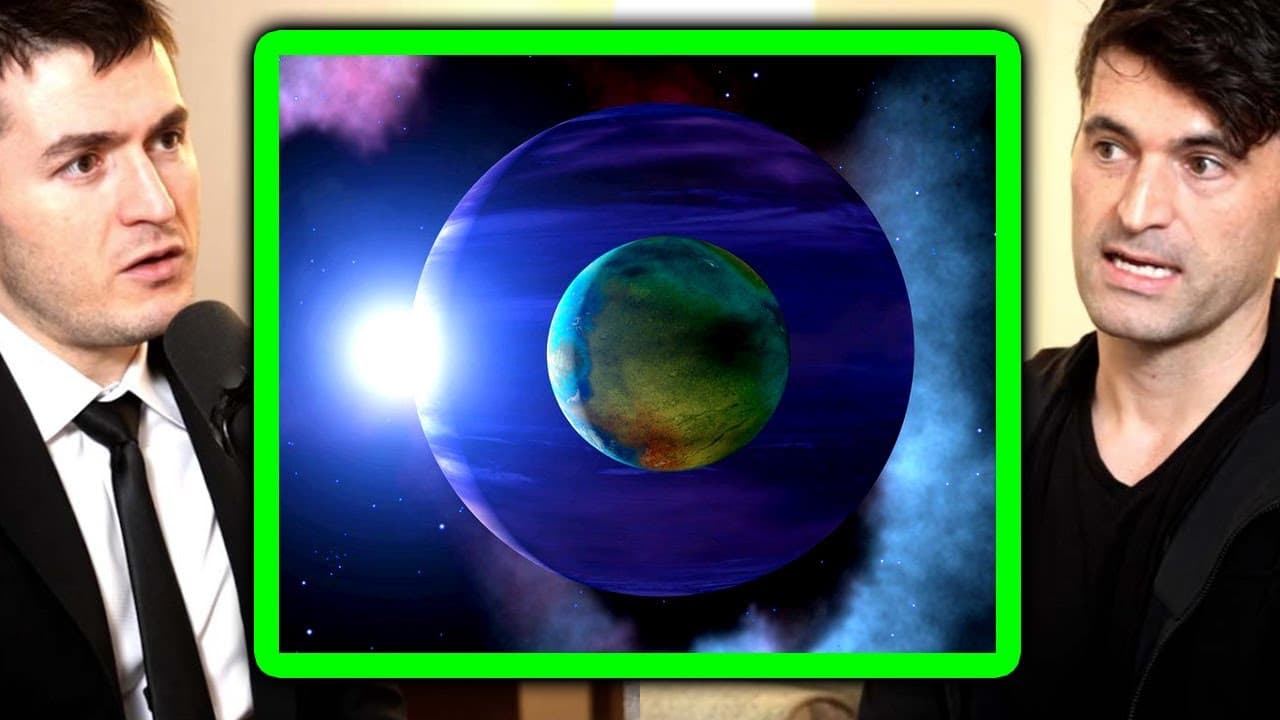
Exomoons could potentially be more abundant than exoplanets when it comes to habitability. Their influence on planetary atmospheres and conditions may significantly impact the search for extraterrestrial life, making it essential to study them alongside their planets.
Transcript
within the field of exoplanets because there's different fields of astronomy but within the field of exoparts I think a good expectation is that most of the telescope time that James WC have will go towards atmospheric retrieval which is uh sort of alluded to earlier you know like detecting molecules in the atmospheres not by signatures because as ... Read More
Key Insights
- ⌛ Most of the telescope time for the JWST will be allocated to studying exoplanetary atmospheres, providing valuable insights into their composition.
- 👨🔬 The search for exomoons aims to find evidence of habitable moons orbiting exoplanets, expanding the potential for habitable worlds.
- 🖐️ Moons can play a significant role in the habitability of exoplanets and may influence their atmospheric characteristics.
- 🫥 Detecting chemical disequilibrium in the atmosphere of a pale blue dot (potentially habitable exoplanet) can indicate the presence of life, but the presence of a moon can complicate the interpretation.
- 🖐️ The Earth's moon may have played a crucial role in stabilizing the planet's obliquity and aiding the origin of life.
- 🥮 Large moons can affect plate tectonics and the habitability of planets they orbit.
- 🛟 Understanding the prevalence and role of exomoons is essential in the search for extraterrestrial life, as they can interfere with the detection of life remotely.
Install to Summarize YouTube Videos and Get Transcripts
Explore YouTube Video Summarizer or Get YouTube Transcript Extractor
Questions & Answers
Q: What is the primary objective of the James Webb Space Telescope?
The JWST's primary objective is to study and retrieve information about exoplanetary atmospheres, providing insights into their composition and potential habitability.
Q: What is the main goal of the search for exomoons?
The search for exomoons aims to find evidence of habitable moons orbiting exoplanets, expanding the potential for habitable worlds in the universe.
Q: Why is the search for exomoons considered more risky compared to studying exoplanetary atmospheres?
Unlike exoplanetary atmospheres that exist in most cases, the existence of exomoons is uncertain. Therefore, searching for exomoons requires pushing telescopes to do something inherently more risky.
Q: How can the discovery of exomoons increase the number of habitable worlds in the universe?
If even a small percentage of exoplanets have Earth-like or Mars-like moons, there could be significantly more habitable worlds than previously estimated, expanding the possibilities for extraterrestrial life.
Summary & Key Takeaways
-
Telescope time for the James Webb Space Telescope (JWST) will primarily focus on atmospheric retrieval on exoplanets.
-
The search for exomoons aims to find the first evidence of habitable moons around exoplanets.
-
Moons can significantly impact the habitability of planets and may interfere with the detection of life.
Read in Other Languages (beta)
Share This Summary 📚
Summarize YouTube Videos and Get Video Transcripts with 1-Click
Try YouTube Summary with ChatGPT & Claude or YouTube Transcript Generator
Explore More Summaries from Lex Clips 📚




Summarize YouTube Videos and Get Video Transcripts with 1-Click
Try YouTube Summary with ChatGPT & Claude or YouTube Transcript Generator