How to draw like anime pros in 24 hours at a studio

TL;DR
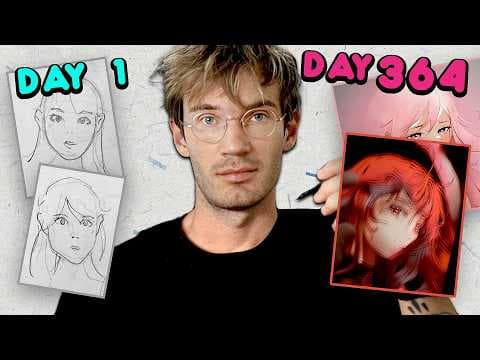
You learn how a professional anime studio drills drawing and color work, plus how to run rapid warm up sessions to build speed and accuracy. The video shows a day with color design, backgrounds, and a crucible of deadlines, and how beginners can gain confidence through supportive critique and daily practice.
Transcript
A few months ago, I got a letter, an invitation from the Royal House of Anime, Gods of Anime, which studio invited me to come over. I could not pass up. They've animated Attack on Titan, Spy Family, a ton of shows, and even the new upcoming One Piece. This is a huge deal. They don't normally do this kind of thing. I could not believe it. Me? Appare... Read More
Key Insights
- The key to anime color design is understanding how raw drawings become colored frames through careful separation of highlight and shadow.
- Backgrounds in anime require multiple passes and sometimes 3D renders before final line work is added, showing the layering of detail.
- Deadlines drive the studio workflow, forcing artists to optimize time without sacrificing essential quality.
- Warm up sessions like the 30 second pose drill push artists to improvise quickly while maintaining recognizable form.
- A one-scene approach to animation can require exhaustive planning and responsibility, as shown by the director who finished a three-cut plan in a single shot.
- Newcomers often feel unworthy, but the environment is supportive and encourages learning through feedback and practice.
- Observation of professional practices reveals that color and lighting choices dramatically affect mood and storytelling in animation.
- The Croquat warm-up session demonstrates how constrained time can sharpen line quality and pose accuracy.
- More videos from this channel:
- More from this channel: PewDiePie
Install to Summarize YouTube Videos and Get Transcripts
Explore YouTube Video Summarizer or Get YouTube Transcript Extractor
Questions & Answers
Q: How to start drawing like anime pros after visiting a studio
The first step is to observe how professionals break down a scene into color, lighting, and background elements, then practice under time pressure to mimic their pace. Begin with short, rapid sketch drills to build confidence, followed by careful review with more experienced artists. The goal is steady improvement under realistic deadlines.
Q: What makes color design important in anime production
Color design translates bare drawings into life by controlling hue, saturation, and contrast to convey time of day and mood. In the studio visit, you see colorists working directly from raw sketches, using markers to separate highlights and shadows, which informs every subsequent frame. Mastery comes from understanding how color guides emotion.
Q: Why are backgrounds critical in anime episodes
Backgrounds provide the world where characters move and act, sometimes using 3D renders as a base before artists add final detailing. The process requires multiple layers of refinement to match the composition and ensure seamless integration with character animation. High quality backgrounds elevate the perceived depth and realism of scenes.
Q: What is a Croquat session used for in animation training
The Croquat session is a daily warm up where artists draw each other in quick rounds to build speed and accuracy. It pushes artists to work within tight timeframes, creating a rhythm that translates into faster, more confident line work during actual production, while still allowing feedback and growth.
Q: How does a 24 fps animation impact drawing workload
In Japanese animation, 1 second equals 24 cuts or frames, which means many frames must be prepared with consistent timing and quality. This creates a heavy workload and emphasizes the need for disciplined pipelines and collaborative review, ensuring each frame aligns with the director’s vision.
Q: What is the role of the director in a scene like the legendary 18 second cut
The director may drive creative choices such as keeping a scene in one take to increase intensity. This requires the team to deliver without cuts and coordinate many artists over several days. Responsibility is shared, but the director ultimately steers decision making and the final look of the sequence.
Q: What should a beginner take away from the drawing warm ups
Beginners should expect to feel pressure and insecurity but can still gain value from supportive critique. Start with simple poses, gradually increase difficulty, and actively study others’ techniques. The key is consistent practice, resilience, and learning from feedback to improve faster than by solo effort.
Q: How can someone apply studio workflows to personal practice
Adopt a structured workflow that mirrors the studio: begin with quick warm ups, then move to short timed drawing drills, review and compare with peers or mentors, and iteratively refine. Maintain deadlines, use color and lighting studies, and keep a regular routine to build incremental skill and confidence.
Summary & Key Takeaways
-
A participant visits a renowned anime studio and observes multiple departments and a demanding workflow.
-
The video highlights the importance of color design and background work in making animated scenes convincing.
-
Warm up exercises, including 30 second and 3 minute drawing sessions, build speed, balance, and confidence for beginners.
Read in Other Languages (beta)
Share This Summary 📚
Summarize YouTube Videos and Get Video Transcripts with 1-Click
Try YouTube Summary with ChatGPT & Claude or YouTube Transcript Generator
Explore More Summaries from PewDiePie 📚





Summarize YouTube Videos and Get Video Transcripts with 1-Click
Try YouTube Summary with ChatGPT & Claude or YouTube Transcript Generator