Impacts of Urbanization| AP Environmental science| Khan Academy
TL;DR
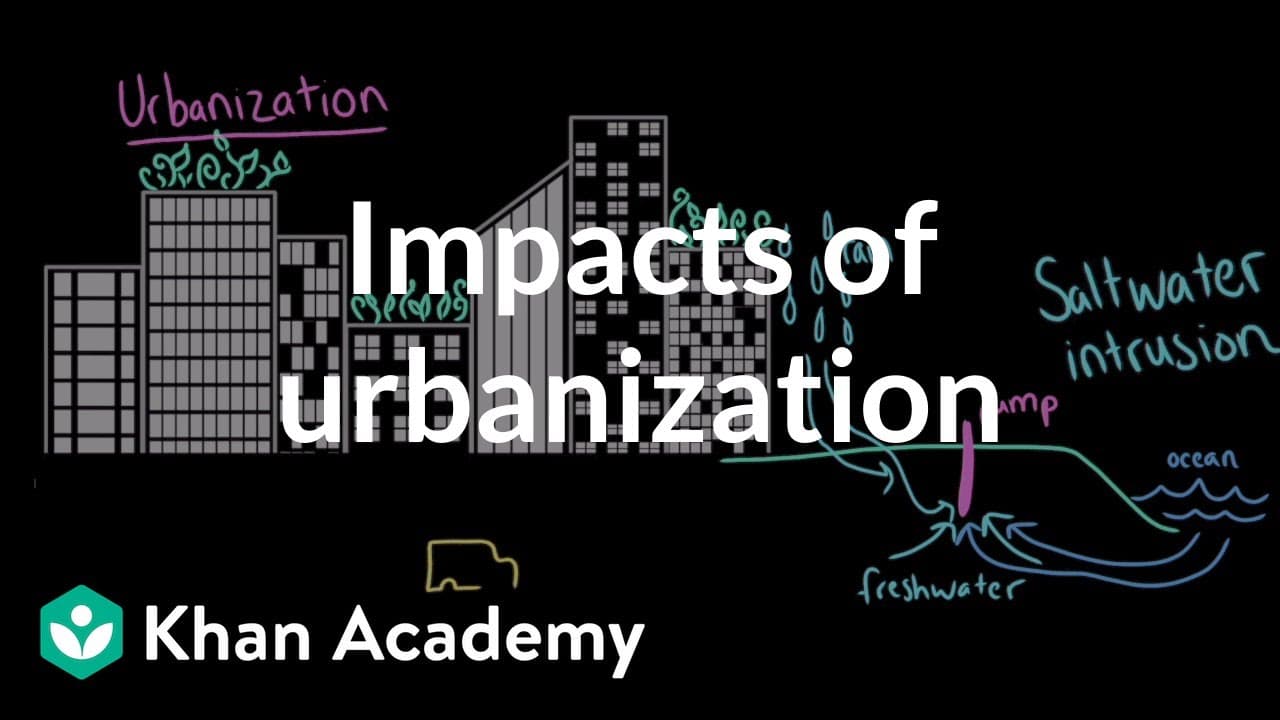
Urbanization has led to over 50% of the world's population living in cities, presenting both advantages and challenges for the environment. Sustainable planning, such as increasing green spaces and reducing vehicle emissions, can help counter these negative impacts.
Transcript
- [Instructor] In this video, we're going to talk about cities. Today, more than 50% of the world's population lives in a city, and this percentage grows every year because of something called urbanization. Urbanization is the creation and growth of cities, human settlements with higher population densities than rural areas. The high population den... Read More
Key Insights
- 🥺 Urbanization has led to over 50% of the global population living in cities, necessitating sustainable planning strategies to address the environmental challenges.
- ✋ The high population density in cities offers advantages in terms of coordinated community efforts and access to services, but it also puts a strain on natural resources.
- 🚄 Green spaces, such as green roofs and rain gardens, can help counter the negative impacts of high population density by preventing runoff and filtering pollutants.
- 👱 Sustainable planning can also reduce air pollution by reducing reliance on fossil-fuel-consuming vehicles and utilizing clean forms of energy.
- 🧑⚕️ Increasing accessibility to public transportation and creating more paths, sidewalks, and bike lanes can encourage walking and biking, improving the health of city residents.
- 😕 Energy co-generation and the use of renewable energy sources can help cities reduce their carbon footprint and become more sustainable.
- 🌆 Setting goals and sustainable plans, like Espoo's goal to become carbon-neutral by 2030, can guide cities towards achieving sustainability.
Install to Summarize YouTube Videos and Get Transcripts
Explore YouTube Video Summarizer or Get YouTube Transcript Extractor
Questions & Answers
Q: What is urbanization and why is it important?
Urbanization is the creation and growth of cities with higher population densities. It is important because it plays a significant role in shaping economies, societies, and the environment, with more than 50% of the world's population currently living in cities.
Q: What are the advantages of high population density in cities?
High population density allows for easier coordination of community efforts, such as recycling and public education. It also provides better access to services like medical care and family planning for urban residents.
Q: How does the high population density in cities impact the environment?
The high population density in cities can strain natural resources and lead to increased air and water pollution. The concentration of people in one space can generate more pollution and cause challenges in waste management and resource depletion.
Q: How can sustainable planning address the negative environmental impacts of cities?
Sustainable planning involves increasing green spaces in cities, such as through green roofs and rain gardens, which help prevent runoff and filter pollutants. It also includes measures like permeable surfaces and clean forms of energy to reduce pollution and resource consumption.
Summary & Key Takeaways
-
Urbanization is the creation and growth of cities, which currently house over 50% of the world's population, leading to advantages such as easier coordination of community efforts and better access to services.
-
However, high population density in cities can have negative environmental effects, causing strain on natural resources and generating air and water pollution.
-
Sustainable planning can mitigate these effects by increasing green spaces, such as green roofs and rain gardens, and reducing pollution through measures like permeable surfaces and clean forms of energy.
Read in Other Languages (beta)
Share This Summary 📚
Summarize YouTube Videos and Get Video Transcripts with 1-Click
Try YouTube Summary with ChatGPT & Claude or YouTube Transcript Generator
Explore More Summaries from Khan Academy 📚



Summarize YouTube Videos and Get Video Transcripts with 1-Click
Try YouTube Summary with ChatGPT & Claude or YouTube Transcript Generator