How to Boost Leg Strength After 60 with Japanese Exercises
TL;DR
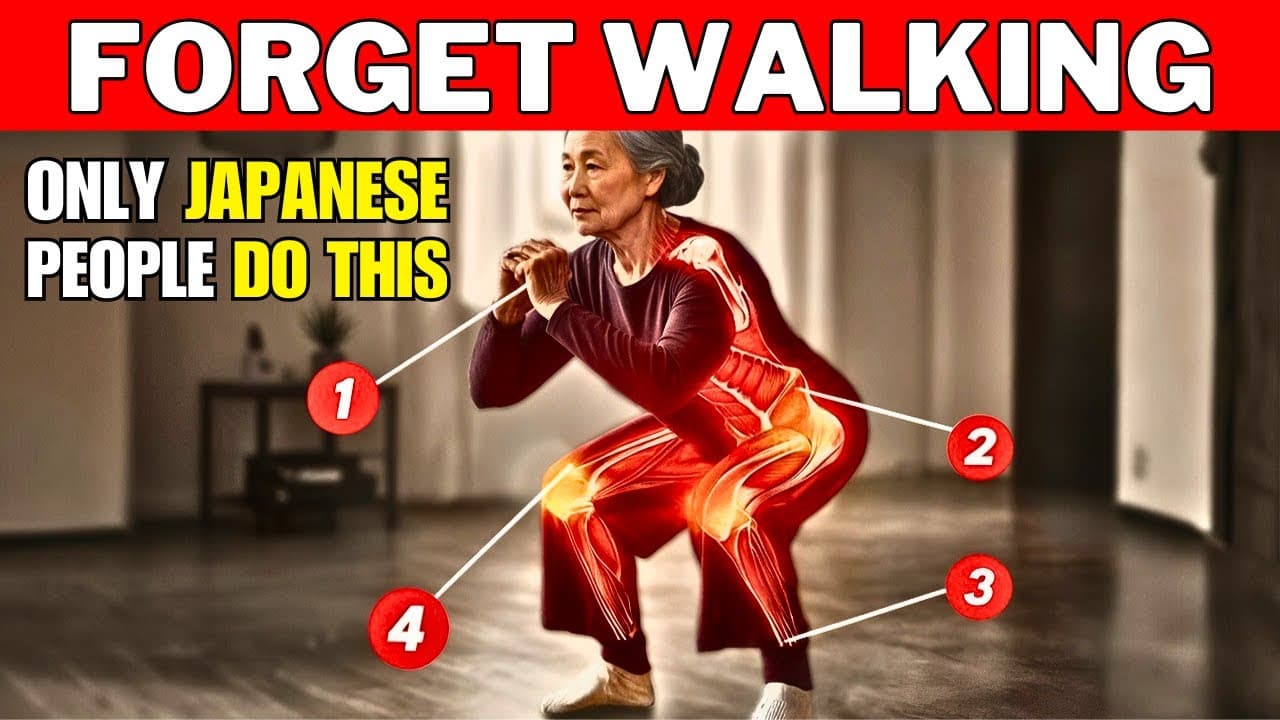
To improve leg strength after 60, incorporate six Japanese exercises: resting squat, balance on one leg, horse stance, sampa walking, heel raises, and wall squats. These exercises enhance muscle strength, stability, and balance, reducing the risk of falls and increasing independence in daily activities. Regular practice leads to noticeable improvements in mobility and confidence.
Transcript
Six exercises used by the Japanese to double leg strength even after 60 years of age. In Japan, besides being the country with the highest number of people over 100 years in the world, adults and elderly manage the incredible feat of maintaining strong legs even after 80 years. While in western countries, the World Health Organization already repor... Read More
Key Insights
- Resting squat engages multiple muscle groups and improves posture while resting.
- Balance on one leg strengthens stabilizing muscles, reducing fall risk.
- Horse stance is effective for strengthening thighs and core without joint impact.
- Sampa walking enhances physical and mental strength through mindful movement.
- Heel raises target calf muscles, improving circulation and stability.
- Wall squats offer safe muscle strengthening through isometric contraction.
- Dead hang promotes spinal decompression and improves grip strength.
- Japanese exercises are integrated into daily routines for sustained benefits.
Install to Summarize YouTube Videos and Get Transcripts
Explore YouTube Video Summarizer or Get YouTube Transcript Extractor
Questions & Answers
Q: How to perform a resting squat correctly?
To perform a resting squat, stand with feet shoulder-width apart and slowly lower your body until your glutes are near the ground, keeping heels flat. Maintain a neutral spine, neither excessively curved nor straight. Beginners should use stable support initially and gradually increase duration to 2-3 minutes without support.
Q: What are the benefits of balancing on one leg?
Balancing on one leg strengthens stabilizing muscles in the ankle, knee, hip, and core, crucial for preventing falls. It enhances reflexes and neural pathways, improving reaction time to trips. Regular practice reduces hip fracture risk by 60% and falls by 40%, boosting confidence in daily activities.
Q: Why is the horse stance effective for older adults?
The horse stance is effective for older adults due to its isometric nature, strengthening thighs, hip, and core without joint impact. It improves leg strength by 24% in 12 weeks, enhancing stability. The position involves bending knees and lowering the body as if sitting in an invisible chair.
Q: How does sampa walking benefit leg strength?
Sampa walking, a slow and mindful technique, improves leg strength by focusing on each step's sequence: heel, middle foot, and toes. It enhances blood circulation, dynamic balance, and proprioception. Practicing 3 minutes daily in a distraction-free space promotes physical and mental strengthening simultaneously.
Q: What is the correct technique for heel raises?
For heel raises, stand with feet shoulder-width apart, rise onto toes, and lower slowly. Each controlled repetition should maximize calf muscle engagement. Beginners start with two sets of 15 repetitions using support. Progress to three sets of 20 repetitions, maintaining position at the top for 1-2 seconds.
Q: How do wall squats improve leg strength?
Wall squats enhance leg strength through isometric contraction, targeting quadriceps, glutes, and core. Stand with back against a wall, feet shoulder-width, and slide down until knees form a 90-degree angle. Beginners should hold for 15-20 seconds, progressing to 60 seconds, ensuring knees align with toes to protect joints.
Q: What are the benefits of the dead hang exercise?
The dead hang offers spinal decompression, grip strength improvement, and enhanced shoulder mobility. Hanging from a bar allows intervertebral discs to rehydrate, relieving pressure. It strengthens forearm muscles and restores shoulder range of motion, crucial for daily tasks. Beginners should start with 5-10 seconds, increasing duration gradually.
Q: How can Japanese exercises help prevent falls in seniors?
Japanese exercises like balance on one leg and heel raises enhance stabilizing muscles and proprioception, reducing fall risk. These exercises improve confidence, dynamic balance, and muscle strength, essential for preventing falls. Regular practice leads to significant reductions in hip fractures and falls, promoting independence in seniors.
Summary & Key Takeaways
-
Resting squat is a key exercise in Japanese culture, engaging quadriceps, hamstrings, glutes, and core while resting. It improves posture and leg strength, with benefits extending to blood circulation and digestion. Beginners should start with support and gradually increase duration.
-
Balance on one leg is crucial for mobility and independence, targeting stabilizing muscles. It reduces fall risk and enhances confidence in daily activities. Proper technique involves transferring weight to one leg, with progression to longer durations without support.
-
Horse stance, rooted in martial arts, strengthens thighs, hip, and core through isometric holds. It symbolizes stability and is valued for its low-impact nature. Practicing regularly increases leg strength and endurance, with beginners starting with short holds.
Read in Other Languages (beta)
Share This Summary 📚
Summarize YouTube Videos and Get Video Transcripts with 1-Click
Try YouTube Summary with ChatGPT & Claude or YouTube Transcript Generator
Explore More Summaries from Strength and Shape 📚



Summarize YouTube Videos and Get Video Transcripts with 1-Click
Try YouTube Summary with ChatGPT & Claude or YouTube Transcript Generator