How Could Mega IPOs Pressure the S&P 500?
TL;DR
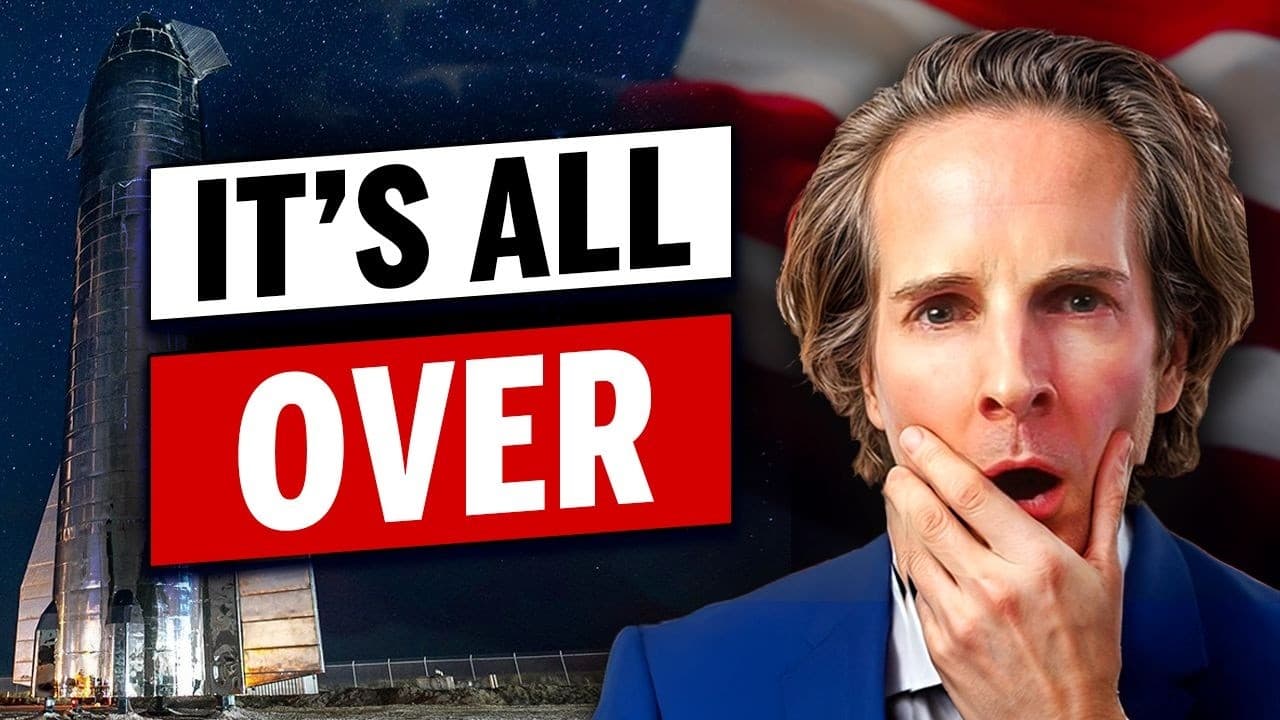
Large IPOs and new share offerings could redirect about $350 billion from existing holdings, according to the video's argument. The proposed response is to examine index concentration, dilution, valuations, and liquidity risk rather than assuming an S&P 500 fund is automatically diversified or protected from selling pressure.
Transcript
350 billion. That is how much fresh cash Wall Street needs to come up with in the next few weeks just to absorb three massive IPOs and the wave of new shares that big tech just started printing. SpaceX, Open AI, and Anthropic are all racing to go public at the same time. Google is already selling 85 billion in brand new shares. They just print them... Read More
Key Insights
- The video's $350 billion estimate combines projected IPO fundraising with current or possible technology-company stock issuance, making it an argument about aggregate demand for investor capital rather than a guaranteed market withdrawal.
- The triple IPO collision is projected to involve approximately $75 billion for SpaceX, $60 billion for OpenAI, and $60 billion for Anthropic. Together, these offerings would require investors to allocate close to $200 billion toward newly public shares within a relatively short period.
- Share issuance can dilute existing ownership because a company creates additional pieces of the same equity base. The video argues that Alphabet's proposed $85 billion offering, followed potentially by Meta and other technology companies, could increase supply while reducing each current shareholder's proportional claim.
- The debt-market constraint is attributed to $110 billion of borrowing by AI-related companies during the first five months of the referenced year. The analysis claims that rising borrowing costs and limited lending capacity are encouraging technology companies to finance AI investment by selling new equity instead.
- Institutional cash raising may target the market's largest and most liquid stocks first. The named examples include Google, Nvidia, Intel, Amazon, Broadcom, Apple, and AMD, which are widely held positions that fund managers could sell more easily when financing participation in major IPOs.
- S&P 500 diversification is limited by concentration when the top 10 holdings constitute about 40% of the index and produce 72% of its gains. The video argues that investors owning the full index may therefore depend heavily on a small group of technology companies.
- Valuation risk is presented through a price-to-earnings ratio of 30 for stocks, compared with a stated long-term average of 16. The analysis uses this difference to argue that current prices leave the market more vulnerable if large equity offerings create additional selling pressure.
- Prominent investor positioning is used as a warning signal because Mohnish Pabrai is described as bearish, holding no S&P 500 or mega-cap technology exposure, while Berkshire Hathaway is said to have sold its S&P 500 index fund position. These examples support the video's cautious view.
- A possible 20% correction is attributed to Tom Lee, whom the video characterizes as a consistently bullish Wall Street strategist. His warning is presented alongside concentration, valuation, dilution, and liquidity concerns, although the transcript does not establish that the projected correction will occur.
Install to Summarize YouTube Videos and Get Transcripts
Explore YouTube Video Summarizer or Get YouTube Transcript Extractor
Questions & Answers
Q: How could major IPOs pressure existing stock prices?
Major IPOs could pressure existing stocks by competing for a limited pool of investor capital. The video estimates that SpaceX, OpenAI, and Anthropic may collectively seek close to $200 billion. Fund managers wanting to participate may raise cash by selling large, liquid holdings such as Google, Nvidia, Amazon, Apple, AMD, Intel, and Broadcom, potentially creating selling pressure in those names.
Q: Where does the video's $350 billion estimate come from?
The estimate combines approximately $200 billion sought through three anticipated IPOs with major technology-company share offerings. SpaceX is described as seeking about $75 billion, while OpenAI and Anthropic are each described as seeking $60 billion. Alphabet is said to be selling $85 billion in new shares, with possible additional issuance from Meta and other companies bringing the projected total to at least $350 billion.
Q: Why might technology companies issue shares instead of borrowing money?
The video argues that debt financing has become less attractive because AI-related companies issued $110 billion in debt during the first five months of the referenced year, borrowing costs increased, and lenders could not absorb unlimited technology debt. As a result, companies seeking money for AI spending may turn to equity markets and issue new shares instead of relying entirely on additional borrowing.
Q: How does issuing new stock dilute existing shareholders?
Issuing stock increases the total number of shares representing ownership in a company. The video compares this to dividing the same pie into more slices: unless the underlying company grows enough to offset the issuance, each existing share represents a smaller proportional interest. Alphabet's stated $85 billion offering is presented as an example of new equity that could dilute current shareholders.
Q: Why does S&P 500 concentration matter to index investors?
S&P 500 concentration matters because the index may contain 500 companies while depending heavily on a small number of dominant holdings. According to the video, the top 10 stocks represent about 40% of the index and generated 72% of its gains during the referenced year. Selling pressure or dilution affecting those companies could therefore have an outsized effect on index-fund performance.
Q: Which stocks could institutions sell to fund the new IPOs?
The video says fund managers are likely to sell positions that are large, widely owned, and easy to trade when they need cash. It specifically names Google, Nvidia, Intel, Amazon, Broadcom, Apple, and AMD. These holdings offer liquidity, but selling them to finance IPO purchases could pressure the same major technology stocks that have produced much of the index's gains.
Q: Why does the video consider current stock valuations risky?
The valuation concern is based on a stated price-to-earnings ratio of 30, compared with a long-term average of 16. The video characterizes stocks as nearly twice as expensive as normal and says the valuation is more extreme than in 2000 before the dot-com crash. High prices could make investors less willing to absorb dilution and additional equity supply without demanding lower valuations.
Q: What warning signs from prominent investors does the video cite?
The video cites Mohnish Pabrai calling the S&P 500 bearish and says he has no money in either the index or mega-cap technology stocks. It also claims Berkshire Hathaway sold its S&P 500 index fund position. Finally, it presents Tom Lee, described as consistently bullish, as warning about a possible 20% correction. These examples are offered as cautionary signals, not proof of a decline.
Summary & Key Takeaways
-
The central argument is that planned IPOs from SpaceX, OpenAI, and Anthropic could require roughly $200 billion, while new big-tech share offerings could lift the total demand for capital to at least $350 billion. Fund managers may raise that cash by selling their largest and most liquid existing positions.
-
The analysis says Alphabet is selling $85 billion in newly issued shares and Meta may also issue stock. It describes issuance as dilution because the number of shares increases, potentially reducing each existing holder's proportional ownership. Big technology companies are reportedly turning toward equity as AI-related borrowing becomes more expensive.
-
The S&P 500 is presented as unusually concentrated because its top 10 stocks represent about 40% of the index and generated 72% of its gains during the referenced year. The proposed risk is that the same companies supporting index returns may face institutional selling, dilution, high valuations, and a possible correction.
-
Key Insights commonly acknowledged by experts, but important to note here, are that the video's $350 billion estimate combines projected IPO fundraising with current or possible technology-company stock issuance, making it an argument about aggregate demand for investor capital rather than a guaranteed market withdrawal.
-
The triple IPO collision is projected to involve approximately $75 billion for SpaceX, $60 billion for OpenAI, and $60 billion for Anthropic. Together, these offerings would require investors to allocate close to $200 billion toward newly public shares within a relatively short period.
-
Share issuance can dilute existing ownership because a company creates additional pieces of the same equity base. The video argues that Alphabet's proposed $85 billion offering, followed potentially by Meta and other technology companies, could increase supply while reducing each current shareholder's proportional claim.
-
The debt-market constraint is attributed to $110 billion of borrowing by AI-related companies during the first five months of the referenced year. The analysis claims that rising borrowing costs and limited lending capacity are encouraging technology companies to finance AI investment by selling new equity instead.
-
Institutional cash raising may target the market's largest and most liquid stocks first. The named examples include Google, Nvidia, Intel, Amazon, Broadcom, Apple, and AMD, which are widely held positions that fund managers could sell more easily when financing participation in major IPOs.
-
S&P 500 diversification is limited by concentration when the top 10 holdings constitute about 40% of the index and produce 72% of its gains. The video argues that investors owning the full index may therefore depend heavily on a small group of technology companies.
-
Valuation risk is presented through a price-to-earnings ratio of 30 for stocks, compared with a stated long-term average of 16. The analysis uses this difference to argue that current prices leave the market more vulnerable if large equity offerings create additional selling pressure.
-
Prominent investor positioning is used as a warning signal because Mohnish Pabrai is described as bearish, holding no S&P 500 or mega-cap technology exposure, while Berkshire Hathaway is said to have sold its S&P 500 index fund position. These examples support the video's cautious view.
-
A possible 20% correction is attributed to Tom Lee, whom the video characterizes as a consistently bullish Wall Street strategist. His warning is presented alongside concentration, valuation, dilution, and liquidity concerns, although the transcript does not establish that the projected correction will occur.
Read in Other Languages (beta)
Share This Summary 📚
Summarize YouTube Videos and Get Video Transcripts with 1-Click
Try YouTube Summary with ChatGPT & Claude or YouTube Transcript Generator
Explore More Summaries from Felix & Friends (Goat Academy) 📚





![⚠️[WATCH NOW] IF You Own Tesla, Palantir, Nvidia, Amd, SoFi, HIMS thumbnail](/_next/image?url=https%3A%2F%2Fi.ytimg.com%2Fvi%2F9TY1aEkEGC8%2Fhqdefault.jpg&w=750&q=75)
Summarize YouTube Videos and Get Video Transcripts with 1-Click
Try YouTube Summary with ChatGPT & Claude or YouTube Transcript Generator